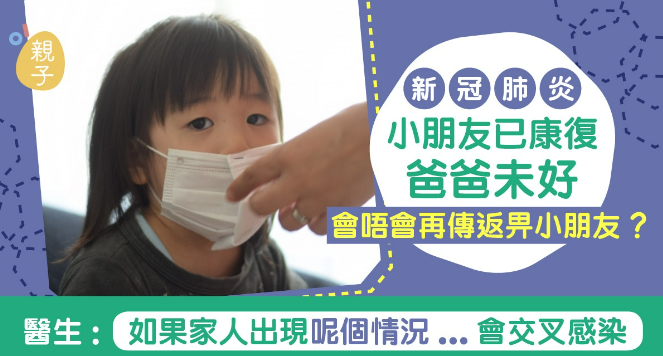
As the number of confirmed Covid-19 cases has fallen from over ten thousand to 3,709 reported yesterday (3rd), many families who had previously tested positive are gradually recovering. However, due to individual differences in constitution, recovery times vary. One parent shared online that after their children had recovered, their husband had not yet fully recovered, and they were worried that the children might get re-infected. At the same time, some children's rapid test results have been fluctuating, sometimes testing positive and sometimes negative, making it unclear whether they have actually recovered. Paediatrician Dr. Chan Yan-wing pointed out that if family members experience the following situations, there is indeed a risk of cross-infection.
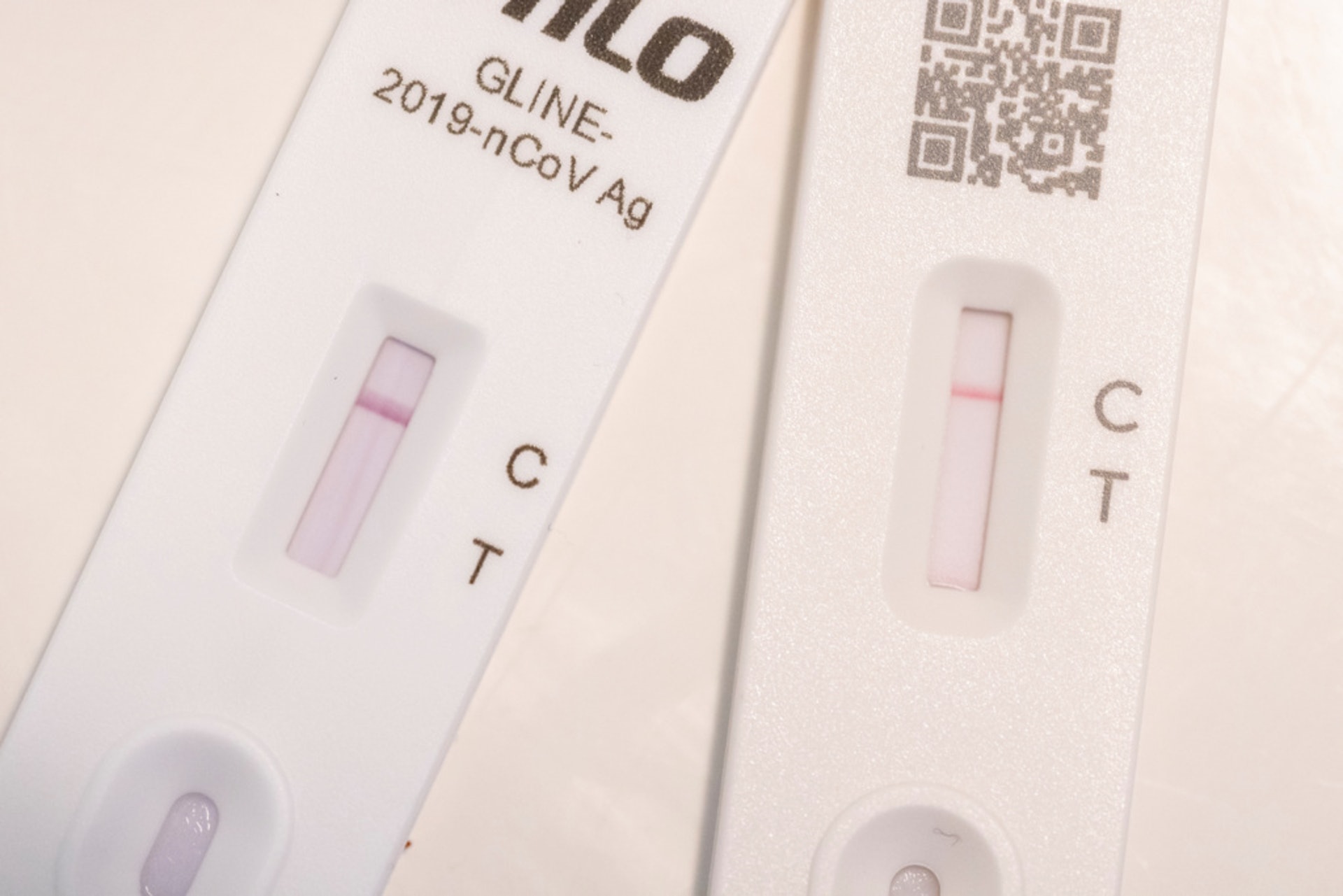
Dr Chan Yan Wing stated that parents who have recently consulted the clinic have doubts about whether their children have recovered. Even after their symptoms have subsided and they have tested positive, rapid tests still show two red lines, leaving parents unsure if their child is considered recovered. Dr Chan Yan Wing said: "If a child’s symptoms have subsided but the rapid test still shows two red lines, we do not consider them fully recovered, as two red lines indicate the ability to infect others. Isolation must continue. Most patients will test negative after 7-10 days, but it is important to note that even after testing negative, relying on a single sample is not enough. At least two samples are required, with a gap of more than 24 hours between them, and both must be negative."
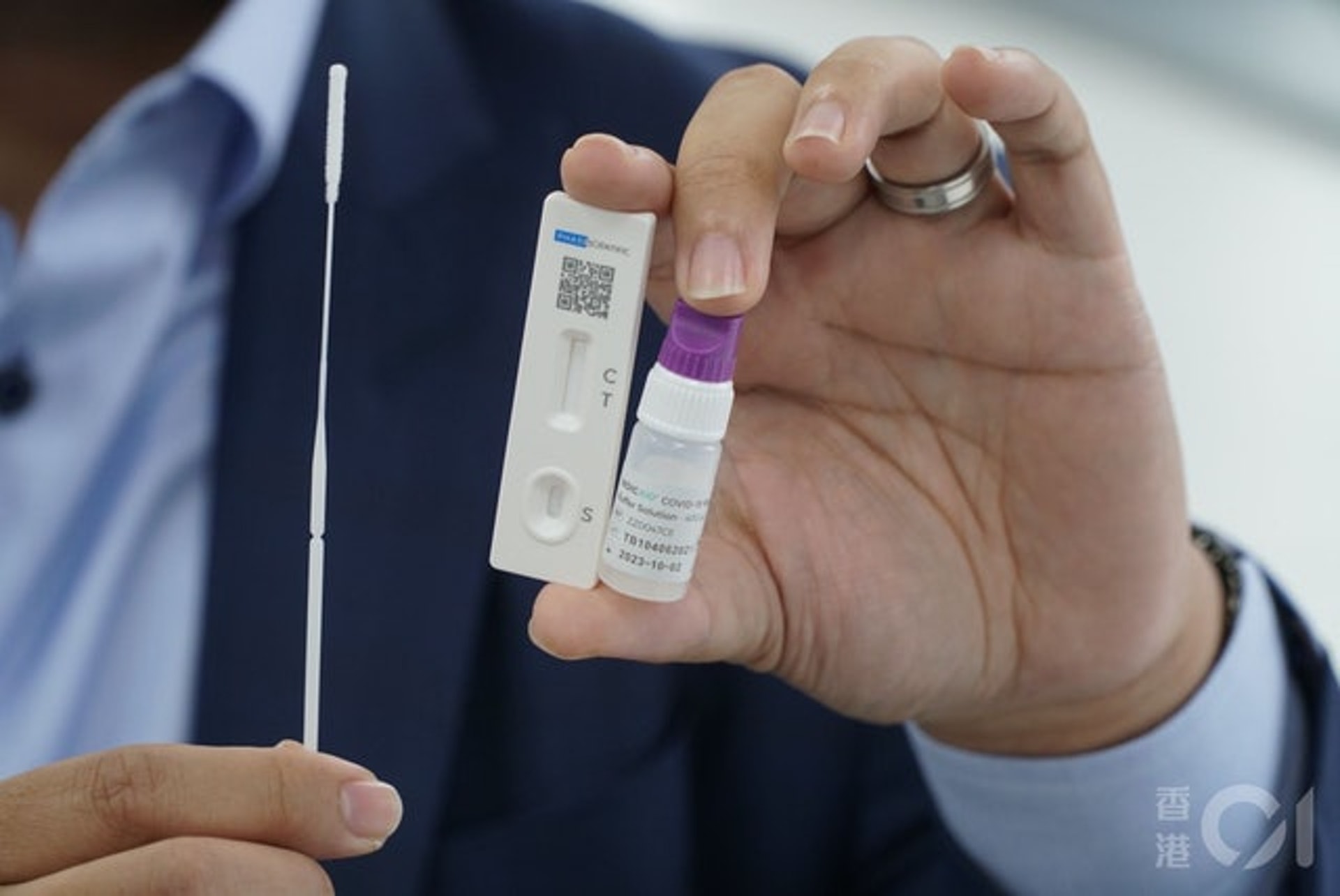
(File photo)
Symptomatic but no test result
For children exhibiting COVID-19 symptoms such as fever, cough, sore throat, and runny nose, but testing negative on a rapid test, Dr. Chan commented, "The most important thing with rapid tests is to observe whether the COVID-19 virus levels are present in the respiratory tract. Taking Omicron as an example, data shows its highest infectivity is the day before symptoms appear, but rapid tests may only become positive on the first or second day after that."
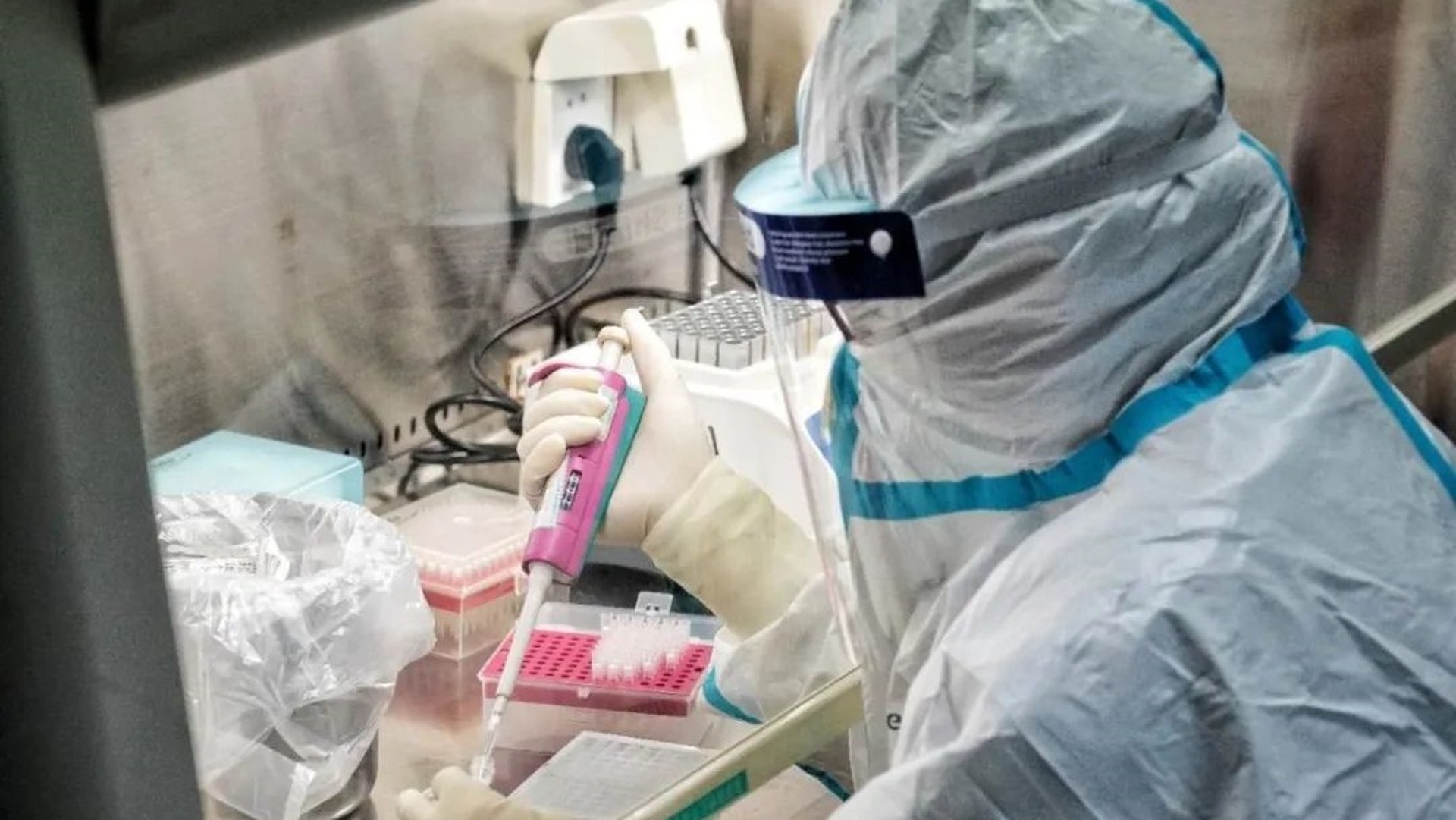
Another important factor influencing test results depends on the severity of the illness. Dr. Chan mentioned that most children have milder symptoms, but for the elderly, or those who are congenitally immunocompromised or have weaker immune systems, there is a chance of developing severe COVID-19 symptoms. He said: "Once infected and severe symptoms appear, infectivity will persist, and can even remain positive for up to 20 days. Therefore, it depends on individual physical constitution and immunity. The level of infectivity, the viral load, but general rapid tests cannot see the CT value, so only PCR tests are more accurate."
How to avoid cross-infection
Regarding differing positive diagnosis and recovery dates among family members, will those who recover earlier be reinfected by those who recover later? Dr. Chan said, "Because Omicron is highly contagious, if someone is diagnosed, the chance of cross-infection is very high. Assuming someone in the family has recovered after being diagnosed, and other members get infected, if it's the same type of virus, because the patient will eventually produce their own antibodies to fight the same model of virus, there will be relatively short-term protection. If the family members are infected with different viruses, there is a risk of cross-infection. Therefore, home isolation measures must be sufficient, with all ventilation systems, drainage, and isolation being very strict, in order to avoid cross-infection within the home."
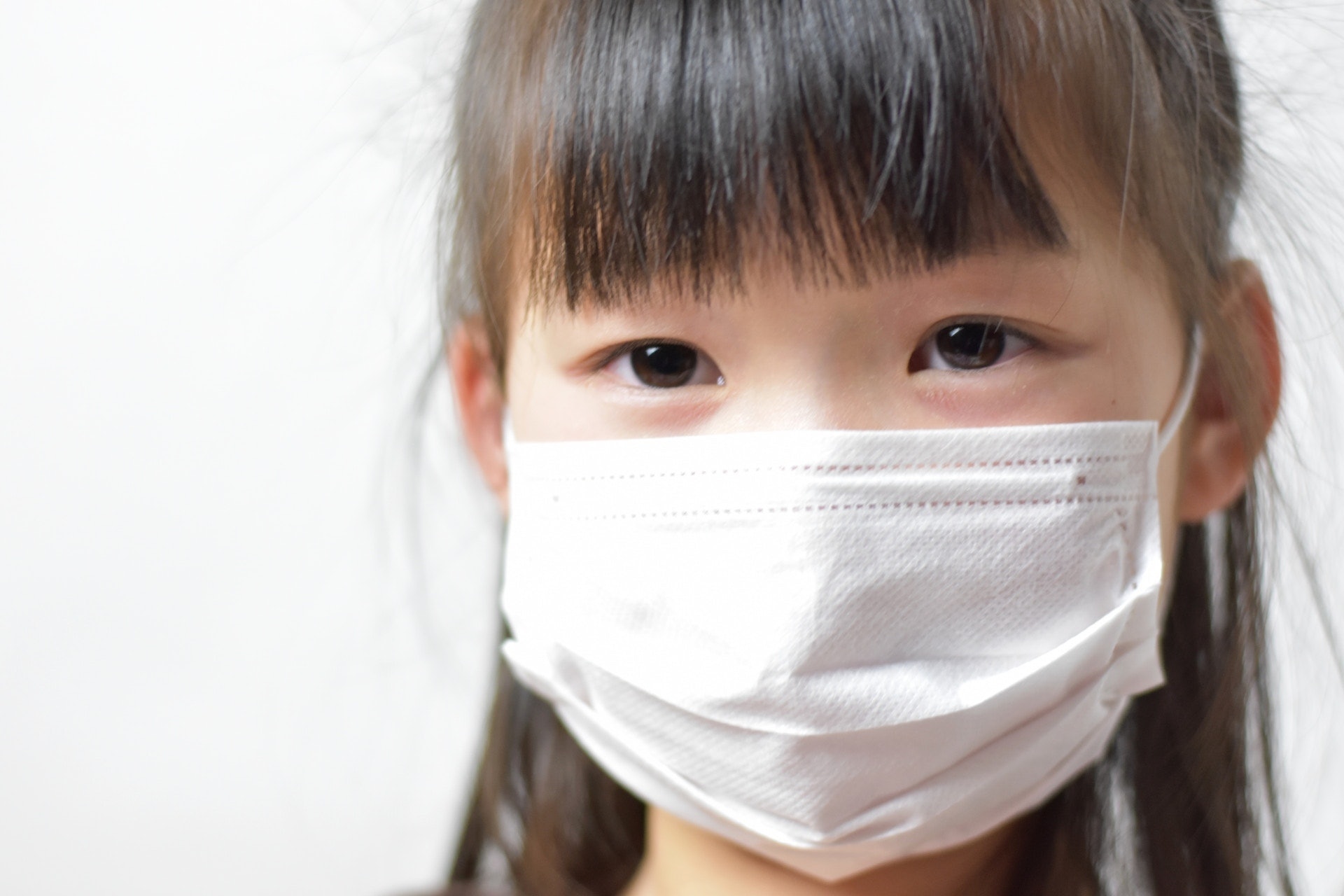
Paediatrician Dr. Chan Yan-wing advised everyone to wear a mask when going out.
What is true recovery?
From a clinical perspective, Dr. Chan has also seen cases where children's symptoms have cleared for two to three days, tested negative on rapid tests, but then tested positive again two days later. Therefore, it is recommended to do a rapid test first after symptoms have subsided. If it turns negative, for caution, do another rapid test three to four days later. If it is still negative, then it will be considered fully recovered.
Having phlegm doesn't necessarily mean you have Long Covid.
Regarding individuals who have recovered but are experiencing phlegm stuck in their throat that they cannot cough up, Dr. Chan stated that this is a symptom of the virus not being fully cleared. He explained, "If there is phlegm that can be coughed up, and the situation is not too severe, without affecting basic lung function, it's just like when we have a bit of leftover phlegm after a common cold, with no long-term impact. This isn't considered long COVID symptoms. Long COVID symptoms are persistent, such as the sense of smell and taste taking longer to recover, or lung-related issues. However, if a patient has had a severe infection with a significant impact on their lungs, respiratory symptoms will naturally take longer to gradually recover."

Paediatrician Dr. Chan Yan Wing.
Media Link: https://bit.ly/38fXmmF