

IgE Allergy Test Faber®CAAM Test (Latest 3rd Generation)

The latest generation of immunoglobulin E (IgE) allergy testing, Faber®, a breakthrough allergen molecular testing technology.
Combining molecular and nanotechnology for multiplexed specific immunoglobulin E (IgE) detection, testing for allergen molecules that directly cause allergic reactions, greatly improving test accuracy.
Suitable for: Detectable from 6 months old

Only 2-3ml of blood

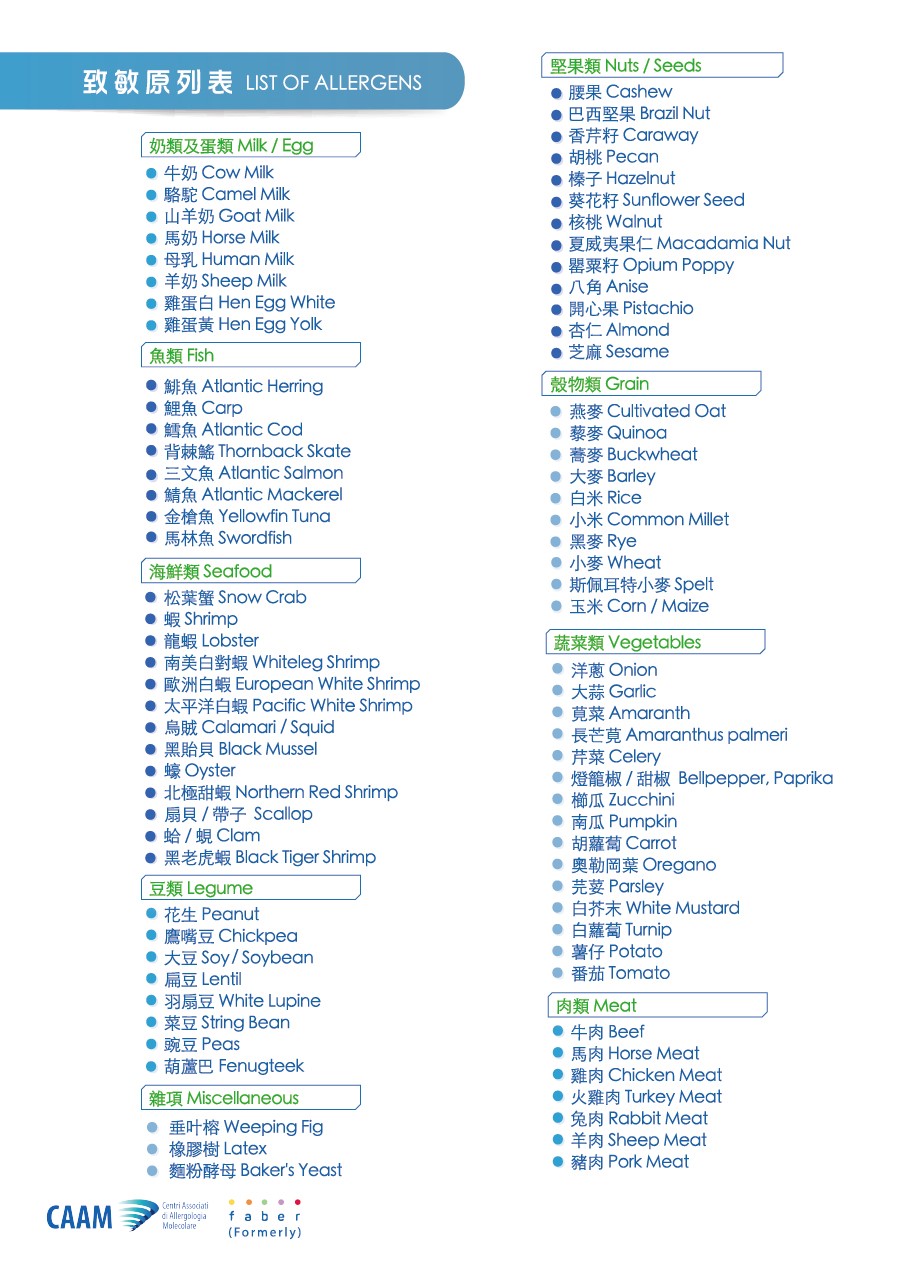
Test 172 allergens (295 allergen molecules)

The sample was tested and analysed by the Italian CAAM team.
Test unaffected by medication

EU IVD approved allergy test

Approximately 10-20 working days for the report.
Many people do not fully understand allergens; even if they know what they are allergic to, they often believe it is difficult to avoid them completely.Unlike previous allergy tests, third-generation allergy testing can detect over 90% allergens, helping you identify the true source of your allergy so that you can treat the condition effectively and provide relief from eczema.
The purpose of allergy testing is not simply to identify allergens, but more importantly, to teach patients how to understand and effectively avoid them.
According to the latest guidelines on allergy testing applications from the Hong Kong Society of Allergy and Clinical Immunology, the IgE test is a widely used allergy test, and IgE blood tests are also used as a diagnostic basis for anaphylactic shock.
Many clients who have undergone allergy testing have stated they have avoided seafood and beef because numerous reports suggest they are the primary culprits for eczema. However, the results of third-generation blood tests for allergens are often unexpected.
IgE allergy testing for children
For example: A mother strictly limits her seven-year-old daughter's diet. She firmly believes apples are healthy and insists her daughter eats one every day, but allergy tests reveal the daughter is severely allergic to apples!
Faber® (CAAM Test) Allergen List:

ALEX3® IgE Allergy Test

To find the root cause of allergies
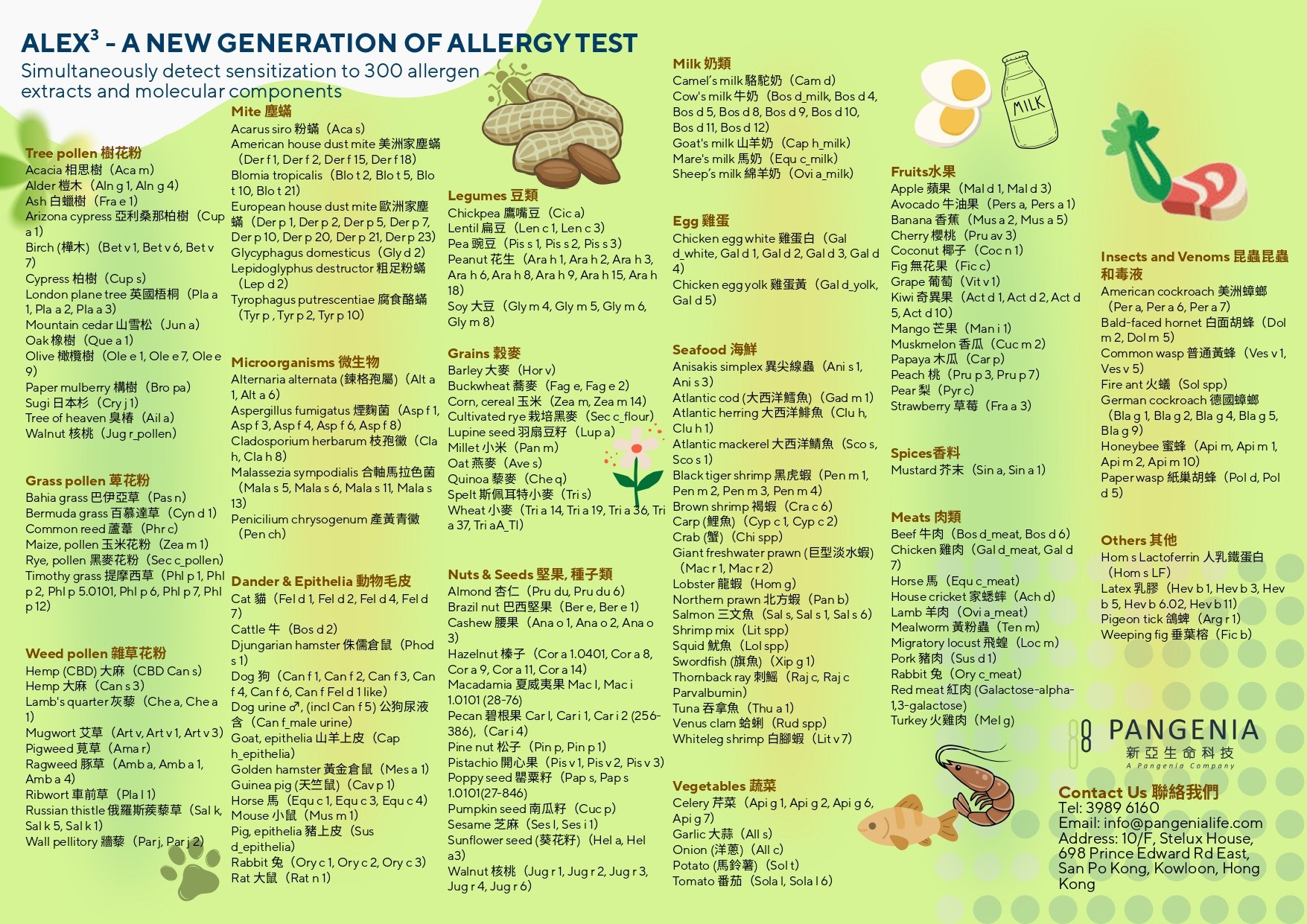
ALEX3 can detect up to 300 airborne and food allergens simultaneously.
original, covering common ones in Europe, Southeast Asia, mainland China, and Hong Kong
Allergens and molecular components, allowing doctors to quickly establish personalised care for patients.
Precision treatment solutions.
- Only 2-3ml of blood
- Detects up to 300 food and environmental molecular allergens
- The samples were tested and analysed by a Hong Kong-based team.
- Report within 7 working days.
- EU IVD approved allergy testing
- Proprietary CCDs Inhibitor technology filters out factors that cause false-positive results
Who is suitable for the IGE ALEX3® allergy test?
- To improve the condition of patients suffering from various allergies, such as rashes, eczema, itching, allergic rhinitis, and asthma.
- Identify the causes of food and environmental allergies
- For children who are still developing and whose immune systems are not yet fully mature, identify the true allergens and avoid excessive dietary restrictions.
- Avoid unnecessary or ineffective drug treatment
ALEX3® Allergen List:


Is it suitable for babies to have an IgE allergy test?
- One or more allergy-induced symptoms, such as eczema, rhinitis (allergic rhinitis), asthma, urticaria (hives/nettle rash), conjunctivitis (eye allergy), food allergic reactions including anaphylaxis, abdominal pain and diarrhoea, insect or latex allergies, etc.
- Identify the causes of food and environmental allergies
- Allergic symptoms that are difficult to improve even with dietary restrictions
- Identifying the true allergens and avoiding excessive dietary restrictions in children whose immune systems are still developing and not yet robust.
- Have a family history of allergies
- To understand if you might have any allergies before travelling, studying abroad, starting a new job, or taking up a new activity.
- Avoid unnecessary or ineffective drug treatment
Common allergens in children
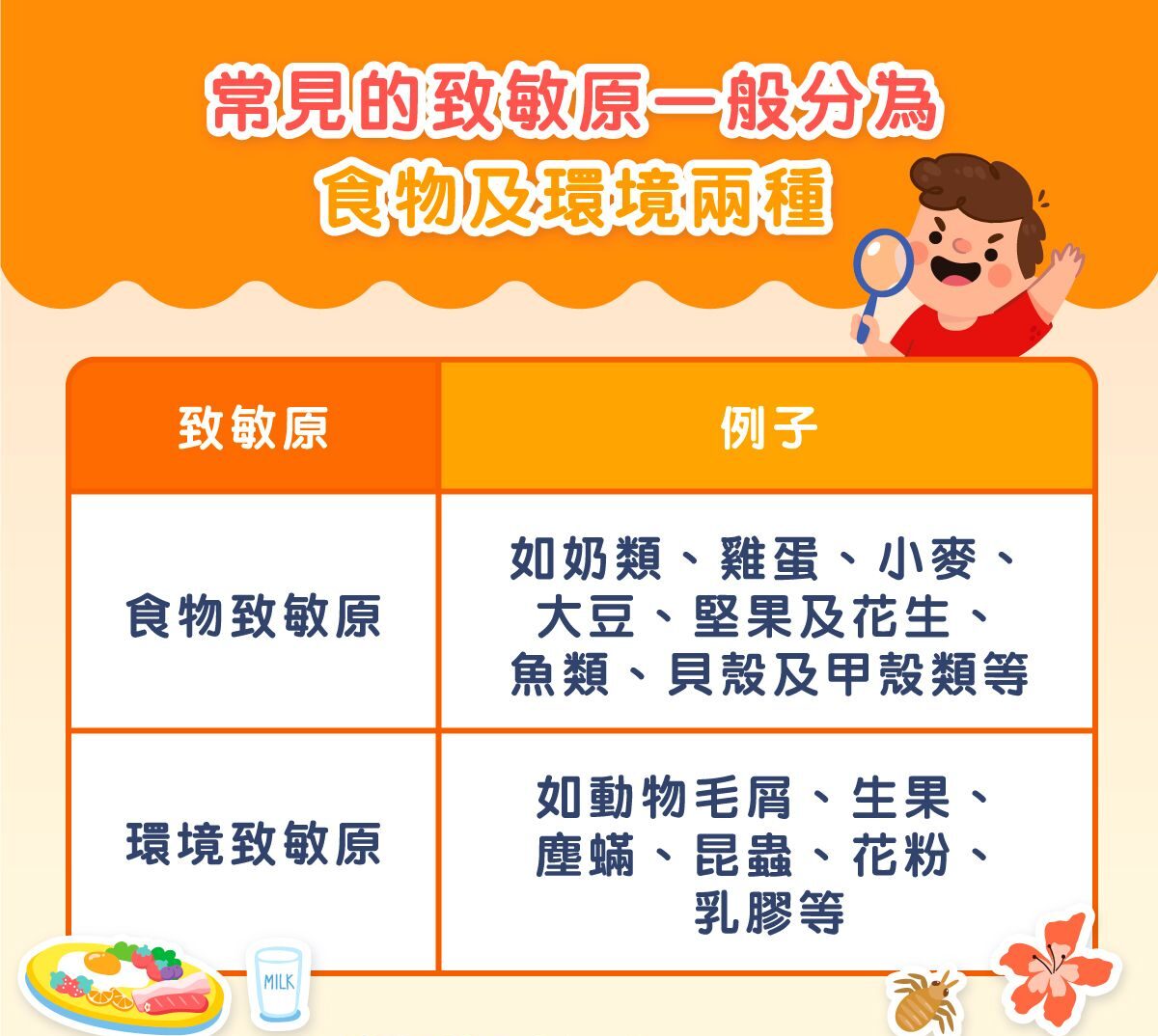
Allergens vary from person to person, but generally speaking, food, the environment, and contact are the three main sources of allergies.
1. Food allergens
In Hong Kong, seafood is the most common food allergen among adults, with approximately 33% allergy cases linked to seafood; the most common food allergens among children are eggs and dairy products.With over 100 types of food allergens, it is difficult for people with allergies to accurately identify the source of their reaction on their own. To determine the cause of their allergy, they may consider undergoing comprehensive allergy testing; in particular, those at high risk of anaphylactic shock must undergo this testing at an early stage to avoid food allergens.
2. Environmental allergens
Environmental allergens include dust mites, cockroaches, cat hair, dog hair and mould, amongst others, with dust mites being the most common environmental allergen.Dust mites are often found in mattresses, pillows, bed linen, carpets, soft toys and sofas.To effectively reduce dust mite allergens, indoor humidity should be lowered to below 50% to disrupt the dust mites’ living environment and kill them.Using dust mite-proof covers on mattresses and pillows is an effective way to reduce patients’ exposure to allergens; as these are made from tightly woven synthetic fibres, it is advisable to choose dust mite-proof covers that have been clinically proven to be effective.
3. Contact allergens
Contact allergens include skincare products, cosmetics, shaving creams, pigments, ointments, perfumes, textile dyes, gloves, leather, furniture, air fresheners, face masks, nappies, printing inks, and silverware, among others. After using products containing allergens, individuals with allergies will develop itchy rashes on their skin.
A patch test for 30 contact allergens helps patients understand the causes of their allergies and avoid them.
Some patients self-medicate after experiencing allergic reactions, and when their symptoms subside, they neglect further treatment. Alternatively, after taking prescribed Chinese or Western medications, their sensitive symptoms may be relieved, but they relapse after stopping the medication for a period, with their condition recurring. Undergoing allergy testing, identifying and avoiding allergens, and controlling allergic symptoms are the fundamental methods for a cure.
Parents should choose centres that offer immunoglobulin E (IgE) allergy testing, which is a blood test under the guidelines of the Hong Kong Medical Association and the Hong Kong Allergy Association.
Why are molecular allergen components important?
Taking milk as an example, it turns out that milk contains as many as 12 different allergen molecules. Only 3 of these are more likely to cause allergic reactions, and some of these allergen molecules break down when heated.
For patients sensitive to milk, if antibodies are detected only against these two specific milk proteins, simply heating the milk before consumption can significantly reduce the risk of triggering an allergic reaction.
From this, it can be seen that patients with milk allergies do not need to completely abstain from all dairy products after allergen molecule testing for their allergies.
Causes of eczema and allergies in children?
The causes of childhood eczema and allergies are diverse, with genetics being one of them. Other common allergens such as dust mites, animal dander, clothing, the home environment, and air pollution can also trigger eczema.
What allergy tests are suitable for children with eczema?
If you suspect you have allergies or want to identify allergens, you might consider an IgE blood test. This is a more accurate serum test where a small amount of blood (1-2ml) is drawn from the patient and sent to a laboratory for analysis. Results are usually available in one to two weeks. Additionally, IgE tests developed in recent years can detect over a hundred allergens at once. If you have any concerns, it's advisable to consult with a doctor first, rather than trying unproven remedies.
When having an allergy test, what should you pay attention to?
- There is no need to fast before the test and you can maintain your usual eating habits.
- Avoid eating for 2 hours before having blood taken, to prevent affecting the results.
- If the subject has abstained from a certain food in the past four to six weeks, it may affect the results of a specific food allergy test.
- If the subject has taken steroid medication or immunosuppressants, this may affect the test results.
- People with fussy eating habits or who are fasting may affect the test results.
- If you have any questions, please consult your doctor.
You can find out from an allergy test...
- The baby's IgE immune system reacting to allergens
- Exclusive IgE Allergy Test Report for Baby
- 1-to-1 paediatric specialist consultation, with advice on how to effectively avoid allergens.