
Children's healthy eating guidance
Child weight management
Parents should pay attention to their children's weight
According to a survey conducted by the Hong Kong Government's "Community Physical Fitness Programme" survey, the results show that about a quarter of children in Hong Kong are overweight or obese. In addition, statistics from the Department of Health for the 2018/19 school year show that approximately one in five primary school students are overweight or obese. Therefore, parents should pay attention to their children's weight, encourage them to develop exercise habits, engage in physical activity weekly, establish a healthy lifestyle, and maintain a standard weight for children using correct methods.
Child weight standards
Whether a child is underweight or overweight depends on their stage of development (height) and gender.First, measure your child’s height and weight, then compare these with the reference data below to determine whether their weight is within the normal range. Being underweight can lead to a weakened immune system, brittle bones and fatigue.Being overweight can lead to health problems such as type 2 diabetes, heart disease and certain cancers. If a child’s weight deviates significantly from the standard (by more than 5%), they should be seen by a doctor for regular check-ups.
| 男 | A weight (kg) below this reference weight is considered underweight | Weight (kg) above this reference weight is overweight |
|---|---|---|
| Child's height (cm) | ||
| 75 | 7.5 | 11.3 |
| 77 | 7.9 | 11.8 |
| 79 | 8.2 | 12.3 |
| 81 | 8.6 | 12.9 |
| 83 | 8.9 | 13.4 |
| 85 | 9.3 | 13.9 |
| 87 | 9.6 | 14.4 |
| 89 | 10.0 | 15.0 |
| 91 | 10.3 | 15.5 |
| 93 | 10.7 | 16.1 |
| 95 | 11.1 | 16.6 |
| 97 | 11.5 | 17.2 |
| 99 | 11.9 | 17.8 |
| 101 | 12.3 | 18.4 |
| 103 | 12.7 | 19.1 |
| 105 | 13.2 | 19.7 |
| 107 | 13.6 | 20.4 |
| 109 | 14.1 | 21.2 |
| 111 | 14.6 | 21.9 |
| 113 | 15.2 | 22.8 |
| 115 | 15.7 | 23.6 |
| 117 | 16.3 | 24.5 |
| 119 | 17.0 | 25.5 |
| 121 | 17.6 | 26.5 |
| 123 | 18.4 | 27.5 |
| 125 | 19.1 | 28.6 |
| 127 | 19.9 | 29.8 |
| 129 | 20.7 | 31 |
| 131 | 21.6 | 32.3 |
| 女 | A weight (kg) below this reference weight is considered underweight | Weight (kg) above this reference weight is overweight |
|---|---|---|
| Child's height (cm) | ||
| 75 | 7.3 | 11.0 |
| 77 | 7.7 | 11.6 |
| 79 | 8.1 | 12.2 |
| 81 | 8.5 | 12.7 |
| 83 | 8.9 | 13.3 |
| 85 | 9.2 | 13.9 |
| 87 | 9.6 | 14.4 |
| 89 | 10.0 | 15.0 |
| 91 | 10.3 | 15.5 |
| 93 | 10.7 | 16.0 |
| 95 | 11.0 | 16.5 |
| 97 | 11.4 | 17.1 |
| 99 | 11.8 | 17.6 |
| 101 | 12.1 | 18.2 |
| 103 | 12.5 | 18.8 |
| 105 | 12.9 | 19.4 |
| 107 | 13.3 | 20.0 |
| 109 | 13.8 | 20.7 |
| 111 | 14.2 | 21.3 |
| 113 | 14.7 | 22.1 |
| 115 | 15.3 | 22.9 |
| 117 | 15.8 | 23.7 |
| 119 | 16.4 | 24.7 |
| 121 | 17.1 | 25.7 |
| 123 | 17.8 | 26.7 |
| 125 | 18.6 | 27.9 |
| 127 | 19.4 | 29.1 |
| 129 | 20.2 | 30.4 |
| 131 | 21.2 | 31.7 |
Why do children need to manage their weight?
The reason is that when the body is overweight, excess fat can accumulate, increasing the likelihood of developing diseases such as diabetes, high blood pressure, cardiovascular disease, gallstones, and certain cancers (e.g., colon cancer). These types of problems typically occur in adults, but many can be traced back to bad habits formed in childhood that led to obesity and being overweight.
Paediatric dietetics

Signs of malnutrition in children
Symptoms of child malnutrition manifest as failure to gain weight or weight loss, with gradual disappearance of subcutaneous fat. This typically occurs in the following order: abdomen, chest and back, waist, and then upper and lower limbs, and cheeks.
Severe cases result in muscle atrophy, delayed motor development, intellectual disability, poor immune function, and susceptibility to indigestion and various infections.
Children suffering from long-term malnutrition are mostly short and thin, slow to react to their surroundings, reluctant to be active, and tend to withdraw from social interaction. Their hair is often dry and sparse, their skin is wrinkled and dry, their mouths may be inflamed with cracked corners, their tongues appear smooth and bare, their limbs are cold, their body temperature is lower than normal, and they are prone to various infections and inflammations.
Parents should observe closely and consult a doctor as soon as possible if early signs of malnutrition are detected in their children.

Severe malnutrition can have a significant impact on a child's development, affecting them both physically and mentally. **Physical Development:** * **Stunted Growth:** This is perhaps the most visible consequence. Children can fail to reach their potential height and weight, a condition known as stunting. This is often irreversible. * **Weakened Immune System:** Malnourished children are highly susceptible to infections and diseases, and recovery from illness is much slower. This can lead to a vicious cycle of illness and malnutrition. * **Impaired Organ Development:** Vital organs like the brain, heart, and lungs may not develop properly, leading to long-term health problems. * **Muscle Wasting and Loss of Body Fat:** This results in children appearing frail and thin. * **Bone Development Issues:** This can lead to skeletal deformities and increased risk of fractures. **Cognitive and Mental Development:** * **Impaired Brain Development:** The brain is rapidly developing in early childhood. Malnutrition, particularly a lack of essential nutrients like iron, iodine, and protein, can severely hinder this development. This can lead to: * **Lowered IQ:** Children may have reduced cognitive abilities. * **Learning Difficulties:** They struggle to learn in school and process information. * **Developmental Delays:** This can affect motor skills, language development, and social skills. * **Behavioural Problems:** Malnourished children may exhibit increased irritability, lethargy, anxiety, and have difficulty concentrating. * **Reduced Social and Emotional Development:** They may struggle with social interactions and forming attachments due to their poor health and cognitive impairments. **Long-Term Consequences:** The effects of severe malnutrition in early childhood can be lifelong and have a profound impact on an individual's life chances: * **Reduced Educational Attainment:** Difficulty learning can limit their opportunities for further education. * **Lower Earning Potential:** Cognitive and physical impairments can make it harder to secure employment and perform well in the workplace. * **Increased Risk of Chronic Diseases:** They may be more prone to developing chronic health conditions later in life, such as diabetes and heart disease. * **Intergenerational Impact:** Malnourished mothers are more likely to give birth to low-birth-weight babies, perpetuating the cycle of malnutrition. In summary, severe malnutrition is a critical issue that can derail a child's development from its earliest stages, affecting their health, learning potential, and overall quality of life well into adulthood.
1. Intellectual disability
Nutritional deficiencies in children, such as lack of iron, protein, zinc, iodine, and vitamins B1 and B6, can to some extent affect their intelligence, significantly impacting their normal learning and daily life.
Short in stature
In the early stages of malnutrition, a child's height is not significantly affected. However, as the severity of malnutrition increases, it can lead to listlessness, slow reactions, lack of appetite, and a slowing of bone growth. The child's height will fall below that of their peers, and they will appear relatively short.
Low resistance
Children who are malnourished will have weaker immune functions and lower resistance, making them prone to illness. They are susceptible to various infections such as recurrent respiratory infections, pneumonia, tuberculosis, thrush, otitis media, and urinary tract infections. If anyone in the household catches a cold or falls ill, the child is easily infected, leading to a vicious cycle.
Reduced vision
Nutrient deficiencies can easily lead to a lack of vitamin A, which is fundamental for the normal development and functioning of vision. This can cause slower and reduced production of rhodopsin in a baby's eyes, leading to a decline in vision, and in severe cases, even night blindness.
4. Emotional instability
Children suffering from malnutrition, particularly due to physical reasons, are susceptible to mockery, which can cause significant psychological harm. Over time, these children may become unsociable, prone to temper tantrums and anger, and experience depressive emotions.
5. Poor mental state
Children suffering from malnutrition generally do not have a good state of mind. They experience poor sleep quality at night, prone to dreaming and insomnia, lack energy during the day, and find it difficult to concentrate, which affects their studies. Over time, this can lead to feelings of low self-esteem in the child.
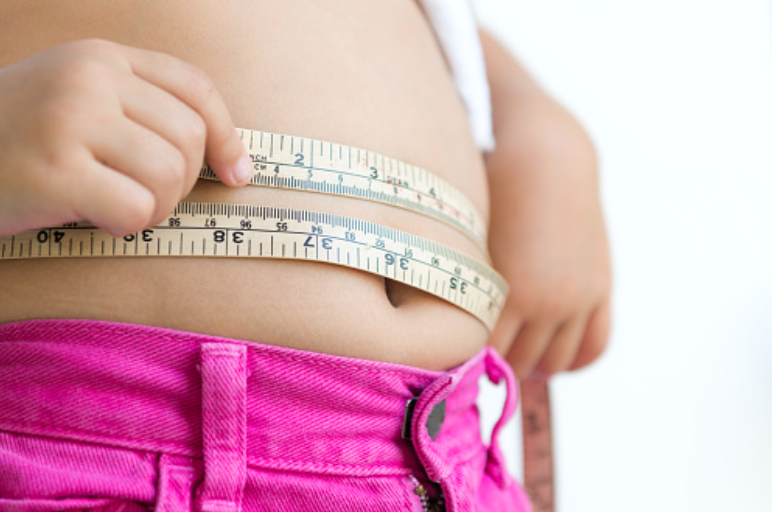
What is used to measure if a child is obese?
Childhood obesity refers to the accumulation of excessive fat in a child’s body, leading to health problems. To assess whether a child is obese, one can evaluate whether their weight is in the normal range for their height; if a child’s weight, after being adjusted for height, exceeds 120% of the weight median, they are considered obese.
|
| ||||||||||||||||||||||||||||||||||||||||||||||||||||||||||||||||||||||
For males over 175cm tall / for females over 165cm tall, BMI (Body Mass Index) should be used instead to assess obesity. If the BMI is 23 or above, it is defined as overweight/obese.
Source: Hong Kong Birth Cohort Study 1993
What is used to measure if a child is underweight?
How to calculate children's BMI
The BMI algorithm for children is the same as for adults, with the formula being: weight (kg) ÷ height (m) squared. However, a child's BMI data needs to be compared with that of children of the same age and sex to determine if it is within the normal range.
Understanding children's BMI
Here is the interpretation of the percentile rank, comparing a child to other children of the same age and sex:
BMI percentile 95 = obese
BMI percentile 85-95 = overweight
BMI percentile 5-85 = normal
BMI percentile below 5 = underweight
A child's BMI is best used solely for observing their growth trends and as a reference point for comparison with other children of the same age and sex. BMI is not always accurate; for instance, children going through puberty may gain weight more easily, and children with more muscle mass will have a higher BMI. Additionally, children with a low BMI percentile can still have a high body fat percentage. Therefore, if you have concerns, please consult a doctor and do not attempt to control your child's weight on your own.
The relationship between childhood obesity and genetics?
Obesity is an issue that requires our attention, particularly as there is a genetic component to obesity. For example, if both parents are obese, the likelihood of their children being obese is as high as 70%; therefore, families with a genetic predisposition to obesity should be particularly mindful of maintaining a healthy weight.
Obesity is often linked to genetics. According to statistics, the incidence of obesity among children whose parents are both of normal weight is 10%; where one parent is obese, the incidence among their children is 50%; and where both parents are obese, the incidence among their children is as high as 70%.Identical twins, when raised in the same environment, tend to have similar body weights; even when raised in different environments, the difference in their body weights is smaller than that between fraternal twins.
Obese patients not only have genetic predisposition to obesity, but also to the distribution of body fat and bone structure. This genetic tendency towards obesity is also reflected in the increase in the number and/or size of fat cells.