Search
兒童言語治療

Children's speech therapy

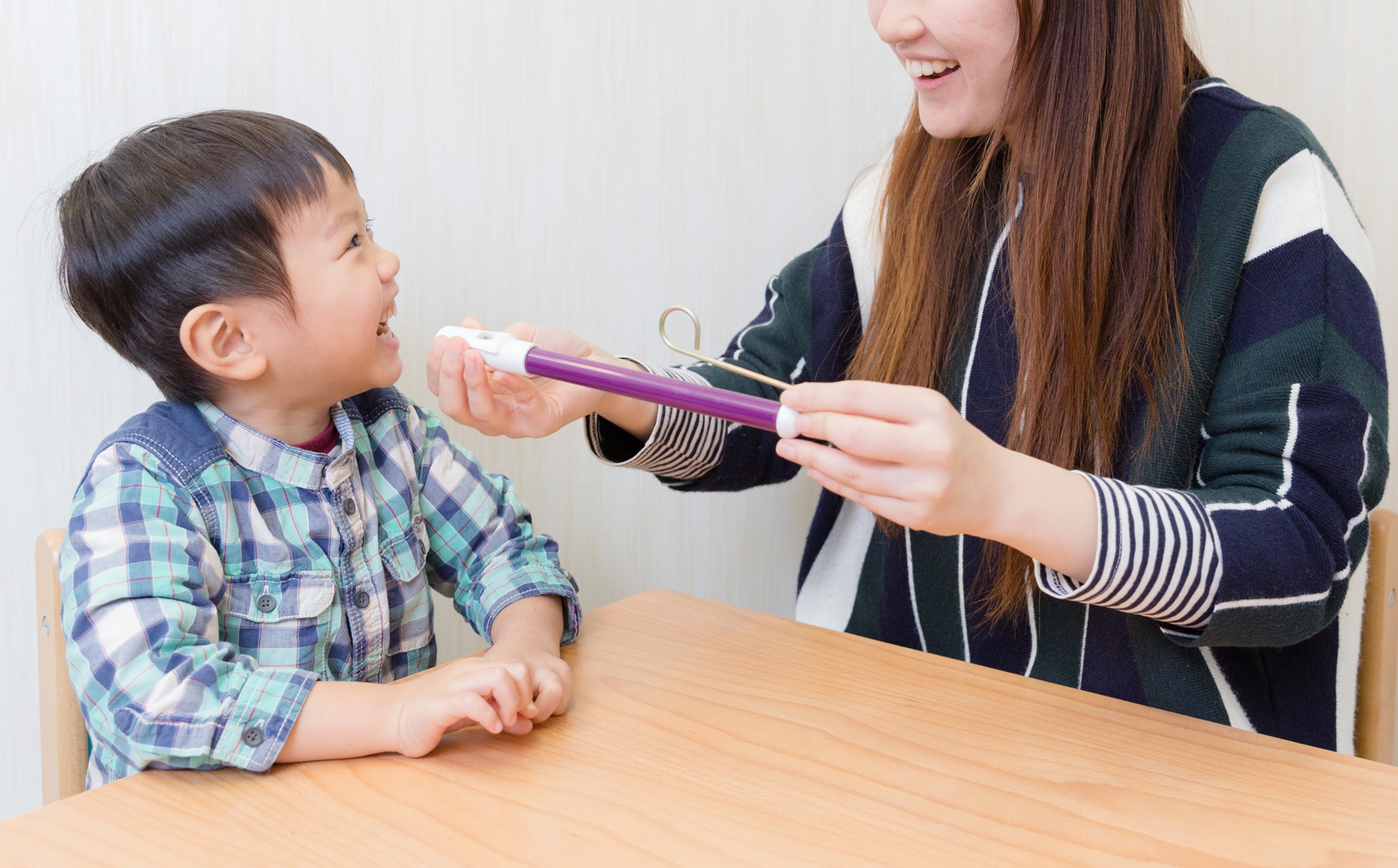
Speech therapists assess and diagnose children's language and articulation skills, developmental language delay, stuttering problems, voice health, oral motor function, and swallowing ability. They then provide relevant speech therapy, offering individual training guidance based on the child's performance. Children have different language development goals at each stage, and the signs of developmental language delay can indicate whether a child requires paediatric speech therapy. If a child exhibits more developmental language delay characteristics, it is recommended that parents consult a paediatric specialist or schedule a comprehensive child development assessment. Our speech therapists will provide appropriate paediatric speech therapy recommendations, training strategies, and recommended materials based on assessment results, medical history, and observations of the child. Early intervention can significantly improve effectiveness.

Our centre will contact you to confirm the details before confirming the reservation.
Required

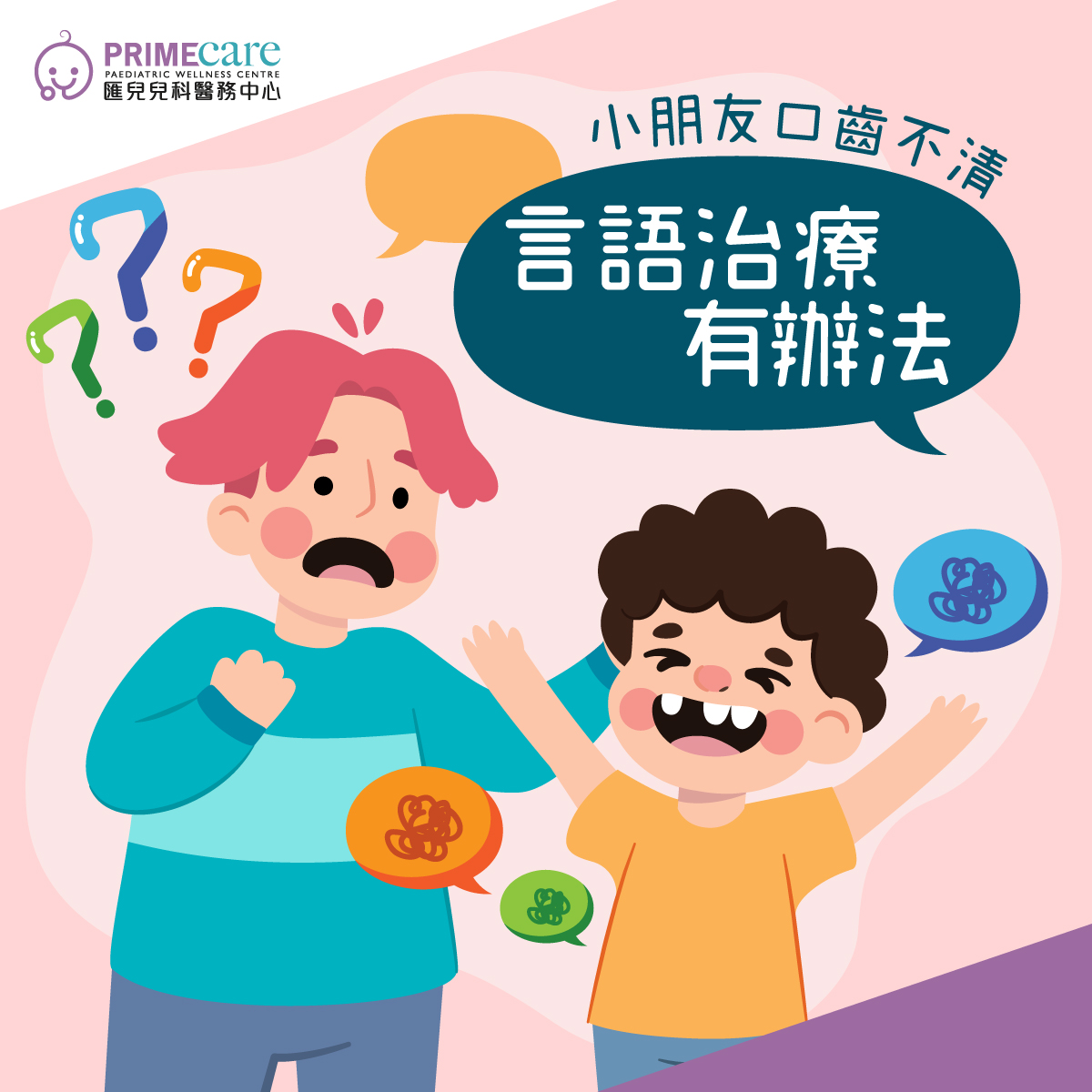
Speech therapy can help children who have difficulty speaking clearly.

言語治療

There are many reasons for delayed language development. Aside from innate factors such as intelligence and genetics, environmental influences (such as bilingual or multilingual households, or lack of language stimulation) can also affect a child's language development. Parents can refer to the following indicators to see if their child's language development is on par with children of the same age:
語言發展遲緩

AgeCharacteristics of Developmental Language Disorder
Two years oldStill unable to say words
– Unable to understand and respond to questions (e.g., "Do you eat apples?", "Do you have a ball?")
Three years oldUnable to speak full sentences
Unable to understand verbal instructions (e.g. "Go to the toilet and get Dad a fizzy drink").
Four years old– Failed to answer why the problem occurred, failed to clearly explain the cause and effect
Unable to tell a simple story
Five years old– Still makes frequent errors in vocabulary or grammar when speaking
– Unable to clearly narrate life events

If your child exhibits the above characteristics, it is recommended to consult a paediatric specialist or schedule a detailed child development assessment.

Is the child's speech unclear because of tongue-tie?

A child's unclear pronunciation may be due to problems with uncoordinated oral motor function, while hearing and intelligence are also factors affecting a child's pronunciation development.

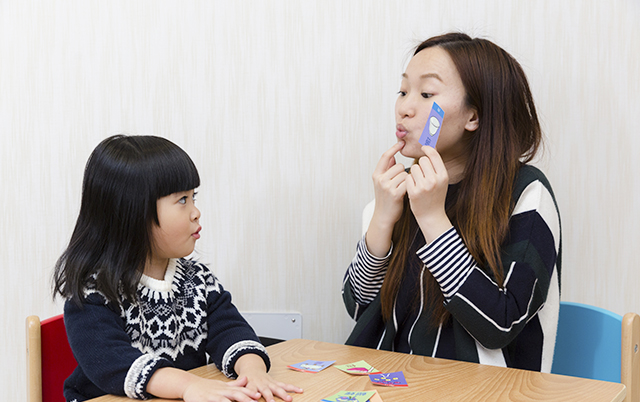
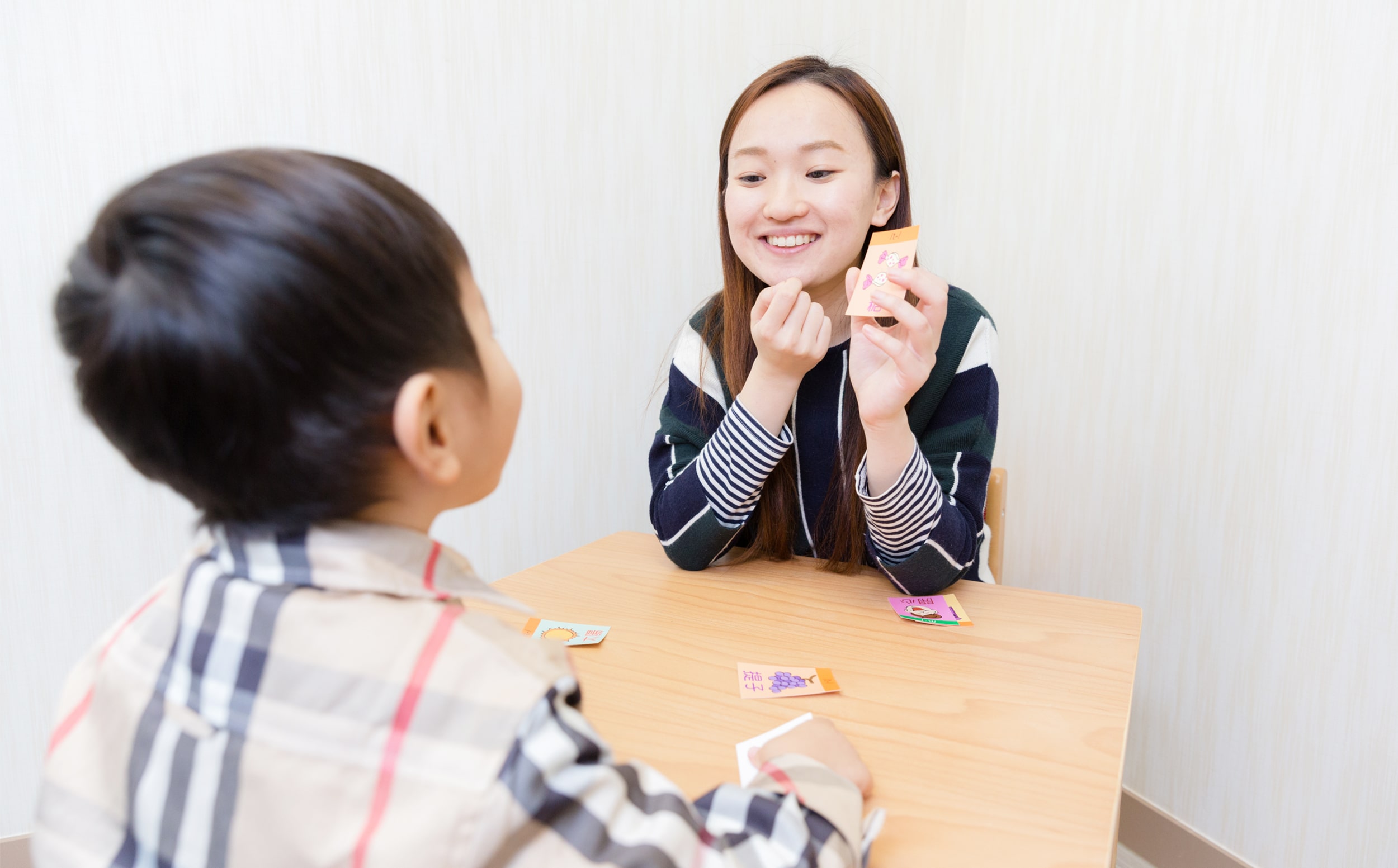
If parents notice their child making pronunciation errors, they can try facing the child (so they can clearly see the parent's mouth shape when speaking) and then demonstrate and guide the child to imitate the correct pronunciation with exaggerated mouth movements. If the error cannot be corrected, the child can be taken for a speech assessment.

In addition to assessing children's speech errors, speech therapists assess the oral motor function of the child's jaw, lips and tongue, as well as their speech discrimination ability, and then provide individual training guidelines based on the child's performance.
兒童發音障礙

The voice is an important tool for communication and can be problematic for both adults and children. Common voice characteristics include:
Hoarse voice
To sing out of tune, lose one's voice
Your throat easily feels fatigued or sore when speaking
Shortness of breath when speaking
– Volume too low or too high
– Speaking pitch is too high or too low
Speaking with an overly nasal tone
 

Voice disorder

There are many causes of vocal cord disorders; in addition to vocal cord problems caused by illness, daily voice use and vocal care habits also affect the quality of the voice.
 
Common causes include:
Vocal cord strain caused by prolonged excessive use of the voice
– Improper vocalisation method
– Frequent forceful coughing
– Unhealthy lifestyle habits (e.g., chronic lack of sleep, smoking, and excessive alcohol consumption)
– Acid reflux
Post-nasal drip
Viral infection
 
Our speech therapists assess patients' current vocal conditions through clinical evaluation, then establish appropriate treatment plans for them. If you are interested in learning more, please contact us.
 
兒童言語治療評估
Mum... Mummy, c-c-can you buy me a car?

If children pause inappropriately or repeat words or phrases multiple times while speaking, it may indicate a stammering problem. Experts have not yet reached a consensus on the causes of stammering, and it may be the result of the interplay between physiological factors (such as brain coordination issues and genetics) and psychological factors (such as stress). In addition to paying attention to the speed and fluency of a child's speech, parents should also observe whether the child exhibits peculiar behaviours such as blinking or rubbing their fingers, which may indicate that their stammering is influenced by psychological factors.

Speech therapy can improve fluency for children who stutter, including helping them to master appropriate speech rhythm and strengthen the connection between sounds. Parents should listen patiently to their children, giving them ample time to express themselves, and reduce their stress to prevent them from refusing to communicate due to fear of ridicule or lack of confidence.
Common social issues include reluctance to interact with strangers, an inability to appropriately initiate or maintain conversations, a weaker ability to understand facial expressions or emotions, and so on. If not managed and followed up appropriately, this can further affect a child's emotional and self-awareness development, and also impact language learning, for example, abstract emotional vocabulary.
A child's oral motor skills are primarily controlled and coordinated by the muscles of the upper and lower jaw, lips, tongue, and cheeks. Insufficient oral motor activity and coordination can affect a child's language expression, speech clarity, and swallowing ability.

If a child exhibits the following symptoms, they may have an oromotor dysfunction:

- Reduced ability to control saliva, leading to drooling.
An unusual aversion to food, very sensitive mouth
Low pronunciation accuracy
Reduced ability to chew food when eating, unable to chew meat slices independently


Speech therapists will conduct clinical assessments of a child's oral muscle sensitivity, tone, and motor coordination. Based on the assessment results, they will establish an appropriate treatment plan for the child, utilising professional oral motor training tools and therapeutic techniques to address any oral motor functional issues.
Communication methods for the hearing impaired:

– Sign language
All electric
– Dactylonomy
– Tonal Auditory Method
Auditory Verbal Therapy
Audiological speech therapy

No single method is best. When choosing a rehabilitation model, parents should select the one that is most suitable for their child. If you are interested in learning more, please contact our speech therapists.
Neurogenic communication disorders are caused by brain lesions, degeneration, orCongenital neurological abnormalitycommunication problems caused by damage to the areas of the brain that control language and mouth muscle activity. Common conditions include stroke, dementia, Parkinson's disease and brain injury.
 
Neurogenic communicative disorders can broadly be divided into the following types:
        Aphasia: Refers to varying degrees of impairment in the four areas of language production, language comprehension, reading, and writing.
        Dysarthria: Difficulties with pronunciation, vocalisation changes, and poor breathing coordination due to poor muscle function.
        Apraxia of speech: Patients experience problems with speech sound errors and fluency due to impaired neuro-muscular control of speech.
        Cognitive communication disorder: Due to extensive cognitive impairment, patients not only exhibit basic symptoms of aphasia, but also experience difficulties with attention, memory, and judgment. Characteristic features include irrelevant responses and talking to oneself.


Speech therapists need to understand the patient's medical history, conduct a comprehensive assessment, and establish personalised training strategies. Early treatment can greatly improve effectiveness.


Characteristics of neurogenic communication disorders:
Difficulty finding words (inability to name objects)
2: Grammar Question ("I want to eat rice" –> "I rice")
3: Impaired comprehension (doesn't answer the question asked)
4: Weak oral muscles (slurred speech)
5: Mispronunciation (reading "ice cream" as "ice knife")

Children's speech therapy

The centre's Speech Therapists diagnose and provide relevant treatment for children under 12 years old in areas such as language and articulation skills, voice health, oral motor function, and swallowing abilities. The centre offers services in Cantonese, English, and Mandarin.

The content includes: understanding the child's background and developmental progress, conducting standardised scales or other tests (including the Reynell Developmental Language Scales, Symbolic Play Skills Test, Hong Kong Cantonese Oral Language Scale, Cantonese (Hong Kong) Language Expression Scale, Hong Kong Cantonese Pronunciation Test, RDLS-III, CELF-P, etc.), assessing the child's language comprehension and expression abilities, articulation development and oral motor function, etc., in order to set the most appropriate treatment goals.

Recommended for:
– Has difficulty with verbal comprehension
Difficult to understand abstract words or complex sentences
Inaccurate pronunciation, unclear speech, and speaking content irrelevant to the situation

8-12 months
• Failed to pay attention to what others were saying
Unable to understand simple instructions, such as: "Give to Daddy", "Bye-bye", with gestures or environmental cues.
• Unable to make different sounds or a series of ten sounds to indicate needs
• Failed to attempt to imitate the word

13-14 months
Unable to say words
• Unable to distinguish the names of multiple familiar people, object names, body parts
• Unable to spontaneously say one or two meaningful words, e.g. "dada", "mama"
Unable to begin combining words, for example: "go-street street", "eat-biscuit biscuit"

25-30 months
• Unable to understand "Do you want it?" or "Do you have it?"

31-36 months
Unable to use more complete sentences for daily communication, such as "I eat biscuit".

Age suitability

Children aged 0-12.

Common Questions

From the perspective of brain development stages, the period before the age of five or six is generally considered a critical window for language acquisition. If language is not grasped well, it will be more difficult to communicate with others in the future, and it will also affect cognitive development, as thinking also involves language.

We recommend parents have their children assessed and treated early!

Parents can observe lessons together to understand their child's learning stage and situation.

We recommend that the treatment programme be conducted at our centre, where our professional speech therapists will train the children to achieve the best possible results.

Scroll to Top

Keep up with the latest information on the epidemic and children's health?
Subscribe to our regular emails now

To be completed
建立注射疫苗時間表
即時預約
whatsapp預約
網上預約