

ASQ Infant and Toddler Development Assessment (0-5.5 years)
What is the ASQ Early Childhood Development Assessment?
ASQ (Ages and Stages Questionnaires) was developed by Dr. Diane Bricker, a renowned psychologist, and her team at the University of Oregon's Center on Human Development. It is primarily used to assess the development of infants and young children in gross motor skills, fine motor skills, communication, problem-solving, personal-social, and adaptive domains. It can effectively identify developmental delays in children aged 0-5.5 years, helping parents understand their child's developmental progress and educating parents about infant and toddler development to help children reach their full potential!
The American Academy of Pediatrics recommends regular developmental screening assessments for all children aged 0-5½ years. Based on the screening results, doctors can develop targeted treatment plans.
Age suitability
1-month-old infant – 5½-year-old child
Scope assessment
| Scope of development | Definition |
| Communication Skills Development | Refers to the development of a child's receptive and expressive language abilities. |
| Gross Motor | The development of a child's hands, feet, and other muscle coordination, such as the ability to sit, stand up, crawl, walk, run, and jump. |
| Fine motor skills | Fine motor development refers to the development of coordination and dexterity in a child's hands and fingers. |
| Problem Solving Skills Development | Problem-solving skills development refers to children learning different skills through play with toys and applying them to problem-solving. |
| Personal and Social Development | The child's development in personal self-care and social skills. |
Assessment process
- Select questionnaire > Select the questionnaire that matches your child's age
- Parents/carers complete the questionnaire > The test is easily completed for your child under the guidance of ASQ. Questions such as "Can your baby pick up crumbs using the tips of their thumb and another finger?" After answering all questions, it will take approximately 10-15 minutes.
- Questionnaire scoring > Test results will be calculated quickly and accurately. Parents can compare their child's scores with the scores on the rating scale.
- Paediatrician consultation, parents can seek professional advice.
- The doctor will inform you of your child's screening results and provide a treatment plan, such as regular monitoring/further assessment.
- If required, the doctor will refer for behavioural/emotional/psychological assessment, therapy/physiotherapy.
Comprehensive Development Assessment for Preschool Children (Under 6)
Children's growth and development is an ongoing process. Children go through infancy, toddlerhood, the preschool years, school age, and adolescence. Child development encompasses many different areas, including physical (gross and fine motor skills), language, cognitive, social, emotional, and behavioural aspects. Each child develops at their own pace. Early identification of a child's developmental challenges and the provision of appropriate training and support can significantly improve their condition and self-confidence.
Early Childhood Comprehensive Development Assessment
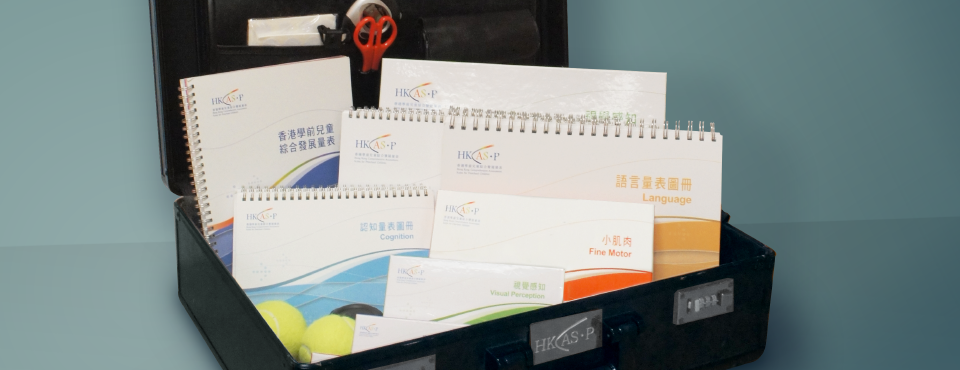
Designed for children up to the age of six, it aims to identify preschool children who are suspected of having developmental delays at an early stage. It provides assessments in seven main areas of growth and development, including:
- Cognition
- Language
- Social cognition
- Small muscles
- Big muscles
- Visual perception skills
- Early reading and number recognition skills
When should an assessment be carried out?
If you suspect that a child may have a developmental delay – for example, if they have not yet learnt simple words by the age of two, or if they display behavioural problems of varying severity in different settings, such as frequent tantrums and uncontrollable behaviour at home, or an inability to integrate into group activities at nursery and to follow the teacher’s instructions – you should arrange for the child to be assessed at an early stage.
Assessment process
An assessment conducted by a paediatrician or psychologist, which will involve first understanding the child's situation with the parents, and then using appropriate tools to assess the child.
Assessment tools
- The Hong Kong Comprehensive Assessment Scales for Preschool Children (HKCAS-P) is a tool developed by local experts to provide a comprehensive assessment of preschool children's growth and development.
Psychological Development Assessment Scale (Before Age 8)
0-8 years is a critical period for children's brain development, and developmental characteristics differ across age groups. Standardised assessment tools are used for evaluation, comparing against the average level for children of the same age, to objectively understand a child's developmental status and provide a reference for their growth.
Griffiths Developmental Scale – China (GDS-C)
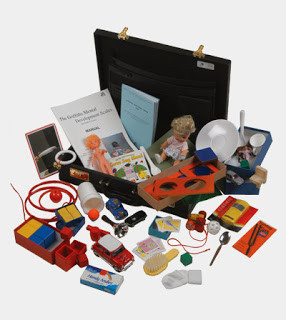
For children aged 8 and under, assessment includes:
- Cognition
- Language
- Social skills
- Fine motor development
- Gross motor skills
When should an assessment be carried out?
If you suspect that a child may have a developmental delay – for example, if they have not yet learnt simple words by the age of two, or if they display behavioural problems of varying severity in different settings, such as frequent tantrums and uncontrollable behaviour at home, or an inability to integrate into group activities at nursery and to follow the teacher’s instructions – you should arrange for the child to be assessed at an early stage.
Assessment process
An assessment conducted by a paediatrician or psychologist, which will involve first understanding the child's situation with the parents, and then using appropriate tools to assess the child.
Assessment tools
- The Griffiths Mental Developmental Scale-Extended Revised – Chinese Version (GDS-C) was translated into Chinese by Dr. Denise Challis between 2009 and 2013. Data was collected in seven cities across China, including Hong Kong, to standardise the Chinese version. The Griffiths Mental Developmental Scale-Extended Revised is a standardised child assessment tool.