

What is Attention Deficit Hyperactivity Disorder (ADHD)?
ADHD (Attention Deficit Hyperactivity Disorder), which we medically call Attention Deficit Hyperactivity Disorder, if we observe some children with ADHD, we will find that they have three main types of behavioural symptoms: weak concentration, excessive activity, and impulsivity.
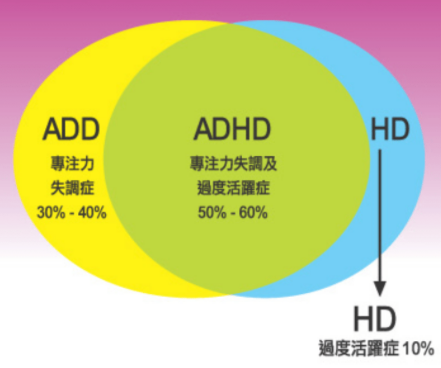
Symptoms of attention deficit

- Easily makes careless mistakes
- Finding it difficult to concentrate on the same thing for a long time
- I often have to repeat commands to complete daily tasks.
- Frequently misplace items
- Easily distracted
- Forgetful, having a poor memory
(2)Symptoms of hyperactivity and impulsive behaviour:

- Too much talk makes it hard to move quietly.
- "Restless", running or climbing around in inappropriate situations
- Difficulty queuing or waiting in line for games
- To interrupt others' activities or conversations halfway through.
- Frequently leaving one's seat in a classroom or at an event requiring stillness.

- It's difficult to be patient, I'm often very impatient.
- Problems often arise when queuing, such as people cutting in line and losing their temper.
- In group games, not wanting to wait your turn and being eager to play first.
- Frequently interrupting others
- Easily gets into arguments or conflicts with others
What are the causes of ADHD?
We also know that various environmental risk factors can accumulate and trigger this condition. These factors include premature babies, head injuries during infancy, or a mother’s drug or alcohol abuse habits during pregnancy, all of which can increase the risk of developing ADHD.
Medical science currently believes it is related to an imbalance of neurotransmitters in the brain, particularly dopamine. Neurotransmitters are what help our brain cells transmit messages.
How is ADHD diagnosed?
Symptoms - Attention Deficit Disorder
- Difficulty noticing details, easily making mistakes as a result.
- Difficulty concentrating on the same thing for a long time, such as: studying, daily activities, games
- Find it difficult to listen attentively to others.
- It is difficult to follow instructions and often impossible to complete daily tasks.
- I often lack organisation and find it difficult to properly arrange plans for things like studying, activities, and daily life.
- Resisting or disliking things that require full concentration
- Frequently misplace items needed for daily study or activities
- Easily distracted by surroundings or events.
- Frequently forget activities planned in daily life, such as forgetting appointment times
Symptoms - Hyperactivity Disorder
- Constantly fidgeting, or wriggling around in their seat, unable to keep still.
- Frequently leaves their seat without permission in classrooms or situations that require remaining seated.
- Running or climbing around in inappropriate situations
- Difficult to play or engage in leisure activities quietly
- Constantly active, like a machine that never stops
- Before the question was even finished, they rushed to answer.
- Difficulty taking turns or queuing in games or groups
- Interrupting or harassing other people's activities.
ADHD can lead to what consequences?
Infant/Toddler Stage 0-3 Years
- Easily irritated
- Sleep disturbance
- Disobedience
Preschool 3-6 years
- Quickly switch games
- My body activities won't stop
- Social difficulties
Primary school stage 6-12 years old
- Easily distracted
- Impulsive and destructive behaviour
- Learning and social difficulties
- Low self-confidence
Teenage years 13-17
- Learning difficulties
- Interpersonal relationship problems
- Difficult to plan things
- Aggressive behaviour
Is ADHD common?
Approximately 5–10% of children or adolescents have ADHD,A local study in Hong Kong indicates that nearly 9% of boys aged seven to eight have ADHD. Therefore, in a classroom of 30 to 40 children, there are likely to be several who may have ADHD. Furthermore, the condition generally affects boys more frequently, with the ratio of boys to girls being approximately 4:1.

ADHD assessment test
ADHD test process
ADHD assessments are conducted by paediatricians or psychologists. Before the assessment, parents will be consulted about the child's overall situation and given an overview of the assessment process. Parents or teachers may be required to complete questionnaires to understand the child's situation at home or school. The paediatrician or psychologist will use appropriate assessment tools for testing. The child may also require an assessment of cognitive abilities or overall development.
Assessment tools
- Children's Eating Habits Questionnaire 2 (TEA-Ch2)
- Attention Deficit Hyperactivity Disorder Questionnaire NICHQ Vanderbilt Assessment Scale
ADHD treatments
Individuals with ADHD can improve their focus and reduce impulsive behaviour through medication; concurrently, behavioural therapy can be used to improve emotional and social skills. If there are any doubts, parents should seek professional help to find a suitable treatment plan and avoid being afraid to seek medical advice.
Pharmacological treatment:
- Consider using someCentral nervous system stimulantsor someNon-central nervous system stimulantmedication
- Central nervous system stimulants can also be divided intoLong-lastingorshort-acting
- Medication can be very helpful, with 70-80% of children showing significant improvement after starting medication. For example, they can experience enhanced concentration, a reduction in impulsive behaviour, and a decrease in their activity levels, thereby lessening symptoms of hyperactivity disorder.
- Subsequently, we hope to help children's learning motivation, improve attention deficit, and enhance learning efficiency.
- It also helps children with their interpersonal relationships and reduces their uncooperative and violent behaviour.
Behavioural therapy
- We will clearly establish some target behaviour plans with the children, and then use rewards.
- We will also work with parents, hoping to improve their parenting skills.
- Patients with ADHD also very much need someChild psychology counsellingor training, particularly in their emotional management or social skills.
- We also encourage parents to communicate and cooperate more with the school, to set some short and long-term treatment goals for the children, and to choose suitable training programmes for them.