New generation 20-valent pneumococcal vaccine
Is pneumonia easily overlooked? Children's infections can be fatal
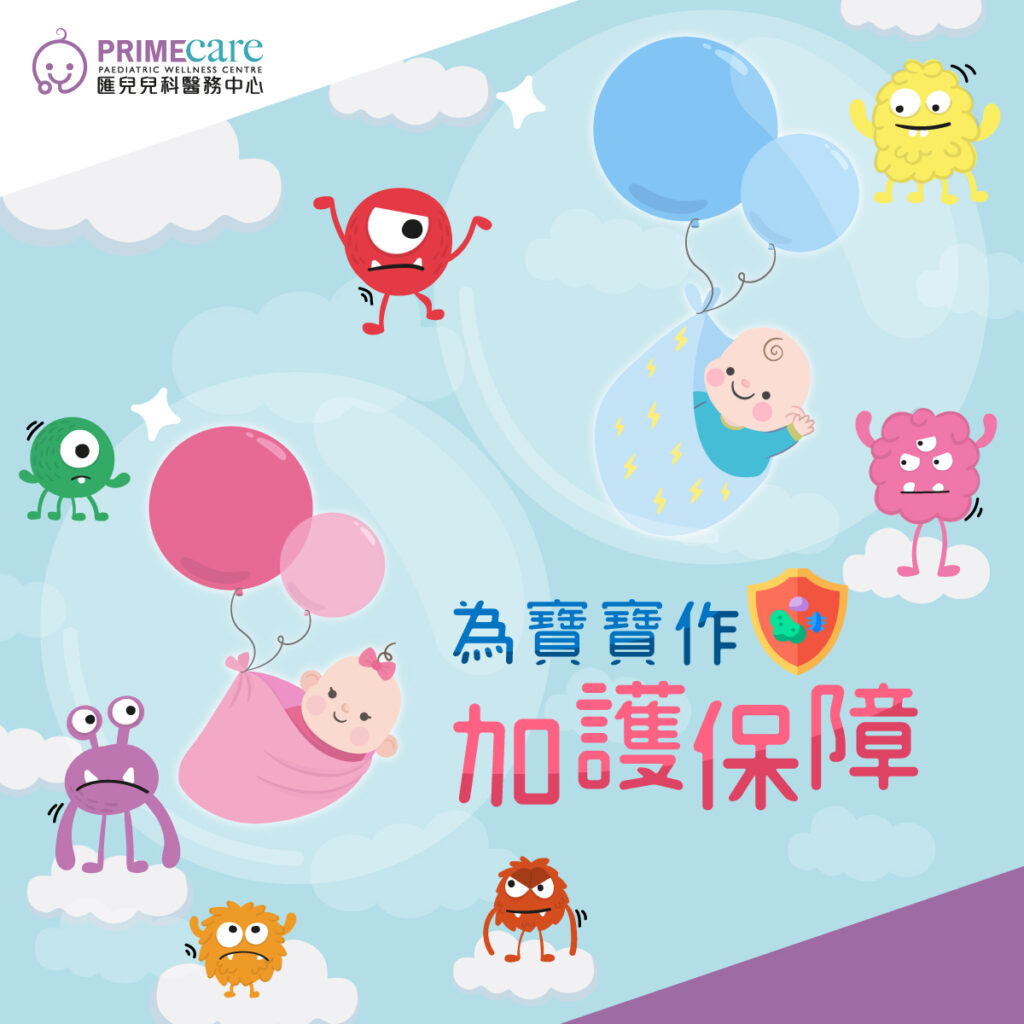
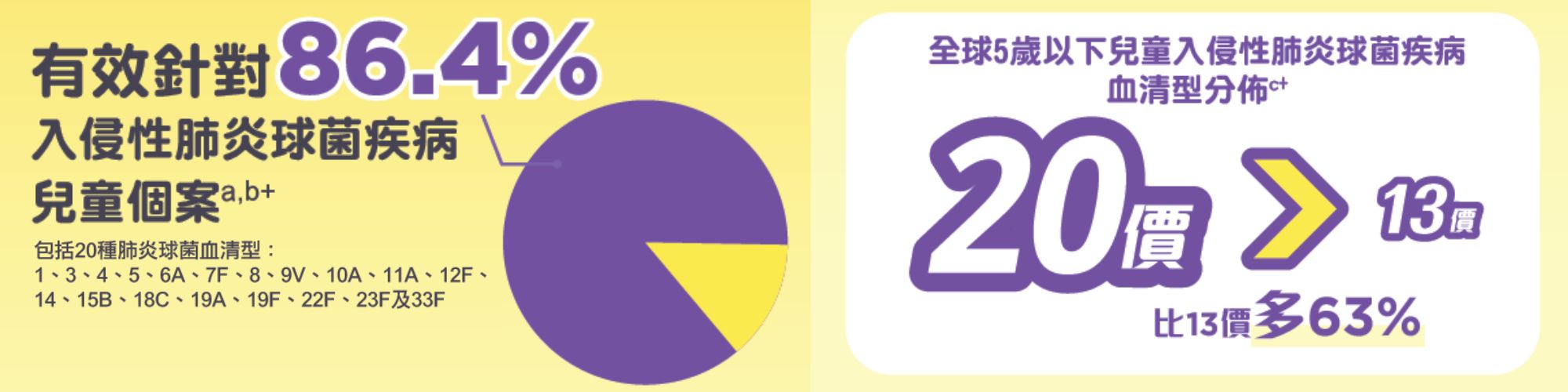
According to the World Health Organisation (WHO) estimates,Globally, around 1 million children under the age of five die each year from pneumococcal infections.In Hong Kong, there are also occasional cases of young children suffering from severe pneumonia. Because children's immune systems are not yet fully developed and their immunity is lower than adults, children under one year of age are at a 25.9 times higher risk of infection!
Leading to a number of serious complications, including:
Pneumonia, Sepsis, Sinusitis, Acute, Otitis Media, Meningitis
Children are at a higher risk of death from pneumococcal disease than adults. In addition to maintaining good personal hygiene habits and ensuring children get enough sleep and rest, we should seize the opportunity to have them vaccinated as soon as possible.
Pneumococcal conjugate vaccines suitable for children available on the market include 13-valent, 15-valent, and the latest upgraded 20-valent pneumococcal conjugate vaccine!
Number of vaccine doses
Infants aged 6 weeks to 15 months:A total of four stitches
Children aged 2 years and over and adults:One stitch
Pneumococcal vaccines are prescription-only medications. Effectiveness and side effects may vary depending on the user's physical condition and individual symptoms. Please consult your doctor or pharmacist for details.
Fully upgraded vaccines, with stronger protection, offering broader protection for children! Hui Er Paediatrics provides childhood immunisation services, where your child will be vaccinated by professional medical staff, ensuring safety and reliability.
This information is provided by Pfizer.
References:
a. Pneumococcal polysaccharide conjugate, 20-valent adsorbed, Prescribing Information.
Pfizer Corporation Hong Kong Limited: Version July 2024.
b. CHP. Report on IPD. Available at: www.chp.gov.hk/en/resources/29/636.html.
Accessed December 2024.
c. Ladhani SN, et al. Lancet Infect Dis2018;18:441-451.
15-valent pneumococcal vaccine
Pneumonia is the second leading cause of death in Hong Kong.
According to the World Health Organisation, pneumococcal disease poses an increasing threat to people worldwide, and anyone of any age can be infected with pneumococcal bacteria. Pneumococcal bacteria are highly contagious and can hide in the nasopharynx, waiting for an opportunity to invade the body, and can also cross-infect young children at home. In addition to causing pneumonia, they can also cause a variety of serious diseases, such as pneumonia, meningitis, otitis media, and septicaemia, and even death. Of these, regarding pneumonia, one in every six people globally5children under the age of1Pneumonia is the second leading cause of death in Hong Kong.
Vaccination is currently one of the most effective ways to prevent pneumococcal disease. However, there are over100The most important thing is that the vaccine targets the correct serotype! 2009Since [Year], the Department of Health has included the pneumococcal vaccine in the "Hong Kong Childhood Immunisation Programme". However, in Hong Kong there are45%-68%Invasive pneumococcal disease is caused by the serum, considered the number one killer of invasive pneumococcal disease.3Type-induced. Currently in Hong Kong, they use13Pneumococcal vaccine for serotypes3The type protection is low and cannot offer complete resistance.
New generation15Pneumococcal vaccine
Earlier than2021Year7The moon can be used for18Adults aged [number] and over15Pneumococcal vaccine, approved by the USAFDAApproval for expanded use, next-generation15Pneumococcal vaccine Now available from birth6For infants and young children over a week old. Utilising a unique technology to improve efficacy and induce a stronger immune response, it has been approved for use in European and American countries such as the United States, United Kingdom, Canada, and Australia.
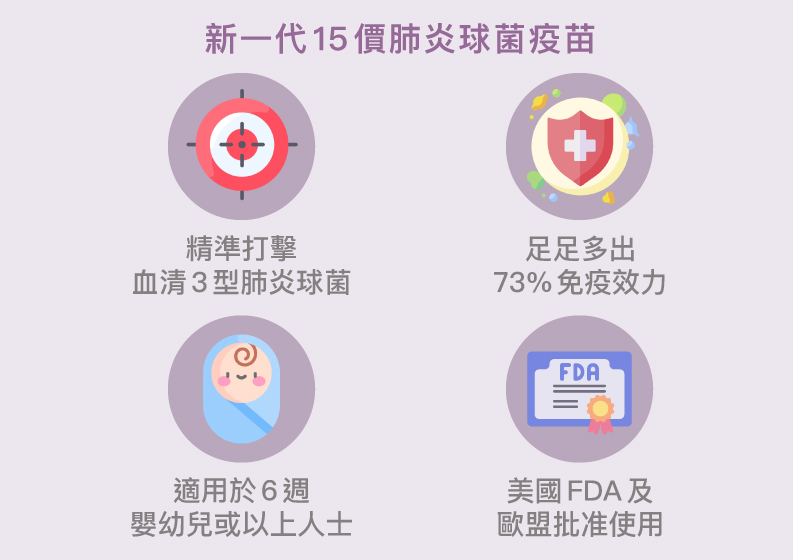
- Precise serum targeting3Pneumococcal type
- Prevention15Serotype of pneumococcus(1,3,4,5,6A,6B,7F,9 volts,14,18th century,19A,19F,22F,23F,33F;
- Compared with the existing vaccine (13-valent), it offers a full 73% greater immunogenicity;
- Approved for use by the US FDA and the EU
Rotavirus oral vaccine
This vaccineExcludingThe "Hong Kong Childhood Immunisation Programme" by the Centre for Health Protection of the Department of Health
What is rotavirus?
Rotavirus vaccine
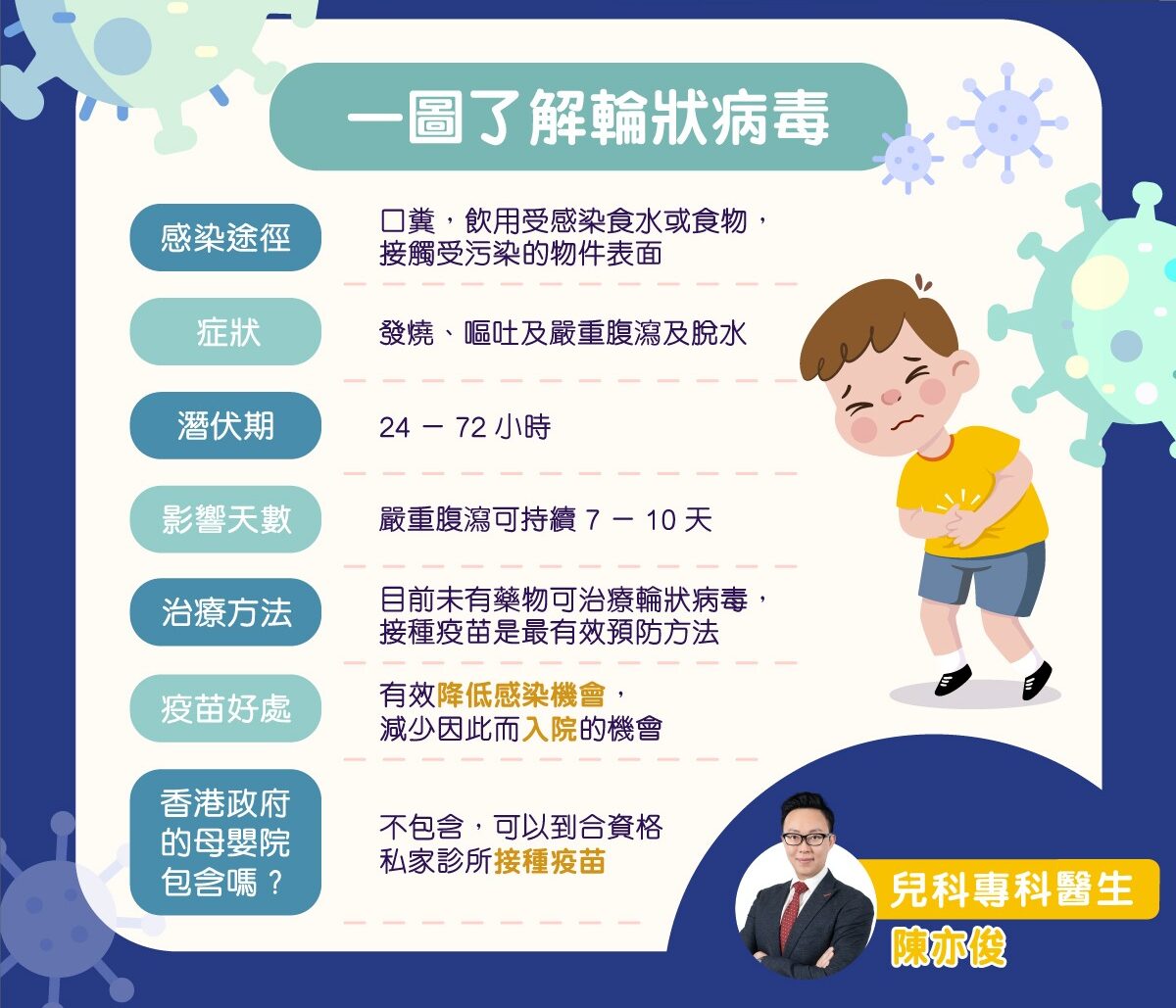
Understanding Rotavirus at a Glance
Recommended vaccination time
Rotavirus vaccine, oral, 2 doses Rotarix (RV1) – GSK
- Including the most common rotavirus serotype G1P[8]
- Recommended for 2 doses at: 2 months and 4 months of age
- Must be completed within 24 weeks of birth
Oral Rotavirus Vaccine, 3 doses, RotaTeq (RV5) – MSD
- Including the five most common rotavirus serotypes: G1, G2, G3, G4 and P1A[8]
- Recommended for 3 doses at: 2, 4, and 6 months of age
- Must be completed within 32 weeks of birth.
[Previous episode] Rotavirus a high risk in winter, young children with vomiting and diarrhoea have no cure | Dr. Wu Chun-pun
[Next Episode] Rotavirus a High Risk in Winter, Infants Vomiting and Diarrhoea Without Medical Treatment | Dr. Wu Chun-pan
Meningococcal ACWY conjugate vaccine (MenACWY)
This vaccineExcludingThe "Hong Kong Childhood Immunisation Programme" by the Centre for Health Protection of the Department of Health
Meningococcal bacterium
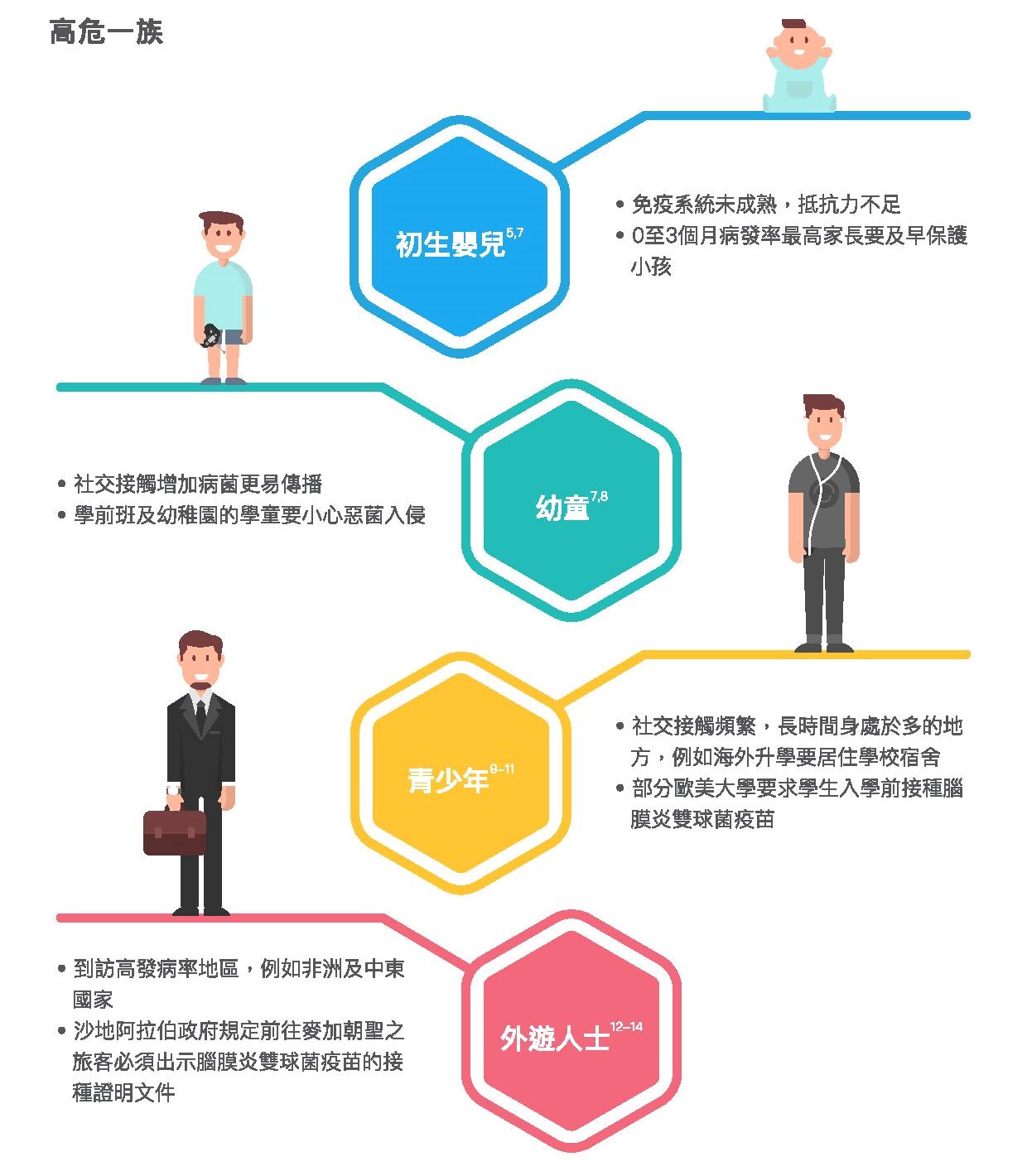
Meningococcal disease is an illness caused by the bacterium *Neisseria meningitidis*. It is a serious, acute infectious disease that can be transmitted through secretions from the nose and mouth of an infected person. Close contact and interaction among children at school can easily lead to cross-infection. Newborns whose immune systems are immature, young children, adolescents, and people visiting areas with high incidence rates are also at high risk, with the highest incidence rate among infants aged 0 to 3 months. Early symptoms are not obvious and are very similar to those of a common cold. When the bacteria invade the bloodstream (meningococcal septicaemia) or the membranes surrounding the brain and spinal cord (meningitis), it can lead to severe conditions, causing patients to develop fever and shock. In severe cases, it can be fatal within 24 hours.
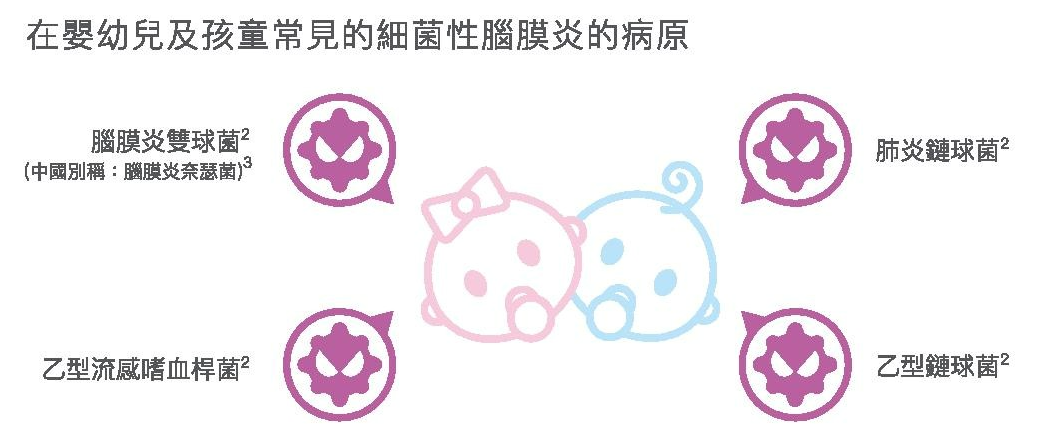
There are two main categories of pathogens that cause meningitis:
- Bacteria: *Neisseria meningitidis*, *Haemophilus influenzae*, *Streptococcus pneumoniae*. Bacterial meningitis is a particularly serious illness that requires prompt treatment.
- Viruses: Enterovirus, Herpes simplex virus
Meningitis symptoms:
- Meningococcal septicaemia (bacteria invading the bloodstream)
- Sudden fever
- Headache
- Bruise
- Shock
- Severe and potentially fatal
- Meningitis (infection of the membranes surrounding the brain and spinal cord):
- High fever
- Severe headache
- Stiff neck
- Vomiting
- Photophobia
- Rash
- It can cause serious brain damage, such as intellectual impairment.
- Can be fatal in severe cases
Meningococcal ACWY conjugate vaccine
Infants and young children have lower immunity, so to more comprehensively prevent meningococcal infection, two types of vaccines are required:
- Meningococcal ACWY conjugate vaccineCapable of covering 4 serotypes, it can prevent meningococcal meningitis types A, C, Y, and W, and prevents diseases caused by meningococcal meningitis.
- Meningococcal B vaccine (MenB)Can prevent B-type meningococcal infection
Suggested injection time
Meningococcal (quadrivalent) conjugate vaccine Menactra – Sanofi
9-23 months: Two doses (3 months apart)
Aged 2 to 55: One dose
Ages 15 to 24: After four years since the first dose, receive one booster dose.
Meningococcal group B vaccine Nimenrix – Pfizer
2 months - 4 months - 12 months: 3 injections in total
3 months - 5 months - 12 months: 3 doses in total
12 months: 1 dose
Meningococcal B vaccine (MenB)
This vaccineExcludingThe "Hong Kong Childhood Immunisation Programme" by the Centre for Health Protection of the Department of Health
What is meningococcal disease serogroup B
Meningococcal bacteria have many different serogroups, generally divided into six types: A, B, C, W, X, and Y. Most cases are caused by infection with serogroups A, B, C, W, and Y, withType B accounts for nearly 50% of infections in Hong Kong.
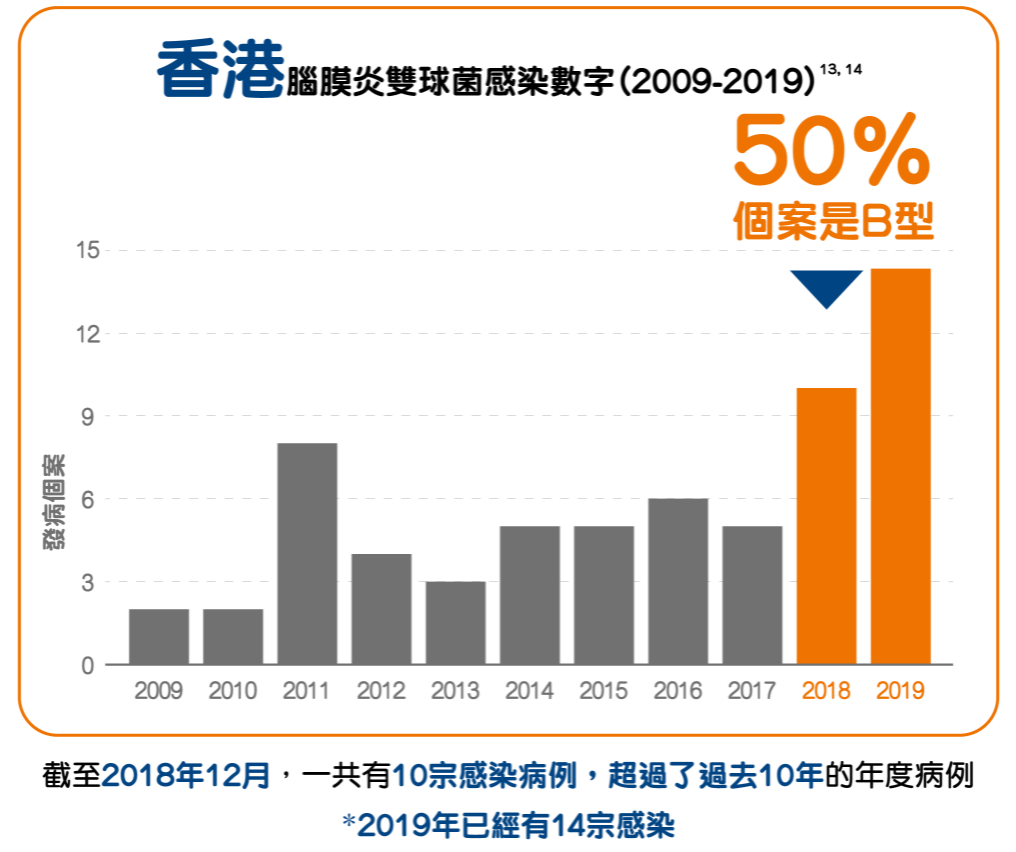
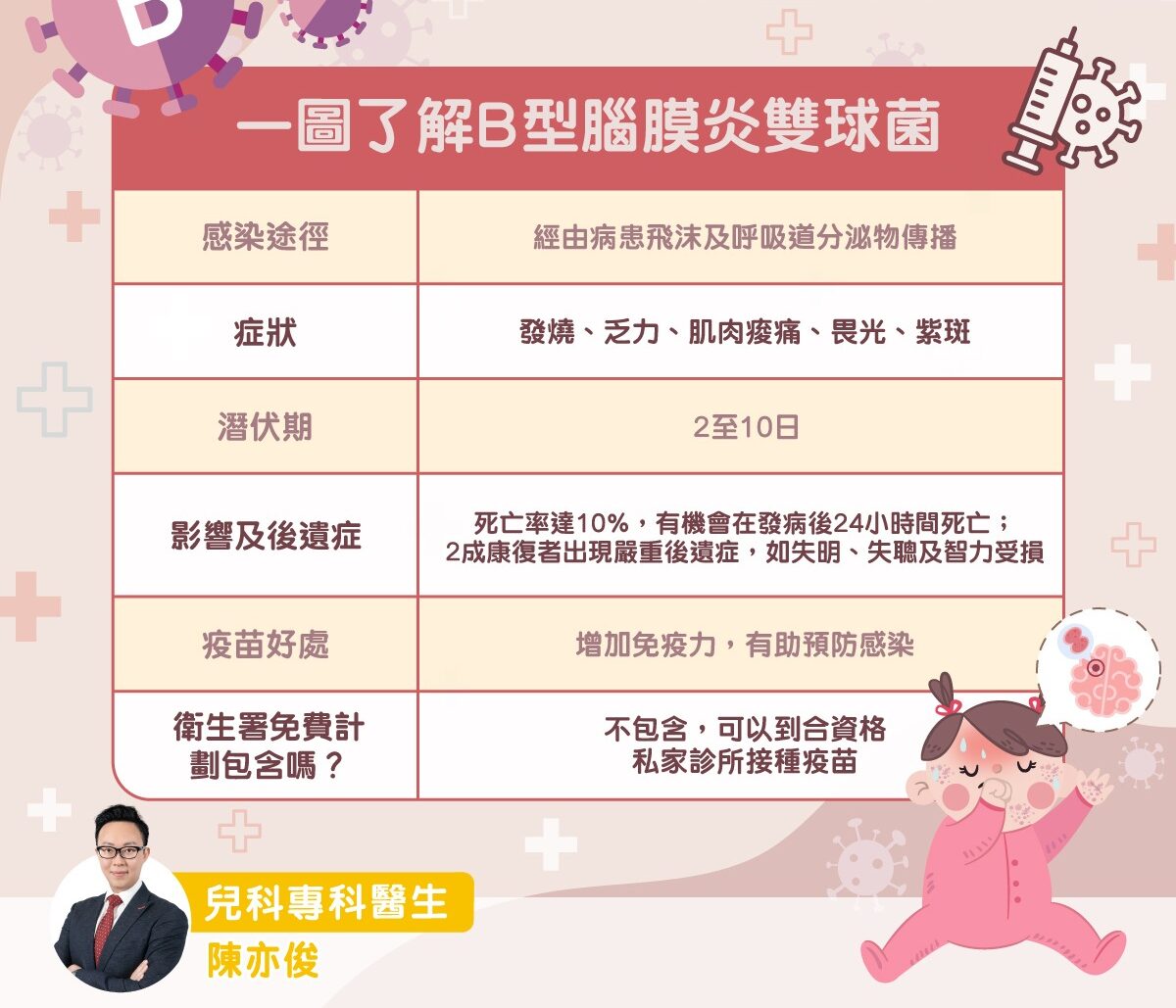
Meningococcal type B can cause invasive meningitis, which progresses rapidly; once infected, patients may die within 24 hours of the onset of symptoms, with a mortality rate as high as 10%.One in five patients may suffer serious long-term complications, including blindness, deafness and intellectual impairment, or may even require amputation. Meningococcal meningitis (MEN-B) is like an invisible killer, lurking in one in ten people.As the symptoms resemble those of a common cold, parents generally find it difficult to detect the condition; they often only realise something is wrong when their child develops purpura all over their body – by which time it is already too late!
Meningococcal group B vaccine
Early meningococcal vaccines only covered serogroups A, C, W and Y, and did not provide protection against cases caused by serogroup B; it was not until 2019 that the meningococcal B vaccine was finally introduced in Hong Kong.According to the US Centres for Disease Control and Prevention (CDC), vaccination is effective in reducing infections caused by meningococcal serogroup B (MEN-B). Vaccination boosts children’s immunity, helping them to fight off MEN-B infections; studies show that the protection rate reaches 95–100 per cent,Parents are advised to ensure their children are prepared.
Understanding Meningococcal Group B in one chart
Recommended vaccination time
Meningococcal Group B vaccine (Men-B) Bexsero – GSK
- 2 months: 4 doses in total (first 3 doses should ideally be at least 1 month apart, booster dose to be administered at 12 months or older *at least 6 months after the 3rd dose)
- 3 – 5 months: 3 doses in total (a minimum of 2 months between the first 2 doses, with the booster administered at 12 months or older *with a minimum of 6 months between the 2nd and booster doses)
- 6-11 months: 3 doses in total (first 2 doses recommended to be at least 2 months apart, booster to be administered at 12 months or older *at least 2 months after the 2nd dose)
- 12 – 23 months: 3 doses in total (the first 2 doses should be at least 2 months apart, and the booster dose should be administered within 12–23 months after the second dose)
- 2 years and over: 2 doses (minimum 1 month between doses)
Encourage vaccinationGroup B meningitisVaccination Programme | Dr. Chan Yick-Chun
Japanese encephalitis vaccine [B-encephalitis]
What is Japanese encephalitis
Japanese encephalitis virus is transmitted to humans by infected mosquitoes. Most people infected with the Japanese encephalitis virus do not show symptoms, and approximately one in 250 infected individuals will develop severe Japanese encephalitis symptoms, including neurological disorders, psychological disorders, intellectual problems, and physical disabilities.
Japanese encephalitis vaccine
There are currently no specific antiviral drugs available to treat Japanese encephalitis; doctors can only provide supportive care to alleviate symptoms and stabilise the patient’s condition. The World Health Organisation recommends that vaccination against Japanese encephalitis be considered if factors indicating the transmission of the disease are present locally or in neighbouring areas.Infants aged 9 to 18 months (99.2%) are protected 28 days after receiving one dose of the Japanese encephalitis vaccine.
Recommended vaccination time
- 9 months to 17 years: Two doses (12-24 months apart)
- 18 and over: One dose
Hepatitis A vaccine for children
This vaccineExcludingThe "Hong Kong Childhood Immunisation Programme" by the Centre for Health Protection of the Department of Health
What is hepatitis A
Hepatitis A is a serious liver disease caused by the Hepatitis A virus, which is a filterable virus that spreads from person to person through contact with the faeces of an infected person. Hepatitis A can lead to liver failure and death. Infected individuals may have no symptoms or only mild flu-like or gastrointestinal symptoms, but it can cause acute hepatitis, with symptoms such as fever, fatigue, and jaundice. Most patients are asymptomatic during childhood, but the symptoms gradually emerge upon reaching adulthood.
Hepatitis A vaccine
Since it is possible to transmit hepatitis A even without symptoms, vaccination is an effective way to prevent infection. Since 1996, the United States has recommended that citizens receive the hepatitis A vaccine. Since then, the number of reported cases in the United States has decreased from approximately 31,000 to less than 1,500 annually.
Recommended vaccination time
- Aged 1 year or over: 2 doses (at least 6 months apart)
Hexavalent vaccine [Hexavac]
This vaccineExcludingThe "Hong Kong Childhood Immunisation Programme" by the Centre for Health Protection of the Department of Health
Benefits of the 6-in-1 vaccine
Combining multiple vaccines significantly reduces the number of injections, and can also decrease the chance of side effects and discomfort in infants and children after vaccination.
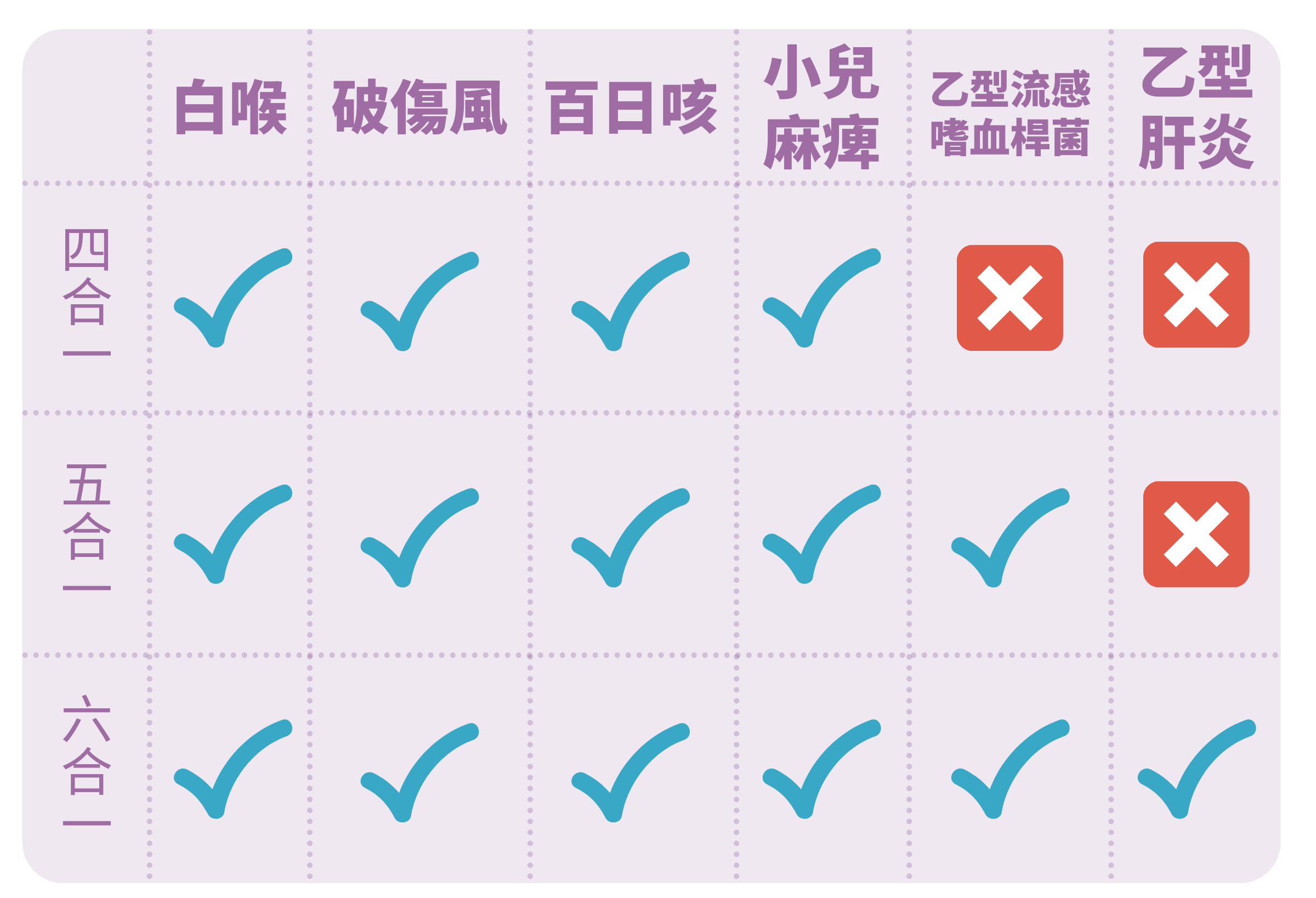
The hexavalent vaccine protects against six diseases.
- DiphtheriaCaused by *Corynebacterium diphtheriae*, it is a serious bacterial infection affecting the nose and throat.
- Whooping coughCaused by the bacterium pertussis, it is a serious infection of the respiratory tract. Whooping cough can cause pneumonia, convulsions, brain damage, and even death.
- TetanusBacteria enter the skin through cuts or grazes, and the toxins they produce can destroy the nervous system, causing widespread muscle pain and stiffness.
- PolioPoliomyelitis is caused by the poliovirus, leading to paralysis of the limbs, and even death. Poliomyelitis can be transmitted through contact with the excrement of an infected person.
- Haemophilus influenzae type b (Hib)can cause serious and life-threatening infectious diseases, including meningitis and septicaemia.
- Hepatitis B: Transmitted via bodily fluids and blood, the hepatitis B virus can cause acute hepatitis. Common symptoms include fever, loss of appetite, nausea, vomiting, abdominal pain, yellowing of the whites of the eyes, dark-coloured urine, and stools that are clay-coloured or pale.Regardless of whether symptoms are present, approximately 5 to 10% of adult patients and 95% of infants infected by their mothers are unable to clear the virus, thereby becoming chronic carriers and potentially developing chronic hepatitis, permanent liver damage or liver cancer in the future.
Recommended vaccination time
- 2 months, 4 months, 6 months, 15 to 18 months: four injections in total
Five-in-one vaccine
This vaccineExcludingThe "Hong Kong Childhood Immunisation Programme" by the Centre for Health Protection of the Department of Health
Benefits of the five-in-one vaccine
Combining multiple vaccines into a single injection greatly reduces the number of vaccinations, and can also lower the chances of side effects and discomfort in infants and young children after inoculation.
The five-in-one vaccine prevents diseases
- DiphtheriaCaused by *Corynebacterium diphtheriae*, it is a serious bacterial infection affecting the nose and throat.
- Whooping coughCaused by the bacterium pertussis, it is a serious infection of the respiratory tract. Whooping cough can cause pneumonia, convulsions, brain damage, and even death.
- TetanusBacteria enter the skin through cuts or grazes, and the toxins they produce can destroy the nervous system, causing widespread muscle pain and stiffness.
- PolioPoliomyelitis is caused by the poliovirus, leading to paralysis of the limbs, and even death. Poliomyelitis can be transmitted through contact with the excrement of an infected person.
- Haemophilus influenzae type b (Hib)can cause serious and life-threatening infectious diseases, including meningitis and septicaemia.
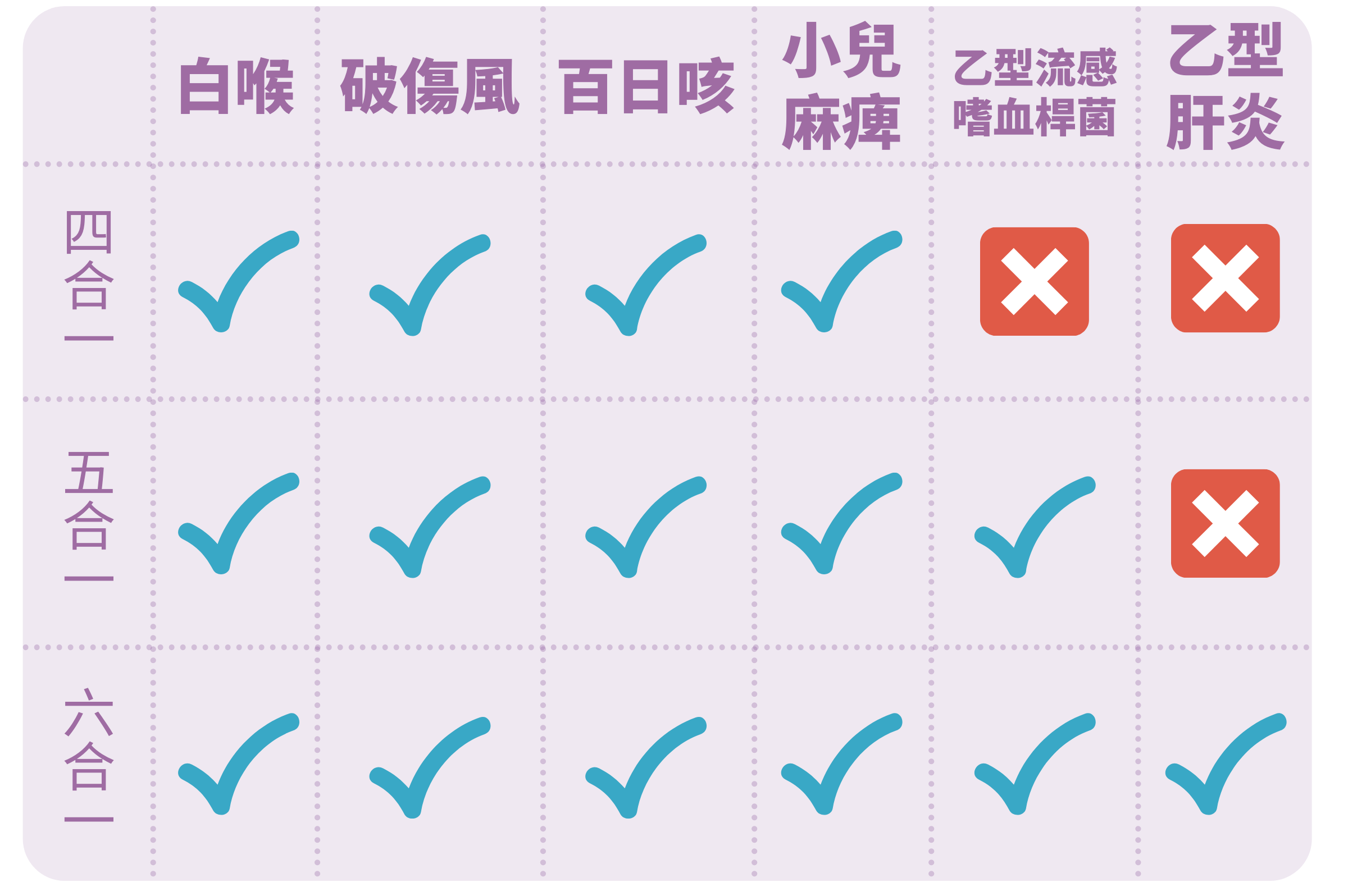
Recommended vaccination time
- 2 months, 4 months, 6 months, 15-18 months: 4 injections in total
The 5-in-1 and 6-in-1 are interchangeable.
Haemophilus influenzae type b vaccine
This vaccineExcludingThe "Hong Kong Childhood Immunisation Programme" by the Centre for Health Protection of the Department of Health
What is *Haemophilus influenzae* type b?
Haemophilus influenzae type b Hi) is a bacterium that can cause serious invasive infections, with 90% of patients being under the age of 5, and the incidence being highest in those under the age of 2. Haemophilus influenzae type B can cause meningitis, pneumonia, pharyngitis, bacterial arthritis, and osteomyelitis. It is mainly transmitted through droplets from direct contact with a patient's nasal and pharyngeal secretions. All these conditions require prompt antibiotic treatment.
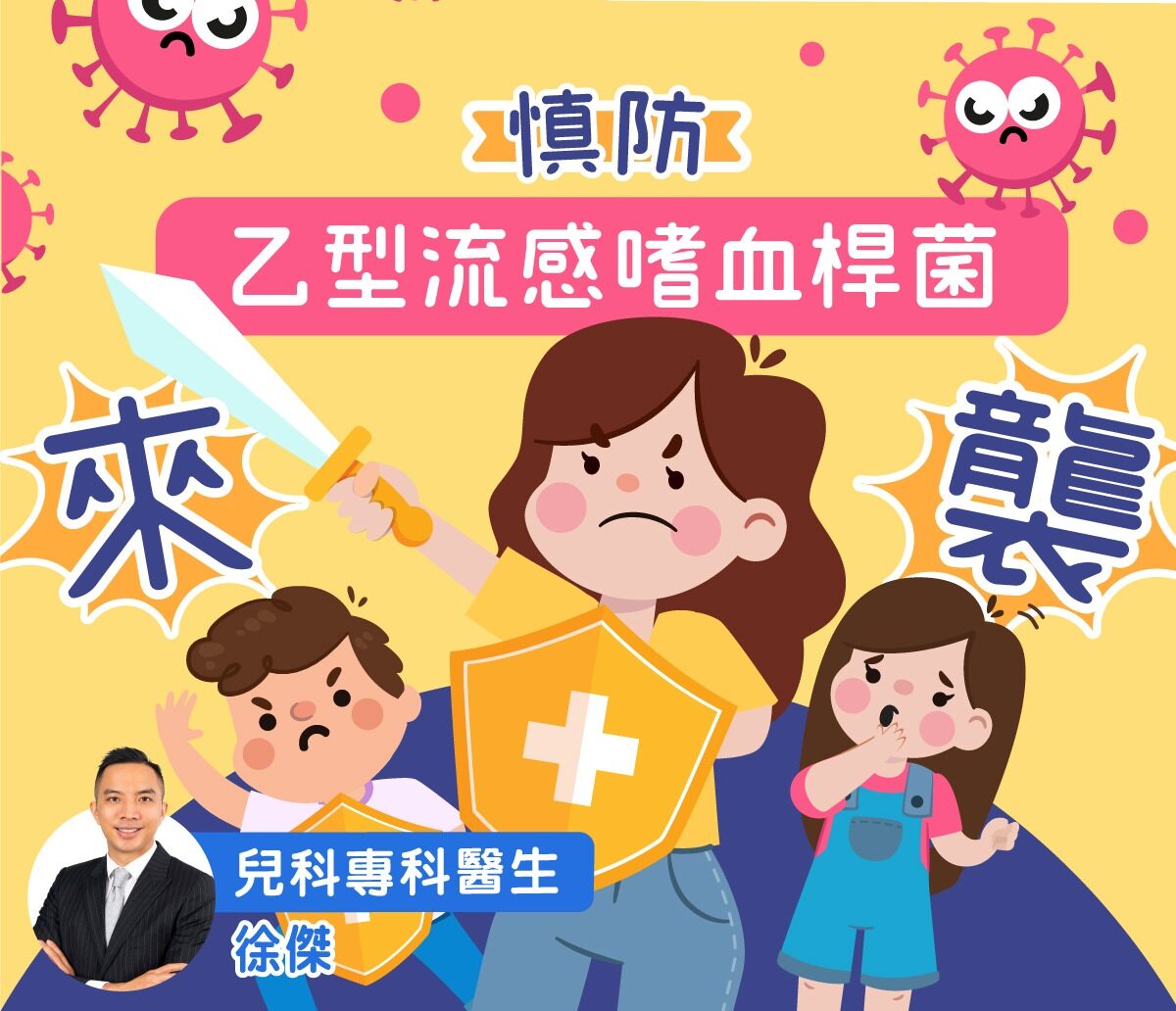
Haemophilus influenzae type b vaccine
Multiple countries, such as the USA, UK, Germany, Australia and Canada, have included the Hib vaccine in their universal healthcare vaccination programmes. However, the Hong Kong government has not yet included the Hib vaccine in its immunisation programme. To provide babies with comprehensive protection, parents can arrange for their children to be vaccinated at private clinics.
Recommended vaccination time
Generally speaking, it is recommended that children at 21 month, 4 months, 6 months, 18 monthsfour doses administered at the same time, currently available on the market:
- Independent Haemophilus influenzae type b vaccine
- Combined diphtheria, tetanus, acellular pertussis, and inactivated poliovirus vaccine – 5-in-1 vaccine
- In addition to the five-in-one, plus the hepatitis B vaccine – Hexavalent vaccine
The main difference is the number of injections the child has to receive, and being able to get vaccinated all at once will cause the child less suffering.
13-valent pneumococcal conjugate vaccine
What is pneumococcal disease?
The threat posed by pneumococcal bacteria to people worldwide is growing. Individuals of any age are susceptible to pneumococcal infections. Pneumococcal bacteria are highly contagious and can reside in the nasopharynx, lying in wait to invade the body and also spread to young children within the household. In addition to causing pneumonia, they can lead to various serious illnesses, such as pneumonia, meningitis, otitis media, and septicaemia, and can even be fatal.
13-valent pneumococcal conjugate vaccine
The World Health Organization states that vaccination is one of the most effective ways to prevent pneumococcal diseases. The combination of vaccine technologies can lead to immune memory, providing long-lasting protection. Individuals who have previously received the 7-valent or 10-valent pneumococcal vaccine can receive a booster dose of the 13-valent vaccine for broader protection. Preventable infectious diseases: Diseases caused by Streptococcus pneumoniae serotypes 1, 3, 4, 5, 6A, 6B, 7F, 9V, 14, 18C, 19A, 19F, and 23F.
Recommended vaccination time
13-valent pneumococcal vaccine Prevenar13 – Pfizer
- 6 weeks – 6 months: 4 doses
- 7 months to 11 months: 3 injections
- 12–23 months: 2 doses
- 2 years and over: 1 dose
Measles, mumps, rubella and varicella vaccine (MMRV)
Benefits of the 4-in-1 vaccine
The ones that currently require separate injectionsChickenpox jab and MMR (measles, mumps and rubella) jabBy combining these vaccines, the number of injections is reduced, whilst also providing effective protection against chickenpox, measles, mumps and rubella. As well as eliminating the need for two separate injections, the combined vaccine offers comprehensive protection for babies as early as 15 months of age, providing nearly 100% protection against chickenpox and sparing them the suffering caused by the disease.
Preventable diseases
- ChickenpoxChickenpox is a common acute infectious disease in children, mostly occurring in those aged five to ten.
- Measlescan cause fever, rash and cold-like symptoms, and can lead to ear infections or pneumonia.
- MumpsIt causes fever, headaches, and swelling of the salivary glands and cheeks. More serious complications include encephalitis and temporary hearing loss.
- Rubellacan cause serious complications and congenital defects in the fetus, including deafness, eye problems, heart defects, liver damage, and brain damage. This is also known as congenital rubella syndrome (CRS).
Recommended vaccination time
- Aged 1 year and over: 2 doses (minimum 3 months between doses)
Measles, Mumps, and Rubella vaccine (MMR)
The benefits of the MMR vaccine.
MMR is currently administered as separate injectionsMeasles, mumps, and rubella vaccinecombined, reducing the number of injections required and effectively preventing measles, mumps, and rubella.
Preventable diseases
- Measlescan cause fever, rash and cold-like symptoms, and can lead to ear infections or pneumonia.
- MumpsIt causes fever, headaches, and swelling of the salivary glands and cheeks. More serious complications include encephalitis and temporary hearing loss.
- Rubellacan cause serious complications and congenital defects in the fetus, including deafness, eye problems, heart defects, liver damage, and brain damage. This is also known as congenital rubella syndrome (CRS).
Chickenpox vaccine
Chickenpox
Chickenpox is a highly contagious infectious disease caused by the varicella-zoster virus, which can be transmitted through respiratory droplets spread in the air by an infected person or through contact with the fluid from the blisters. Symptoms of the illness include fever and itchy rashes. The rashes typically appear progressively over about 5 days and then develop into itchy, bean-sized blisters. They initially appear on the skin of the head and face, then spread to the trunk and limbs, with the trunk usually having the most blisters. The small blisters will dry and scab over after about 3 days. Patients usually recover naturally within 2 to 4 weeks.
In healthy children, most chickenpox symptoms are mild. However, adults and those with weakened immune systems may experience more severe illness and complications, including skin inflammation, meningitis, encephalitis, and pneumonia. If pregnant women contract chickenpox in early pregnancy, it can lead to congenital defects in the foetus.
Chickenpox vaccine
Approximately 90% of people who receive the chickenpox vaccine develop immunity.
Recommended vaccination time
Suitable for ages 1 year and over: 2 doses (at least 3 months apart)
Shingles vaccine
Shingles
Commonly known as "shingles", it is an illness caused by the chickenpox virus. Patients develop a painful, band-like rash with blisters. Anyone who has had chickenpox is at risk of developing shingles. If the virus affects the eyes or ears, it can even lead to blindness or deafness. It is estimated that about one-third of people may develop shingles in their lifetime, and it is common in the elderly or children.
95% of adults are at risk of developing ‘shingles’, and this risk increases significantly after the age of 50; one in three people will develop ‘shingles’ at some point in their lives, and it can be extremely painful!
Shingles vaccine
It can reduce the chance of getting the illness by half in those aged 50-80, and also helps reduce post-herpetic neuralgia or the severity of relapse.
Nasal spray flu vaccine (Flumist)
Influenza
Commonly known as "flu," it is an acute, contagious respiratory illness caused by viruses, primarily spread through droplets or secretions. Symptoms include fever, sore throat, and cough. While most cases resolve spontaneously within a week, complications such as viral pneumonia, bacterial pneumonia, sinusitis, or ear infections can occur, and in some instances, can be fatal. Influenza viruses mutate frequently, leading to seasonal epidemics. Therefore, the World Health Organization monitors circulating and newly discovered influenza strains and recommends the annual composition of the influenza vaccine. Annual vaccination against influenza is an effective method to prevent the flu and its associated complications.
Nasal spray flu vaccine (Flumist)
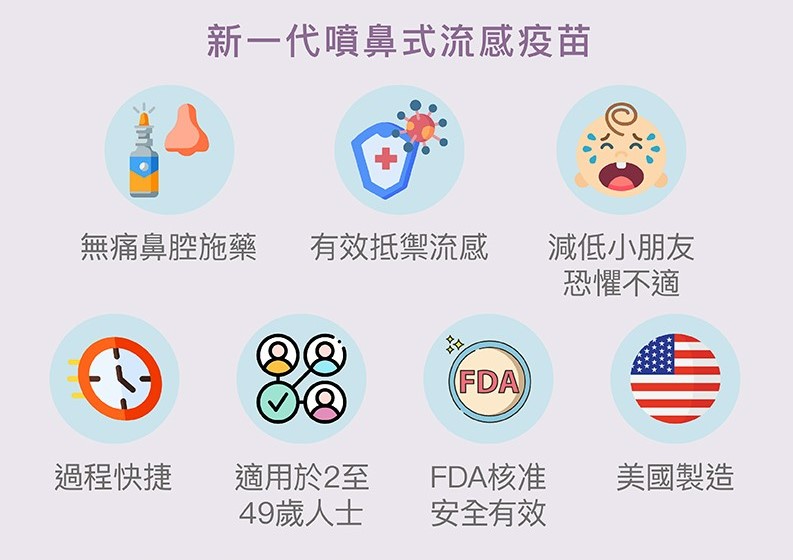
The new generation nasal flu vaccine, painlessly combats flu symptoms, suitable for the whole family!

- Painless intranasal drug delivery
- Effective flu prevention
- Reduce children's fear and discomfort
- Quick process
- For ages 2 to 49
- The FDA has approved safety and efficacy.
- Made in the USA
Recommended vaccination time
Age group | Have you been vaccinated? | Dose |
Children aged 8 or under | Not vaccinated against influenza. | Two doses (at least 4 weeks apart) |
Persons aged 9 and above | Whether or not you have been vaccinated against influenza | 1 dose |
*Information provided by the manufacturer
Quadrivalent flu vaccine
Flu
Peak infection periods: January to March, July and August annually
Quadrivalent flu vaccine
Parents and babies should both receive the seasonal influenza vaccine annually.
Recommended vaccination time
Suitable from 6 months of age
- under 9 yearsNeverReceived flu vaccine: 2 doses (at least four weeks apart)
- under 9 yearsUsedReceived flu vaccination: 1 dose
- 9 years and over: 1 dose
Preventing influenza
To prevent influenza, in addition to getting vaccinated, it is important to maintain good personal hygiene. Wash your hands frequently, particularly before touching your mouth, nose or eyes, or after touching surfaces in public places (such as door handles and handrails). Where possible, use liquid soap and running water to wash your hands thoroughly.When your hands are not visibly soiled, using a hand sanitiser containing 70% – 80% alcohol is also an effective way to clean them.
Keep indoor air circulating. During influenza outbreaks, avoid crowded or poorly ventilated public places; high-risk individuals may consider wearing a mask when in such places. Maintain a balanced diet, regular exercise and adequate rest, do not smoke and avoid excessive life stress.
To be considerate of others, cover your mouth and nose when sneezing or coughing, and dispose of soiled tissues in a lidded bin. Wear a mask when experiencing respiratory symptoms.
Cervical cancer vaccine (Gardasil)
Cervical cancer
It is not a genetic disorder. In 99.7% of cervical cancer cases worldwide, HPV (human papillomavirus) is found in every single case; it is the main cause of cervical cancer and can be transmitted even if the infected person shows no symptoms.
Cervical cancer vaccine
Effectively preventing HPV infection, protecting yourself and your partner, men and women should both take precautions! In addition, regular cervical cancer screening is one of the most effective ways to prevent cervical cancer.

Dear Sir/Madam, Recommendation: Vaccination Programme Choice One
Option 1
| Age/Year Group Ages/Stages | Vaccinations to be administered Types of vaccines |
| Newborn Newborn | – Bacillus Calmette–Guérin (BCG) (given at birth) – Hepatitis B vaccine – 1st dose (given at birth) |
| Six to eight weeks 6-8 weeks old | – 5-in-1 / 6-in-1 vaccine – 1st dose – 13-valent pneumococcal vaccine – 1st dose – Oral Rotavirus Vaccine – 1st Dose [Rotarix/Rotateq] |
| Four months 4 months old | – 5-in-1/6-in-1 vaccine – 2nd dose – 13-valent pneumococcal vaccine – 2nd dose – Oral rotavirus vaccine – 2nd dose [Rotarix/Rotateq] |
| Six months 6 months old | – 5-in-1/6-in-1 vaccine – 3rd dose – 13-valent pneumococcal vaccine – 3rd dose Oral Rotavirus Vaccine – 3rd Dose [Rotateq] |
| Nine months 9 months old | – MenACWY conjugate vaccine – 1st dose – Japanese Encephalitis Vaccine – 1st dose |
| One year old 1 year old | – Combined measles, mumps, rubella and varicella vaccine (MMRV) – 1st dose – 13-valent pneumococcal vaccine – booster dose |
| Fifteen months 15 months old | – Meningococcal ACWY conjugate vaccine (ACWY) – 2nd dose Hepatitis A vaccine – 1st dose |
| Eighteen months 18 months old | – 5-in-1 vaccine – booster dose – MMRV vaccine – 2nd dose |
| Twenty-four months 24 months old | Hepatitis A vaccine – 2nd dose – Japanese Encephalitis Vaccine – 2nd dose |
| Twenty-seven months 27 months | – Meningococcal B vaccine (Men-B) – First dose |
| Thirty months 30 months old | – Meningococcal B vaccine (Men-B) – 2nd dose |
*Hui Er recommends: Vaccination programme Option Two

Option 2

| Age/Year Group Ages/Stages | Vaccinations to be administered Types of vaccines  |
| Newborn Newborn | – Bacillus Calmette–Guérin (BCG) (given at birth) – Hepatitis B vaccine – 1st dose (given at birth) |
| Six to eight weeks 6-8 weeks old | – 5-in-1 / 6-in-1 vaccine – 1st dose – 13-valent pneumococcal vaccine – 1st dose – Oral Rotavirus Vaccine – 1st Dose [Rotarix/Rotateq] |
| Three months 3 months old | – Quadrivalent meningococcal conjugate vaccine (ACWY) – Nimenrix dose 1 – Meningococcal group B vaccine (Men-B) – Bexsero 1st dose |
| Four months 4 months old | – 5-in-1/6-in-1 vaccine – 2nd dose – 13-valent pneumococcal vaccine – 2nd dose – Oral rotavirus vaccine – 2nd dose [Rotarix/Rotateq] |
| Five months 5 months old | – Meningococcal ACWY conjugate vaccine (ACWY) – Nimenrix 2nd dose – Meningococcal B vaccine (Men-B) – Bexsero 2nd dose |
| Six months 6 months old | – 5-in-1/6-in-1 vaccine – 3rd dose – Oral Rotavirus Vaccine – 3rd Dose (Rotateq) |
| Nine months 9 months old | – Japanese Encephalitis Vaccine – 1st dose |
| One year old 1 year old | – Combined measles, mumps, rubella and varicella vaccine (MMRV) – 1st dose – 13-valent pneumococcal vaccine – booster dose |
| Thirteen to fifteen months 13-15 months old | Quadrivalent meningococcal conjugate vaccine (ACWY) - Nimenrix 3rd dose – Meningitis B vaccine (Men-B) – Bexsero 3rd dose |
| Eighteen months 18 months old | – 5-in-1 vaccine – booster dose – MMRV vaccine – 2nd dose |
| 2 years old | Hepatitis A vaccine – 1st dose – Japanese Encephalitis Vaccine – 2nd dose |
| Thirty months 30 months old | Hepatitis A vaccine – 2nd dose |
Child Vaccination Programme - Crown Diamond Level 1
| Age/Year Group Ages/Stages | Vaccinations to be administered Types of vaccines |
| Six to eight weeks 6-8 weeks old | — Hexavalent Vaccine – First Dose – 15/20-valent pneumococcal vaccine – first dose Rotavirus oral vaccine – First dose (Rotarix/Rotateq) |
Three months 3 months old | Meningococcal ACWY conjugate vaccine (ACWY) Nimenrix – First dose – Meningococcal B vaccine (Bexsero) – First dose |
| Four months 4 months old | Five-in-one vaccine - Second dose – 15/20-valent pneumococcal vaccine – second dose – Oral Rotavirus Vaccine – Second Dose (Rotarix/Rotateq) |
Five months 5 months old | – Quadrivalent meningococcal conjugate vaccine (ACWY) Nimenrix – Second dose - Meningococcal group B conjugate vaccine (Bexsero) - Second dose |
Six months 6 months old | – Five-in-one vaccine – Third dose – 15/20-valent pneumococcal vaccine – third dose Oral Rotavirus Vaccine – Third Dose (Rotarix) |
Nine months 9 months old | Japanese encephalitis vaccine – 1st dose |
Twelve months 12 months old | MMRV vaccine - 4 doses, 1st time Pneumococcal vaccine (13-valent) – booster dose |
Thirteen to fifteen months 13 – 15 months old | Meningococcal ACWY conjugate vaccine (ACWY) Nimenrix – third dose - Meningococcal Group B Vaccine (Bexsero) - Third dose |
Eighteen months 18 months old | Five-in-one vaccine – booster Four-in-one vaccine (MMRV) – Second dose |
Twenty-four months 24 months old | Japanese encephalitis vaccine – second dose |
Thirty months 30 months old | Hepatitis A vaccine – second dose |
Child Vaccination Scheme - Crown Diamond Tier 2
| Ages/Years | Vaccine types |
| Six to eight weeks old |
— Hexavalent Vaccine – First Dose
– 15/20-valent pneumococcal vaccine – first dose
Rotavirus oral vaccine – First dose (Rotarix/Rotateq)
|
| Four months |
Five-in-one vaccine - Second dose
– 15/20-valent pneumococcal vaccine – second dose
– Oral Rotavirus Vaccine – Second Dose (Rotarix/Rotateq)
|
|
Six months
|
– Five-in-one vaccine – Third dose
– 15/20-valent pneumococcal vaccine – third dose
- Meningococcal B-conjugate vaccine (Bexsero) - First dose
Oral Rotavirus Vaccine – Third Dose (Rotarix)
|
|
NineMonth
|
- Meningococcal B conjugate vaccine (Bexsero) - Second dose
- Japanese encephalitis vaccine - First dose
|
|
TwelveMonth
|
MMRV vaccine - 4 doses, 1st time
Pneumococcal vaccine (13-valent) – booster dose |
|
Thirteen to fifteen months
|
– Meningococcal ACWY conjugate vaccine (ACWY) Menactra/Nimenrix – First dose
- Meningococcal Group B Vaccine (Bexsero) - Third dose
Hepatitis A vaccine - First jab |
|
Eighteen months
|
Five-in-one vaccine – booster
Four-in-one vaccine (MMRV) – Second dose
|
|
Twenty-four months
|
Japanese encephalitis vaccine – second dose
Hepatitis A vaccine – second dose |
Children's Vaccination Programme - Gold Level 1
| Age/Year Group Ages/Stages | Vaccinations to be administered Types of vaccines |
| Six to eight weeks 6-8 weeks old | — Hexavalent Vaccine – First Dose – 15/20-valent pneumococcal vaccine – first dose Rotavirus oral vaccine – First dose (Rotarix/Rotateq) |
Three months 3 months old | Meningococcal ACWY conjugate vaccine (ACWY) Nimenrix – First dose – Meningococcal B vaccine (Bexsero) – First dose |
| Four months 4 months old | Five-in-one vaccine - Second dose – 15/20-valent pneumococcal vaccine – second dose Oral rotavirus vaccine – second dose (Rotarix/Rotateq) |
Five months 5 months old | – Quadrivalent meningococcal conjugate vaccine (ACWY) Nimenrix – Second dose - Meningococcal group B conjugate vaccine (Bexsero) - Second dose |
Six months 6 months old | – Five-in-one vaccine – Third dose – 15/20-valent pneumococcal vaccine – third dose Oral Rotavirus Vaccine – Third Dose (Rotarix) |
Nine months 9 months old | Japanese Encephalitis Vaccine – First Dose |
Twelve months 12 months old | MMRV vaccine - 4 doses, 1st time Pneumococcal vaccine (13-valent) – booster dose |
Thirteen to fifteen months 13 – 15 months old | Meningococcal ACWY conjugate vaccine (ACWY) Nimenrix – third dose - Meningococcal Group B Vaccine (Bexsero) - Third dose |
Eighteen months 18 months old | Five-in-one vaccine – booster – 4-in-1 vaccine MMRV – second dose |
Twenty-four months 24 months old | Japanese encephalitis vaccine – second dose |
Child Vaccination Programme - Gold Tier 2
| Ages/Years | Vaccine types |
| Six to eight weeks old |
— Hexavalent Vaccine – First Dose
– 15/20-valent pneumococcal vaccine – first dose
Rotavirus oral vaccine – First dose (Rotarix/Rotateq)
|
|
fourMonth
|
Five-in-one vaccine - Second dose
– 15/20-valent pneumococcal vaccine – second dose
Oral rotavirus vaccine – second dose (Rotarix/Rotateq)
|
|
SixMonth
|
– Five-in-one vaccine – Third dose
– 15/20-valent pneumococcal vaccine – third dose
Meningococcal B vaccine (Bexsero) - First dose
Oral Rotavirus Vaccine – Third Dose (Rotarix)
|
|
Nine months
|
Bexsero - Meningococcal Group B Conjugate Vaccine - Second Dose
Japanese Encephalitis Vaccine – First Dose |
|
Twelve months
|
MMRV vaccine - 4 doses, 1st time
Pneumococcal vaccine (13-valent) – booster dose
|
|
Thirteen to fifteen months
|
Meningococcal ACWY conjugate vaccine (ACWY) Menactra/Nimenrix – First dose
- Meningococcal Group B Vaccine (Bexsero) - Third dose
|
|
Eighteen months
|
Five-in-one vaccine – booster
– 4-in-1 vaccine MMRV – second dose
|
|
Twenty-four months
24 months old |
Japanese encephalitis vaccine – second dose
|
Children's Vaccination Programme - Gold Level 3
| Age/Year Group Ages/Stages | Vaccinations to be administered Types of vaccines |
| Six to eight weeks 6-8 weeks old | — Hexavalent Vaccine – First Dose – 15/20-valent pneumococcal vaccine – first dose Rotavirus oral vaccine – First dose (Rotarix/Rotateq) |
ThreeMonth 3 months old | Meningococcal ACWY conjugate vaccine (ACWY) Nimenrix – First dose – Meningococcal B vaccine (Bexsero) – First dose |
fourMonth 4 months old | Five-in-one vaccine - Second dose – 15/20-valent pneumococcal vaccine – second dose – Oral Rotavirus Vaccine – Second Dose (Rotarix/Rotateq) |
FiveMonth 5 months old | – Quadrivalent meningococcal conjugate vaccine (ACWY) Nimenrix – Second dose - Meningococcal group B conjugate vaccine (Bexsero) - Second dose |
Six months 6 months old | – Five-in-one vaccine – Third dose – 15/20-valent pneumococcal vaccine – third dose Oral Rotavirus Vaccine – Third Dose (Rotarix) |
Twelve months 12 months old | MMRV vaccine - 4 doses, 1st time Pneumococcal vaccine (13-valent) – booster dose |
Thirteen to fifteen months 13 – 15 months old | Meningococcal ACWY conjugate vaccine (ACWY) Nimenrix – third dose - Meningococcal Group B Vaccine (Bexsero) - Third dose |
Eighteen months 18 months old | Five-in-one vaccine – booster – 4-in-1 vaccine MMRV – second dose |
Child Vaccination Programme - Gold Level 4
| Age/Year Group Ages/Stages | Vaccinations to be administered Types of vaccines |
| Six to eight weeks 6-8 weeks old | — Hexavalent Vaccine – First Dose – 15/20-valent pneumococcal vaccine – first dose Rotavirus oral vaccine – First dose (Rotarix/Rotateq) |
fourMonth 4 months old | Five-in-one vaccine - Second dose – 15/20-valent pneumococcal vaccine – second dose Oral rotavirus vaccine – second dose (Rotarix/Rotateq) |
Six months 6 months old | Hexavalent vaccine – third dose – 15/20-valent pneumococcal vaccine – third dose Meningococcal B vaccine (Bexsero) - First dose Oral Rotavirus Vaccine – Third Dose (Rotarix) |
NineMonth 9 months old | - Meningococcal group B conjugate vaccine (Bexsero) - Second dose |
Twelve months 12 months old | MMRV vaccine - 4 doses, 1st time Pneumococcal vaccine (13-valent) – booster dose |
Thirteen to fifteen months 13 – 15 months old | Meningococcal ACWY conjugate vaccine (ACWY) – Menactra/Nimenrix – First dose - Meningococcal Group B Vaccine (Bexsero) - Third dose |
Eighteen months 18 months old | Five-in-one vaccine – booster – 4-in-1 vaccine MMRV – second dose |