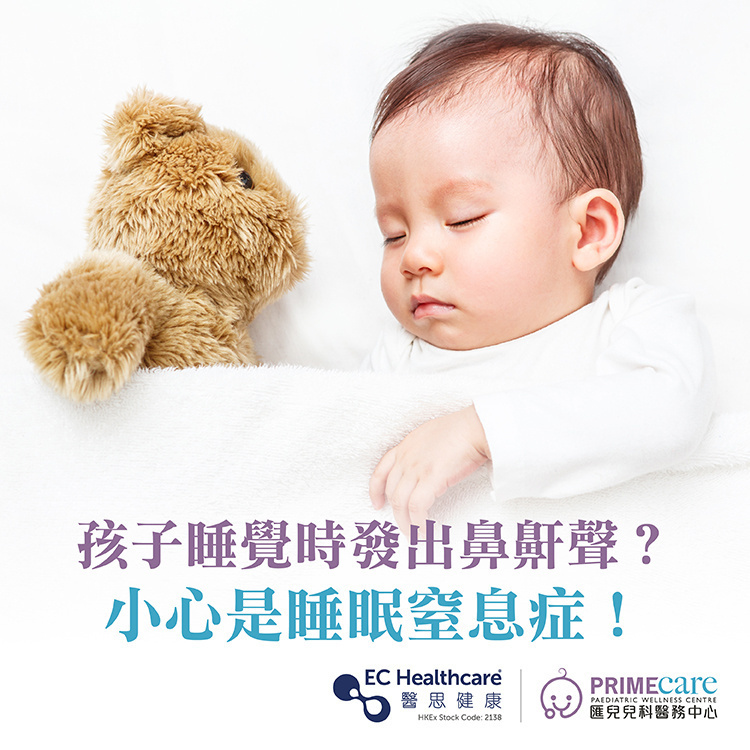
Have you ever noticed children snoring or breathing abnormally when they sleep? Don't take it lightly, as this could be a symptom of sleep apnoea! Most child sufferers develop the condition between the ages of 2 and 8, and typically snore, breathe through their mouths, and may even experience brief pauses in breathing during sleep, making it difficult to enter deep sleep.
Sleep apnoea is a sleep disorder characterized by the cessation of breathing during sleep, and it is primarily divided into:
01 Obstructive:
Relaxation of the soft tissues near the throat causes upper airway obstruction, which is the most common type.
02 Central Nervous System:
The respiratory control centre has sustained trauma and is unable to effectively transmit breathing signals.
Symptoms of Sleep Apnoea
Recent clinical research has found that the proportion of children suffering from sleep apnoea is actually more severe than previously imagined. In particular, children with enlarged tonsils/adenoids, allergic rhinitis, and obesity are more prone to sleep apnoea. If your child has the following symptoms, you need to be particularly careful!
Snore
Sleep-related breathing pauses
Mouth breathing during sleep
Feeling tired and sleepy during the day
Reduced concentration, cognitive ability
Emotional instability, hyperactivity
The Effects of Sleep Apnoea
Children's growth hormone is mainly secreted during sleep. If the airway is blocked, it will affect the child's normal sleep cycle and inhibit normal growth and development.
Sleep apnoea causes children to have low blood oxygen levels during sleep, leading to oxygen deprivation in the brain. When the brain doesn't get enough oxygen, children become tired easily, affecting their prime learning period in class.
At the same time, if their IQ and emotional development are hindered, it will also cause problems in their learning, communication, and interpersonal relationships.
If you suspect your child has sleep apnoea, book a sleep test for them as soon as possible!
Home Sleep Test Programme
Sleep apnoea must be diagnosed through a sleep test (also known as polysomnography), which simultaneously monitors multiple instruments to record brainwaves, nasal and oral airflow, and chest and abdominal movements during a child's sleep. A sleep technician will attach sensors to the patient. At bedtime, the sensors will collect sleep data. The doctor will make a diagnosis based on the Apnoea-Hypopnoea Index (AHI).
Sleep Test and Treatment Procedure
01 Consult a doctor
If a child is suspected of having sleep apnoea, they should consult a specialist doctor as soon as possible. The doctor will arrange a sleep test depending on the situation.
02 Appointment Testing
Book a test date and time.
03 Home Sleep Test
A sleep technician will visit in the evening to conduct the test, and a specialist will collect the testing equipment the following day.
04 Doctor's Evaluation and Treatment Plan
Attend a regular appointment with the doctor for a follow-up consultation, to discuss test results, and to recommend further treatment options.