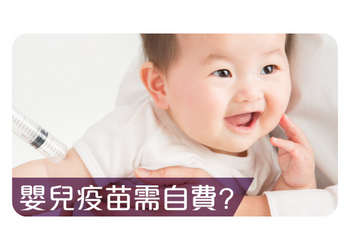
All new parents want to provide the best protection for their little ones, so they often agonise over the issue of vaccinations. Which vaccines should they get? What are the differences between paying for them privately and getting them for free under the public scheme? What are these "5-in-1" and "6-in-1" vaccines? This article gathers some information on...Childhood vaccinesThis information is hoped to be of help and solve problems for all new parents.
First, here are the vaccines currently covered by Hong Kong's "Childhood Immunisation Programme":
Newborn
BCG vaccine
Hepatitis B vaccine – first dose
One month
Hepatitis B vaccine – second dose
Two months
Diphtheria, Tetanus, Acellular Pertussis and Inactivated Polio Vaccine – First Dose
Pneumococcal vaccine – first dose
Four months
Diphtheria, Tetanus, Acellular Pertussis and Inactivated Polio Vaccine - Second Dose
Pneumococcal vaccine – second dose
Six months
Diphtheria, Tetanus, Acellular Pertussis and Inactivated Polio Vaccine - Third Dose
Hepatitis B Vaccine – Third Dose
Twelve months
Measles, mumps, and rubella vaccine – first dose
Pneumococcal Vaccine – Booster
Chickenpox vaccine – first dose
Eighteen months
Diphtheria, Tetanus, Acellular Pertussis and Inactivated Polio Vaccine – Booster
Measles, Mumps, Rubella and Varicella Vaccine – Second Dose*
Primary 1
Measles, mumps, rubella and varicella combined vaccine – second dose
Diphtheria, Tetanus, Acellular Pertussis and Inactivated Polio Vaccine – Booster
Little Five
Human Papillomavirus Vaccine – First Dose
[Junior Six]
Diphtheria (reduced), Tetanus, Acellular Pertussis (reduced) and Inactivated Poliovirus Combination Vaccine – Booster
Human Papillomavirus Vaccine – Second dose
The free vaccination programme offered by government maternal and child health centres does not include preventative vaccines for certain high-risk, fatal infectious diseases, such as rotavirus, Haemophilus influenzae type b (which can cause meningitis), hepatitis A, and meningococcal disease. Therefore, parents may consider private clinics to choose suitable infant vaccination packages for their children to provide more comprehensive protection.
Rotavirus oral vaccine
Rotavirus is the most common viral cause of acute gastroenteritis. Patients generally recover on their own, but due to severe diarrhoea which can last for 7-10 days, some cases may lead to severe dehydration requiring hospitalisation, especially in infants. Management primarily involves rehydration. However, rotavirus infection has a low mortality rate in developed regions, approximately less than 1 in 20,000. Vaccination is effective in reducing the chance of infection and subsequent hospitalisation (rotavirus infection is one of the main causes of hospitalisation for children).
Haemophilus influenzae type b vaccine
Haemophilus influenzae type b is not actually related to influenza. It mainly causes meningitis and pneumonia, and can also cause less common but equally serious infections including epiglottitis, bacterial arthritis, and bacterial osteomyelitis. It is mainly transmitted via droplets from direct contact with a patient's nasal and throat secretions. These conditions all require prompt antibiotic treatment, and most cases require hospitalisation.
Generally, the Haemophilus influenzae type b (Hib) vaccine is recommended at two months, four months, and six months of age for children. Currently, standalone Hib vaccines are available, as well as a pentavalent vaccine that combines Hib with diphtheria, tetanus, acellular pertussis, and inactivated poliovirus, and a hexavalent vaccine that includes hepatitis B in addition to the pentavalent components. The main difference is the number of injections children need to receive, and getting vaccinated in one go will naturally cause children less pain.
Meningococcal conjugate vaccine
Meningococcal bacteria are also a bacterium that infects through direct contact with a patient's oral and nasal secretions, which can cause septicaemia and meningitis.
Hepatitis A vaccine
Hepatitis A is a viral infection transmitted through contaminated food, especially shellfish. Infected individuals may be asymptomatic or experience mild flu-like symptoms or gastroenteritis. However, it can cause acute hepatitis, presenting with symptoms such as fever, fatigue, and jaundice.
Japanese encephalitis vaccine
Japanese encephalitis is a mosquito-borne illness caused by a viral infection. The incidence in Hong Kong is low, with most people experiencing mild symptoms. A minority may develop severe encephalitis.
Do you need to add protection for your baby?
Would you like to reduce the number of injections for your baby?
Would you like your baby to have more comprehensive protection?
If parents want their baby to receive the best care,
In fact, all vaccines can be administered privately.
All Primecare vaccinations are administered by paediatric specialists, completely eliminating the need to visit a polyclinic.
If you have any questions about the vaccine, please feel free to ask us.