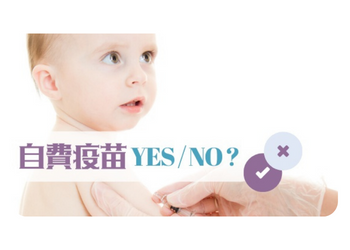
Babies need to get various vaccinations from birth. In addition to the government's "Childhood Immunisation Programme", there are also some recommended self-funded vaccines for parents to have their children inoculated.
Even though "self-funded vaccines" are not included in government schemes, many of these self-funded vaccines are actually essential, and parents should consider getting their children vaccinated.
The purpose of vaccination is to prevent disease, and vaccines exist because they have value.
Which optional vaccines need to be administered?
Oral Rotavirus Vaccine
Rotavirus is the most common cause of severe diarrhoea disease in children worldwide.
Rotavirus oral vaccines have been included in universal immunisation programmes (UMV) in 81 countries and regions including the United States, the United Kingdom, and Australia.
Rotavirus is a highly contagious gastrointestinal virus that is a major cause of severe gastroenteritis in infants and young children.
Almost all children under 5 have been infected with rotavirus; the infection peak is from birth to 24 months, with severe cases commonly seen in infants aged 4-23 months. Symptoms after infection include fever, vomiting, diarrhoea, abdominal cramps, severe dehydration, shock, or death. Severe illness can last up to 9 days, with up to a third of children experiencing a high fever.
At present, vaccination is an effective method of preventing rotavirus gastroenteritis.
Meningococcal vaccine
Be careful! Meningitis infection can be serious!
Meningococcal infection is caused by meningococcal bacteria, generally divided into six types: A, B, C, W, X, and Y. Type B accounts for 50% of infections in Hong Kong. Once infected, the condition progresses rapidly, and patients may die within 24 hours of symptom onset!
The WHO further points out that even after a baby has recovered, 10–20% of those infected will suffer from permanent long-term effects… and newborns are particularly at high risk!
Receive the "Quadrivalent Meningococcal Conjugate Vaccine" and the "New Meningococcal B Vaccine" to effectively prevent ACWY and B meningococcal infections, providing comprehensive protection for your baby!
To effectively prevent meningococcal meningitis, vaccination is the ideal method.
(3) Mixed vaccine
Every time a child gets an injection, they cry, and as parents, it’s naturally heartbreaking!
How to reduce a baby's fear of vaccinations?
Five-in-one or six-in-one combination vaccine
It covers a larger area and offers more comprehensive protection for the baby.
✅Reduce the number of injections
Reduce the risk of side effects
✅ Provide more protection
5-in-1 vaccine
Can prevent diphtheria, tetanus, whooping cough, polio, Haemophilus influenzae type b;
Hexavalent vaccine
Prevention of diphtheria, tetanus, pertussis, poliomyelitis, Haemophilus influenzae type B + hepatitis B.
Compared to traditional separate injectable vaccines, 5-in-1/6-in-1 acellular combination vaccines combine multiple vaccines, which can significantly reduce the number of vaccinations. It can also reduce the chance of side effects and discomfort in babies after vaccination.
Tips
As the baby's physiological functions are not yet fully developed, it is recommended to consult a paediatrician before vaccination to ensure the baby's health.