If your baby has eczema, parents need to pay attention! For babies with sensitive constitutions, after eczema, as they grow older, various allergic symptoms may follow, such as allergic rhinitis or tracheal sensitivity. This issue, we invite a Western medicine doctor to explain tracheal sensitivity to parents, and that besides daily care, desensitisation treatment can also improve the condition.
It can be caused by congenital or acquired factors.
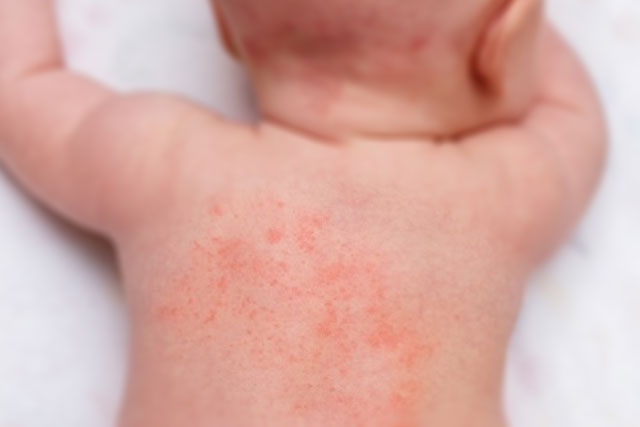
Paediatric specialist Dr. Woo Chun-bun stated that the causes of tracheal sensitivity can be both congenital and acquired. If parents or siblings have a sensitive constitution, the baby's risk of developing tracheal sensitivity will increase. For babies with a strong family history of allergies, tracheal sensitivity may appear earlier. Environmental factors such as dust, mites, and pet hair and faeces can also be allergens. Generally, "sensitivity" primarily affects the skin, nose, and trachea. If newborns exhibit symptoms of skin sensitivity, such as eczema, they are more likely to develop tracheal sensitivity and allergic rhinitis around the age of three to four.
Symptoms vary in severity
Trachea sensitivity symptoms vary in severity, and the extent of their occurrence may differ depending on age. Mild symptoms might just be a cough, which has little impact on life. However, when more severe, asthma can suddenly appear, and it may even cause a wheezing sound, affecting sleep and daily life. Trachea sensitivity also produces phlegm because the sensitivity causes the trachea to narrow and the tracheal walls to secrete. The timing of its onset is also quite peculiar; some babies only experience symptoms at night, while others may start coughing after a little bit of running.
Tracheal sensitivity is not contagious.
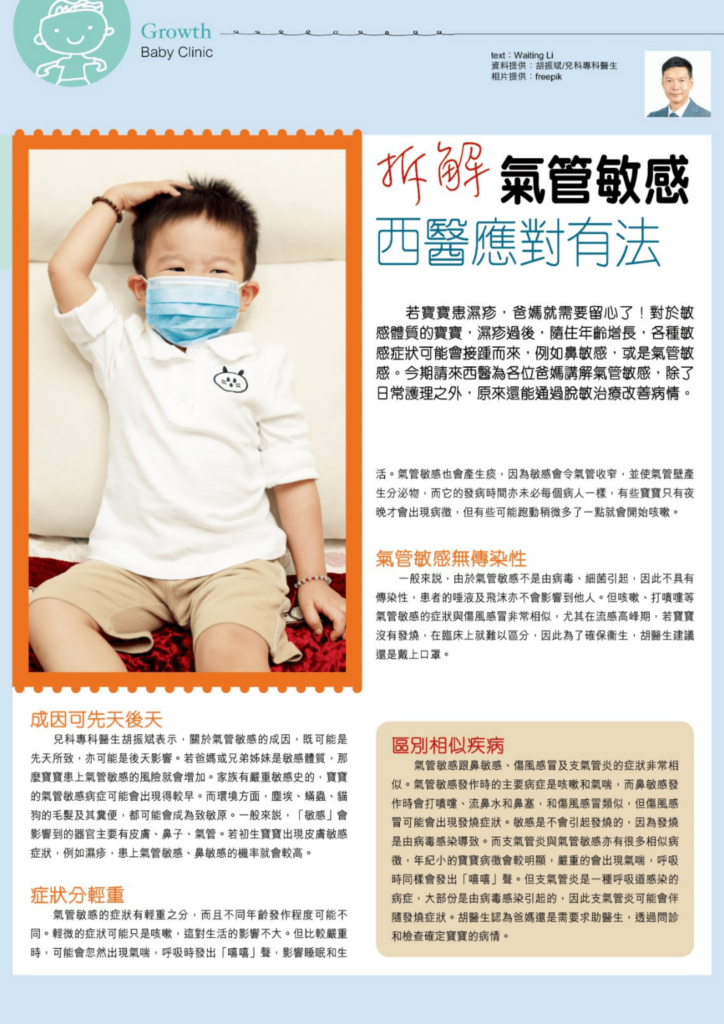
In general, as tracheal sensitivity is not caused by viruses or bacteria, it is not contagious, and saliva, patient spittle, and droplets will not affect others. However, symptoms of tracheal sensitivity such as coughing and sneezing are very similar to those of a common cold, especially during peak flu season. If the baby does not have a fever, it is clinically difficult to distinguish. Therefore, to ensure hygiene, Dr. Wu recommends wearing a mask.
Distinguishing between similar diseases
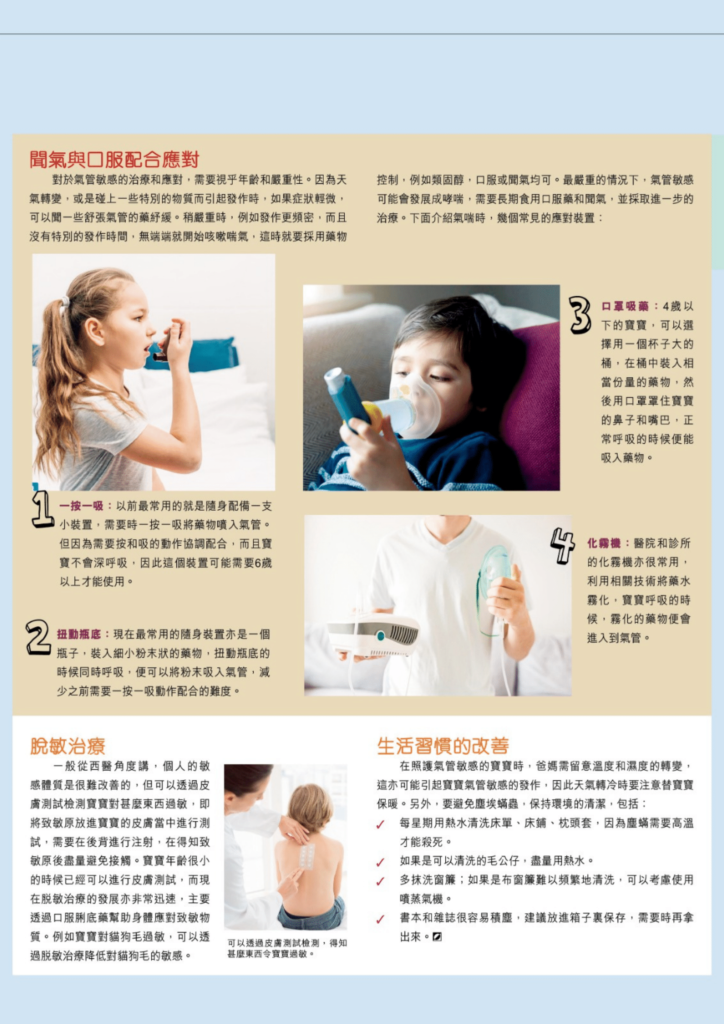
Symptoms of tracheal sensitivity, allergic rhinitis, and the common cold are very similar. The main conditions during a tracheal sensitivity flare-up are coughing and wheezing, while allergic rhinitis includes sneezing, a runny nose, and nasal congestion, similar to a common cold, which may also present with a fever. Sensitivity does not cause fever, as fever is caused by viral infections. Bronchitis also shares many similar symptoms with tracheal sensitivity. Symptoms will be more apparent in younger babies, and severe cases may present with wheezing and a "wheezing" sound during breathing. However, bronchitis is a respiratory tract infection, mostly caused by viral infections, and therefore may be accompanied by fever. Dr. Wu believes that parents still need to seek medical advice from a doctor, who can determine the baby's condition through consultation and examination.From a Western medicine perspective, it is generally difficult to improve an individual's sensitive physique. However, skin tests can be performed to detect what a baby is allergic to. This involves introducing allergens onto the baby's skin, typically through injections on their back. Once the allergens are identified, it is advised to avoid contact with them as much as possible. Skin tests can be performed even when the baby is very young. Furthermore, desensitisation treatments have been developing rapidly, mainly using sublingual (under the tongue) medication to help the body cope with allergenic substances. For example, if a baby is allergic to cat or dog fur, desensitisation therapy can reduce their sensitivity to it.
Improvements to lifestyle habits
When caring for babies with sensitive tracheas, parents need to pay attention to changes in temperature and humidity, as these can also trigger sensitive trachea episodes in the baby. Therefore, they should ensure the baby is kept warm when the weather turns cold. Additionally, to avoid dust mites, it is important to maintain a clean environment, including:- Wash sheets, bedding, and pillowcases in hot water every week, as dust mites need high temperatures to be killed.
- If the teddy bear can be washed, use hot water as much as possible.
- Wipe down curtains more often; if they are fabric curtains that are difficult to wash frequently, consider using a steam cleaner.
- Books and magazines can easily gather dust. It is recommended to store them in boxes and take them out when needed.
Media Link: https://seeclinic.hk/clinic_article_detail.asp?article_id=589