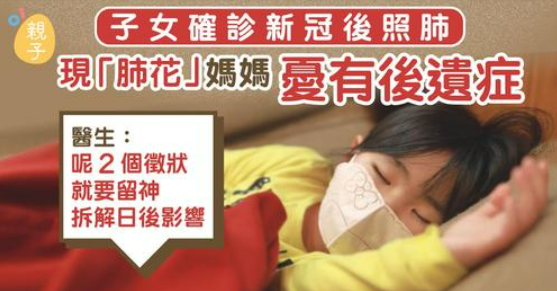
The fifth wave of the epidemic is ongoing, and many children have unfortunately tested positive for the virus. Several mothers have expressed in social media groups that their young children, after being diagnosed with COVID-19, had chest X-rays that showed "patchy" or "hazy" areas on their lungs. They are concerned that their children may suffer long-term lung damage after recovery. Paediatrician Dr. Chan Yan-wing explained that seeing "patchy" areas on an X-ray is not the sole indicator of pneumonia in children. A doctor's clinical diagnosis, along with the location and extent of these "patchy" areas, are also crucial. While the novel coronavirus can indeed trigger pneumonia, if the pneumonia is severe and the illness is prolonged, children will require a longer recovery period and may experience symptoms such as breathlessness and chest pain.
The fifth wave of the pandemic sees daily confirmed cases exceeding 10,000, with a significant number of children affected. Some parents have set up groups on social media for parents of infected children to exchange information and share experiences. One mother posted that her doctor, after examining her toddler son's lungs, noticed "patchy infiltrates" and recommended hospital admission. She expressed her worry and asked for advice on how to proceed.
Watch for 2 symptoms
Paediatric specialist Dr. Chan Yan-wing said that "lung flowers" is a term doctors use to explain to patients, and diagnosing pneumonia is not solely based on observing "lung flowers" on X-rays. It also requires clinical diagnosis, as well as the location and severity of the "lung flowers," making it difficult to generalise. If "lung flowers" have the potential to indicate pneumonia, and the pneumonia is caused by the novel coronavirus, the treatment primarily involves supportive care. Dr. Chan stated that although Omicron more commonly affects the upper respiratory tract, there are also cases where it affects the lungs. If a patient develops pneumonia due to the novel coronavirus, and the pneumonia is severe or prolonged, recovery will also take longer. Some patients experience symptoms such as "shortness of breath" and wheezing, or chest pain when exercising after recovery. If children exhibit these symptoms after recovering from pneumonia, parents should have them tested to check for any other underlying health conditions.

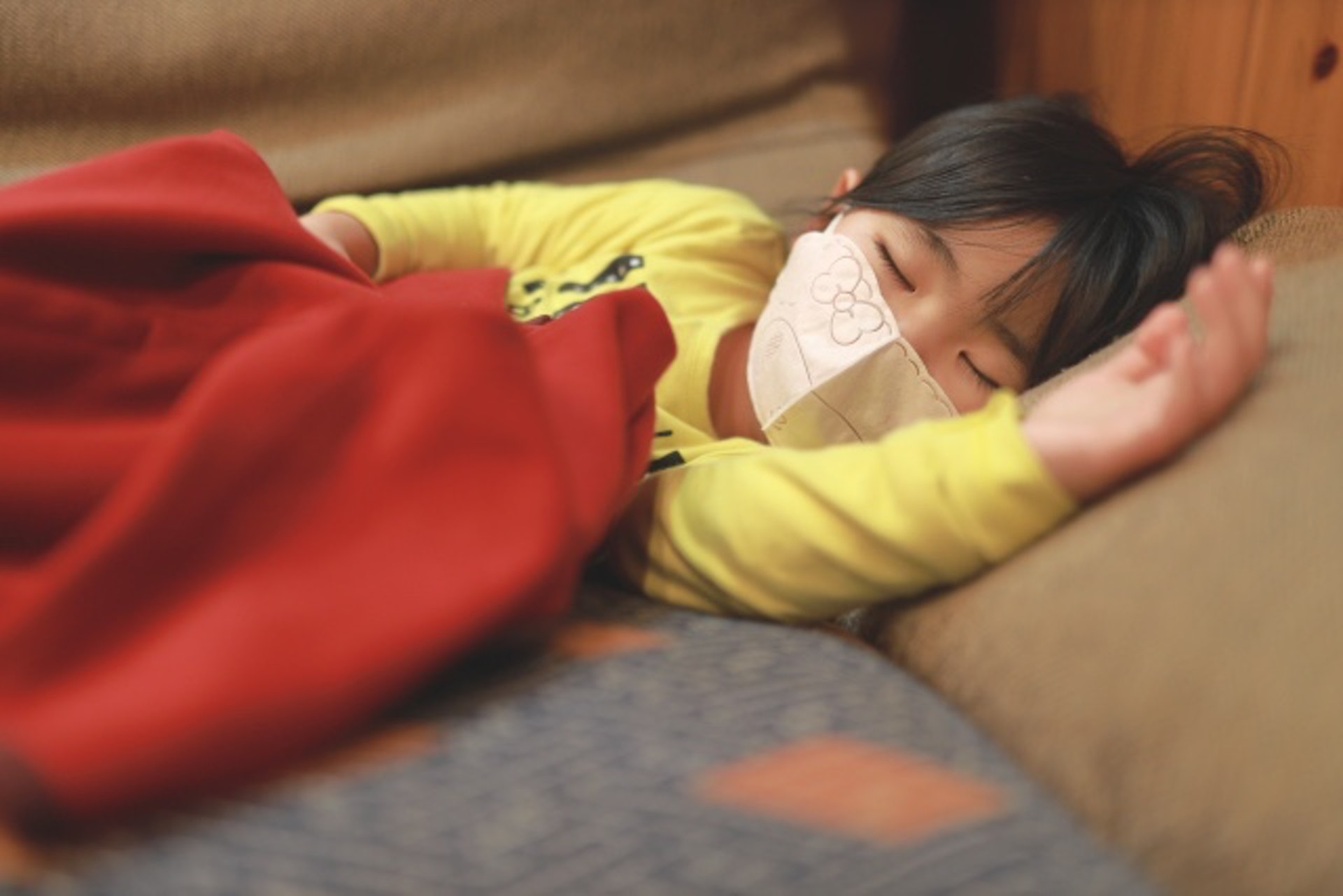
COVID-19 illness is divided into 4 levels.
Dr. Chan stated that the severity of COVID-19 infections in children can be broadly categorised into four levels. The first level is "asymptomatic," where infection is only detected through testing. The second level is "mild," which is the most commonly encountered by doctors, primarily presenting with upper respiratory tract infection symptoms and gastrointestinal discomfort, including a runny nose, nasal congestion, a mild cough, diarrhoea, and vomiting. The third level is "moderate," with symptoms such as a severe cough, high fever, and even wheezing, potentially leading to pneumonia, where chest X-rays would show opacities in both lungs. The fourth level leads to low blood oxygen levels, shortness of breath, and wheezing in children, requiring mechanical ventilation. This level carries the risk of multi-organ inflammation, failure, and even shock or death.
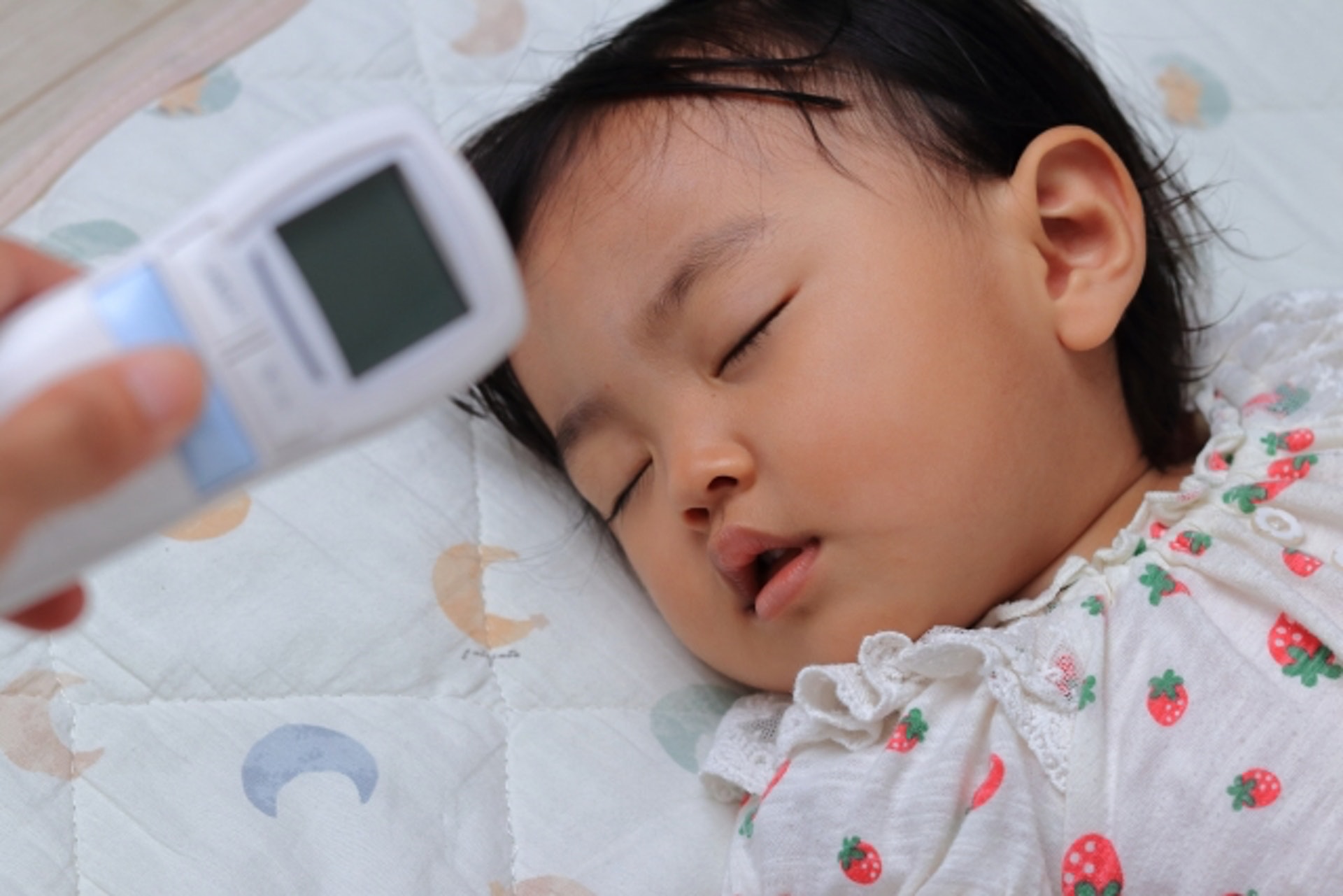
Lung scarring will heal as pneumonia recovers, but if the pneumonia has caused lung damage, it may still affect breathing during exercise for up to 3 months after recovery, leading to shortness of breath and wheezing, requiring more time to recuperate.
Doctors advise that if children only exhibit symptoms of an upper respiratory tract infection, it is very rare for their lungs to be affected, so there's no need to worry about lung damage. However, if children experience shortness of breath or wheezing, it's important to pay attention and consult or seek medical attention from a doctor.
Media Link: https://bit.ly/3hTV26k