Many mothers drink nourishing soups immediately after giving birth to increase breast milk production, while others "eat and drink voraciously" in an effort to ensure their babies receive more nutrients from breast milk. However, a paediatrician has stated that this approach not only fails to help babies absorb more nutrients but can also be counterproductive, leading to breast engorgement and insufficient milk supply for the mother.
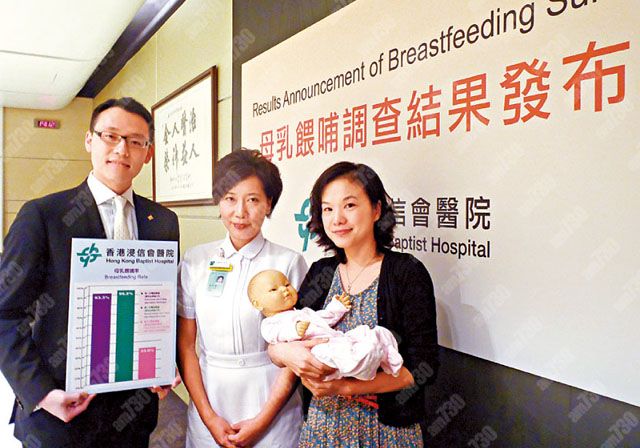
Baptist Hospital surveyed 120 breastfeeding mothers to investigate the difficulties they encountered during the breastfeeding process. The results revealed that over 65 per cent of mothers gave up breastfeeding by the time their babies were three months old, primarily due to insufficient breast milk (44%),the need to return to work or a lack of breastfeeding facilities at their workplace (38.1%), and the baby’s resistance (3.2%).
Winnie Chan, head nurse of the nursery at the Baptist Hospital, pointed out that a mother's anxiety can affect the normal secretion of milk, and advised them to stay relaxed. She also stated that many mothers have misconceptions about breastfeeding knowledge, believing that "drinking more soup and water after childbirth," "pumping frequently when breasts are engorged to relieve swelling and pain," and "stopping breastfeeding when ill" might help with breastfeeding. She explained that these misunderstandings can lead to greater difficulties during the breastfeeding process and even discourage them from continuing.
Regarding the common yellowing of the skin in infants (jaundice), Dr. Chan Yan-wing, Consultant Paediatrician at the Centre for Children and Adolescents, explained that it is mainly due to the infant's immature liver, which is unable to quickly process bilirubin in the blood, leading to yellowing of the skin. However, the yellowing usually subsides within one to two months. He also pointed out that certain components in breast milk can prolong the duration of jaundice in breastfed infants, but there are no other effects, so mothers can continue breastfeeding with peace of mind.
The WHO recommends breastfeeding up to two years of age.
Breast milk is recommended by the World Health Organization for breastfeeding to begin within the first hour of an infant's birth and to exclusively breastfeed until the infant is 6 months old, after which appropriate complementary foods can be introduced and breastfeeding can continue up to 2 years of age or longer.
Three common misconceptions about breastfeeding
Drink plenty of soup and fluids, and eat food immediately after childbirth to increase milk secretion and nutrition.
Incorrect. Drinking too much soup will make the breasts engorged, making it difficult for the baby to latch on. It is recommended that mothers only consume an additional 300 to 500 calories per day.
When breasts are engorged, you should express milk frequently to relieve discomfort and pain.
Incorrect. Not pumping regularly will make your body think the baby is feeding more, which will worsen milk engorgement, creating a vicious cycle.
Should breastfeeding be stopped while taking medication as a result of illness?
Unless the illness is severe, the chance of common colds or flu being transmitted through breast milk is very small, so there is no need to stop breastfeeding when taking medication.