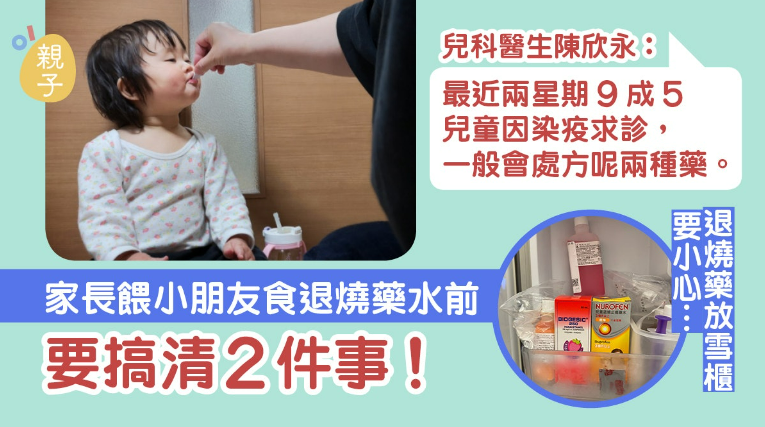
The fifth wave of the pandemic continues to be severe, with today (4th) seeing 52,000 confirmed cases, many of whom are children infected with the disease. As public hospitals are overwhelmed, children with milder symptoms who unfortunately contract the virus can only remain at home, taking fever reducers to manage their condition. With an increasing number of parents stocking up on medication at the market, paediatrician Dr. Chan Yan-wing will explain what parents should consider before administering medication if their child develops a fever.
Four children have sadly died since the start of the pandemic, and as of February, a total of 1,939 children and adolescents under the age of 17 had tested positive and been admitted to hospital for treatment, with 49 requiring admission to intensive care units.Paediatrician Chen Xinyong pointed out that in recent weeks, patients have rarely visited clinics, with remote consultations being the norm; of these, 951 TP3T or more were confirmed cases of COVID-19, the youngest being a newborn just a few days old.
Have a look around and feel the difference.
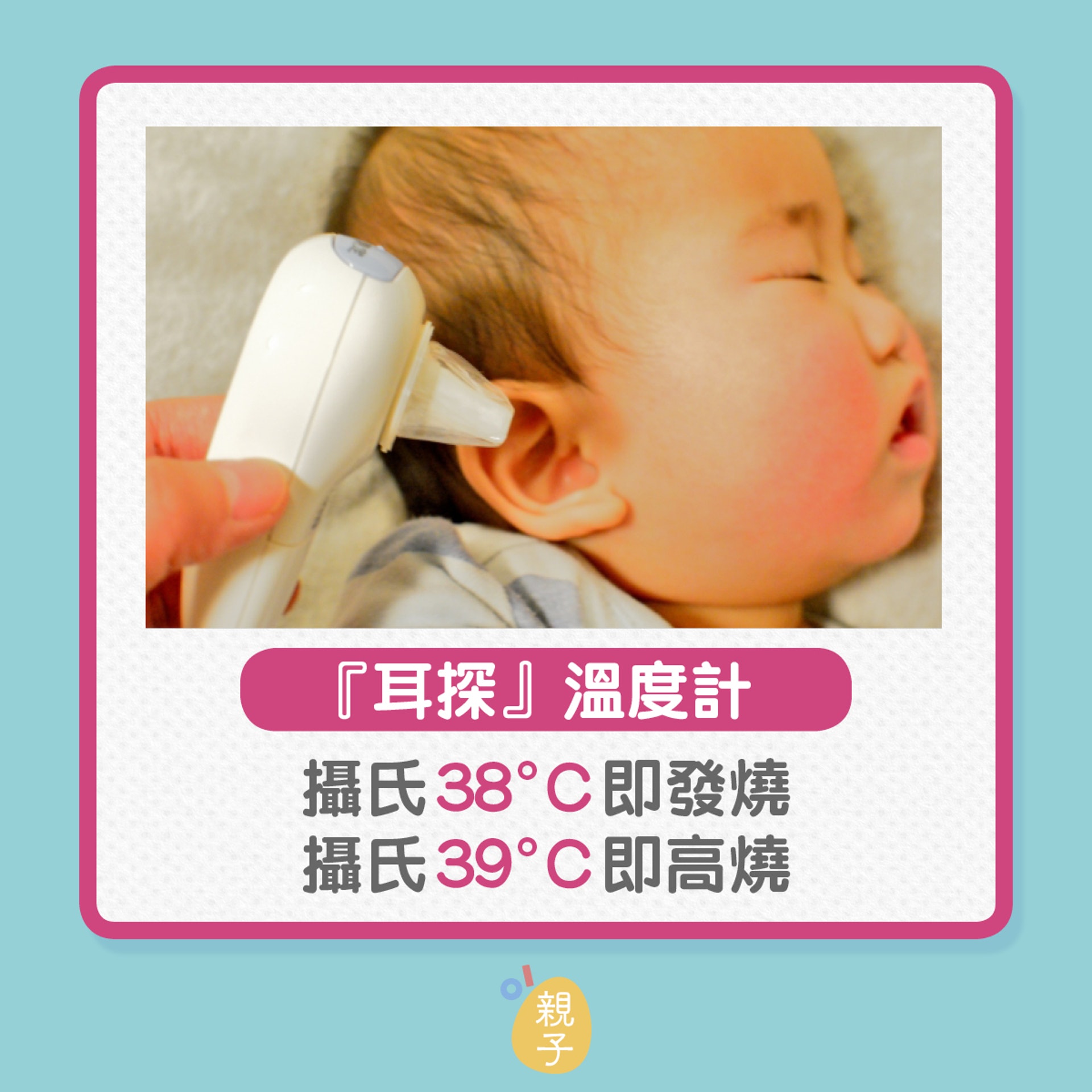
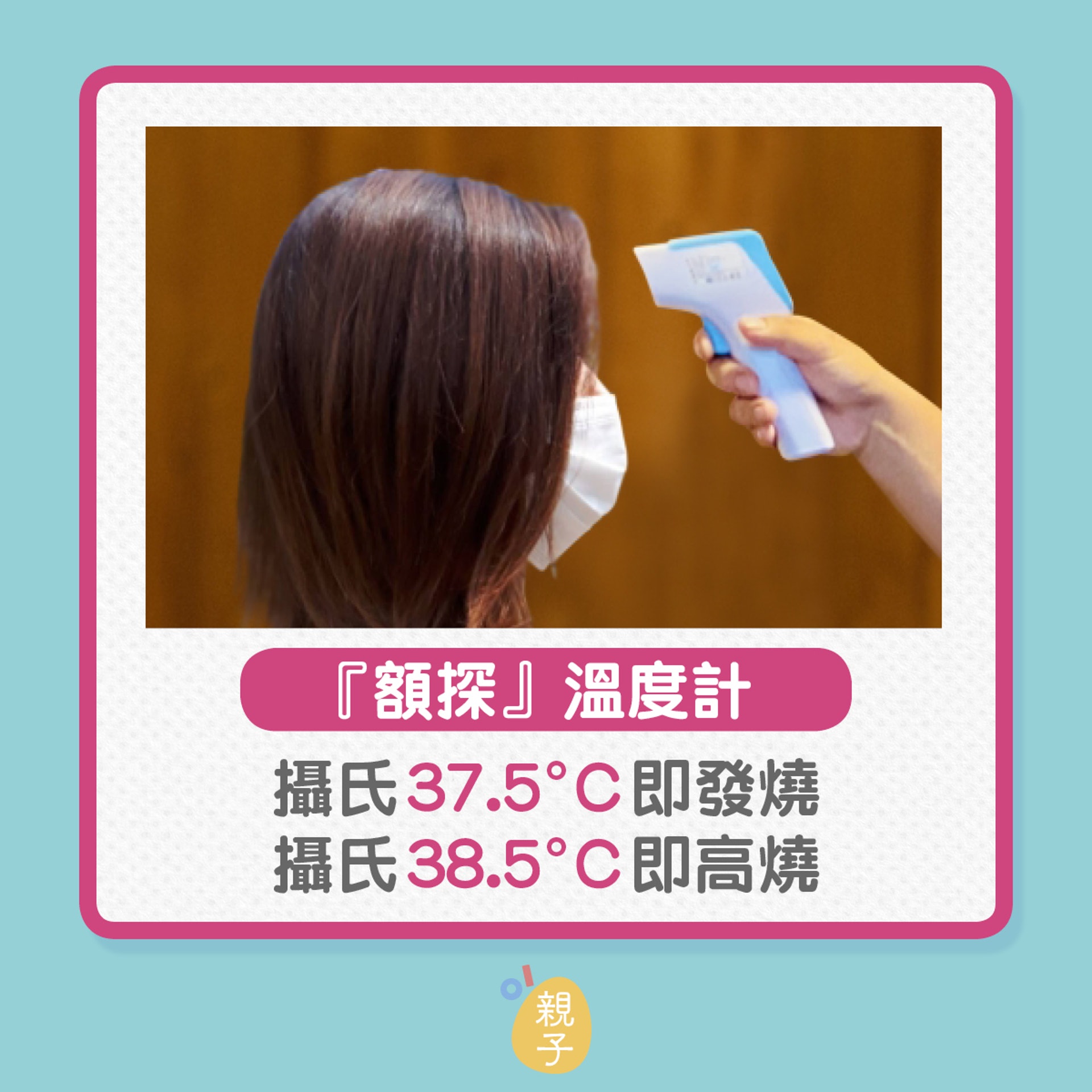
Parents naturally worry and feel anxious when their children have a fever at home. There are many types of thermometers available, so at what temperature should a child be considered to have a fever and require medication? Chan Yan-wing says, "Currently, common household thermometers are mainly 'forehead' and 'ear' thermometers. We usually measure using core temperature. 'Core temperature' refers to the 'ear thermometer'. A temperature of 38 degrees Celsius and above is considered a fever, and 39 degrees Celsius and above is considered a high fever. If using an infrared forehead thermometer to measure skin temperature, it will be 0.5 degrees lower than an 'ear thermometer'. For an infrared forehead thermometer, 37.5 degrees Celsius is considered a fever, and a 'forehead thermometer' reading of 38.5 degrees Celsius and above is called a high fever."
The medicine is for high or low fever.
Chan Yan-wing points out that children's fever reducers are divided into those for high fever and low fever. "General paediatricians differentiate between low-grade and high-grade fever reducers. Low-grade fever reducers are primarily Paracetamol, which is the same as adult Panadol. The usual prescription is for fevers between 38 and 39 degrees Celsius. In case of high fever, Ibuprofen syrup is used, for fevers of 39 degrees Celsius and above."
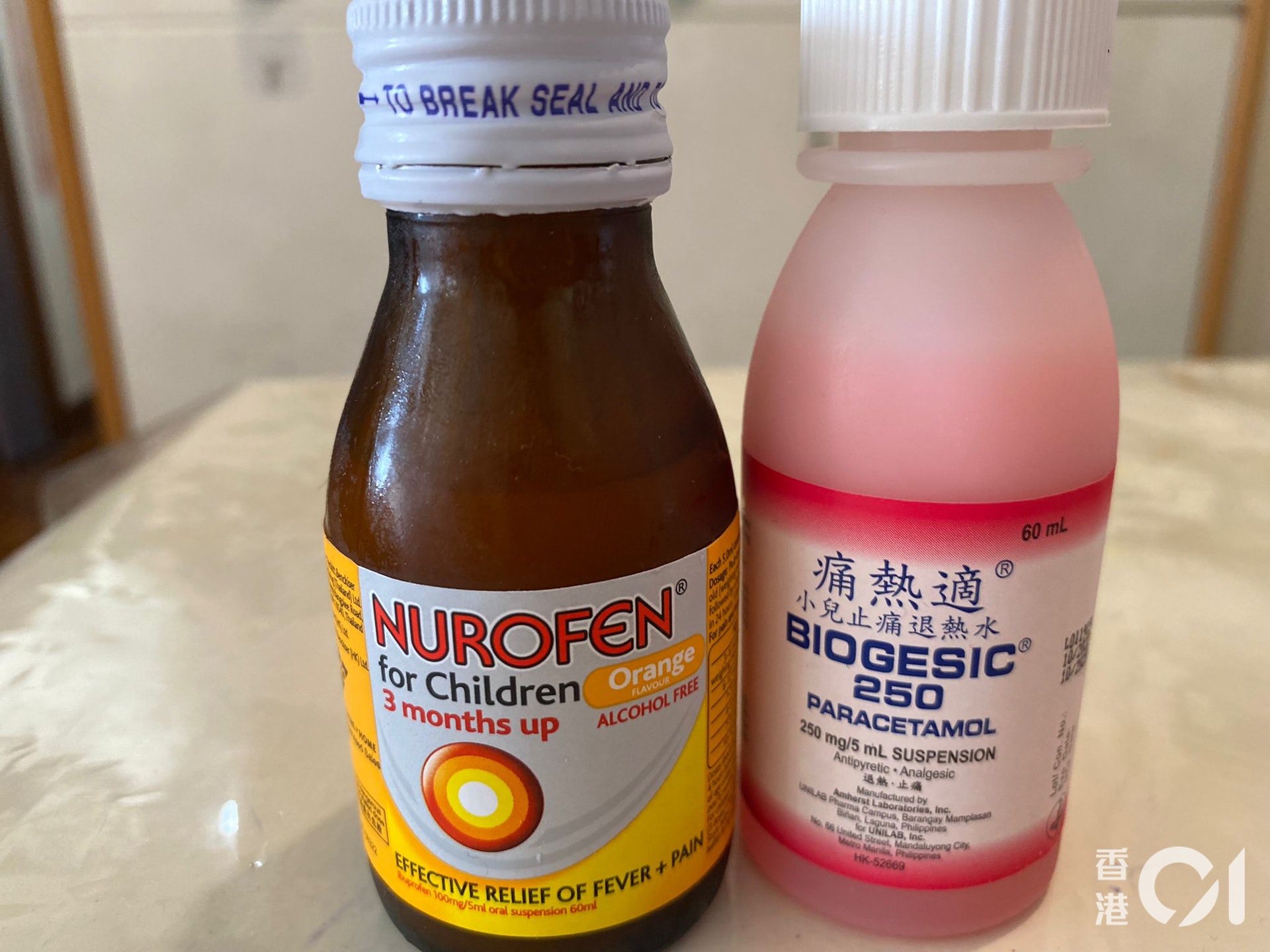
Paediatricians generally prescribe antipyretics for low-grade and high-grade fevers. For low-grade fevers, "Paracetamol" is primarily used, which is the same as adult Panadol. The general prescription is to take low-grade fever medication for fevers between 38 and 39 degrees Celsius. In case of a high fever, "Ibuprofen syrup" is used, with fevers above 39 degrees Celsius considered high-grade. (Photo by Hui Lok Wing)
Paediatricians prescribe appropriate dosages based on a child's weight. If parents purchase over-the-counter fever reducers, the dosage instructions are usually based on the child's age. However, doctors will prescribe medication based on the child's weight because children of the same age can vary in size. They shouldn't be given the same dosage. Doctors are more careful and cautious, prescribing medication based on a child's weight and usually for a low-grade fever, depending on the temperature.
Can two potions be taken together?
"Since the medicines for high fever and low fever are different, can the two medicines be taken at the same time?" Dr. Chan said: "Actually, they can be taken together, because they are two different medicines. It's just that the same medicine needs a sufficient time interval. That is, after giving one dose of the high fever medicine, the next dose of the same high fever medicine should be given after 6 hours; while for the low fever medicine, the interval should be 4 hours."
Are suppositories better for reducing fever?
Many parents have been trying to get their hands on fever-reducing suppositories recently. Dr. Chan said, "Suppositories are also divided into two types: for high fever and for low fever. The high fever suppository is the same medicine as the high fever syrup, and they cannot be used at the same time; you can only choose one. Similarly, the low fever suppository is the same medicine as the low fever syrup, and they cannot be used at the same time; you can only choose one. The fever-reducing syrup and the fever-reducing suppository have the same medicinal properties, and before taking either, you need to consider the child's temperature and weight."
How many days does a fever last after an infection?
In the past three weeks, Dr. Chan Yan-wing noted from his experience diagnosing children that most infected children have a fever for approximately three to five days. "Covid-19 is one of the coronaviruses. Besides respiratory symptoms like coughing, a runny nose, and phlegm, it can also present with gastrointestinal symptoms. Children commonly experience vomiting, stomach aches, and diarrhoea. Most will have a high fever for the first two days, and by the third or fourth day, the fever will gradually come under control. The high fever experienced during this period can reach 39, 40 degrees Celsius or higher.".
The following symptoms require attendance at A&E.
As no private hospitals are currently admitting patients who have tested positive for COVID-19, and there are long waiting times at public hospital A&E departments, parents are worried about how to deal with complications if their children contract the virus. Dr. Chan said: "Most COVID-19 cases can be managed at home. However, if complications arise, such as sudden convulsions, confusion, or a state of delirium, parents should be concerned about complications like encephalitis and should call an ambulance to the A&E department immediately. Infants under three months old who develop a fever and are infected with COVID-19 are also considered a high-risk group, being more susceptible to complications such as encephalitis and meningitis."
He continued: "I suggested admission for observation, but due to current pressure on A&E departments, I received a case of a newborn baby, just over 20 days old, who waited a full day in A&E without being admitted. So, I understand the difficulties in the community right now. However, from a paediatrician's perspective, the younger the baby, the more it is recommended to stay in hospital for observation if they develop a fever after infection. But private hospitals definitely won't accept patients, so the only option is a government public hospital."
Detection must continue
Due to the fact that 95% of children seeing Dr Chan have tested positive for COVID-19, with most of them being infected as a family, he suggests: "Because COVID-19 is highly transmissible, it's worth noting that during the first one to two days of fever, a rapid test may not necessarily be positive. If a child has a fever and has been in contact with a confirmed case, parents should not just do a rapid test for one day. They are advised to continue testing on the second and third days."
Should antipyretics be kept in the fridge?
Another concern for parents is how to store fever-reducing medication. Chan Yan-wing said: "Fever-reducing medication does not need to be kept in the fridge; it can be stored at room temperature. However, you should pay attention to the temperature of the place where you store the medicine. Of course, do not place it on top of an oven. It should be kept in a cool, dark place. If medication is stored in the fridge, the frequent opening of the fridge to get food can sometimes cause condensation and fog, which can affect the drug's efficacy and quality. Generally speaking, it is not necessary to store it in the fridge."
"Unless a type of medicine, such as antibiotics, needs to be stored in the fridge to prevent it from deteriorating; when dispensing medication, the nurse or pharmacist will make it clear to the patient whether the medication needs to be kept in the fridge. In general, other fever reducers and cold and flu medications do not need to be stored in the fridge," he added.
Can children take adult fever reducers?
If there is no children's fever reducer at home, can parents give children adult fever reducers? Chan Yan-wing said: "If the adult fever reducer contains aspirin, it is absolutely unsuitable for children. If that fever reducer only contains paracetamol and no other ingredients, it can also be taken according to the child's weight, but we must be careful, this must depend on the child's weight to determine the dosage. An adult tablet of Panadol is about 500mg, and we must be careful that not every child is suitable for this dosage. Therefore, if you have any doubts, it is best to consult a doctor, and let the doctor decide what medicine should be taken based on the child's weight."
If adult antipyretics contain aspirin, they are absolutely unsuitable for children.
Do not use antibiotics for COVID-19
Dr. Chan Yan-wing reminded parents that antibiotics are ineffective against COVID-19. "Antibiotics are used to fight bacteria. If a patient has a bacterial infection, they will be prescribed antibiotics. However, at this stage, most fevers are caused by COVID-19 infection, so there is no need to prescribe any antibiotics."
With the pandemic, video consultations have become a trend.Child patient numbers surge during the pandemic - paediatricians promote video consultations and then same-day drug delivery.👈🏻👈🏻👈🏻🔼🔼🔼