Hives, commonly known as "wind sores," are a common skin problem that appears on children. Red, swollen lumps suddenly appear on the body, often accompanied by intense itching, causing children to scratch constantly. However, hives appear quickly and disappear quickly, sometimes recurring, and may persist for several days or even weeks. Why do children get hives? What should be done if the condition is severe? Paediatrician Dr. Chan Yan-wing answers your questions!
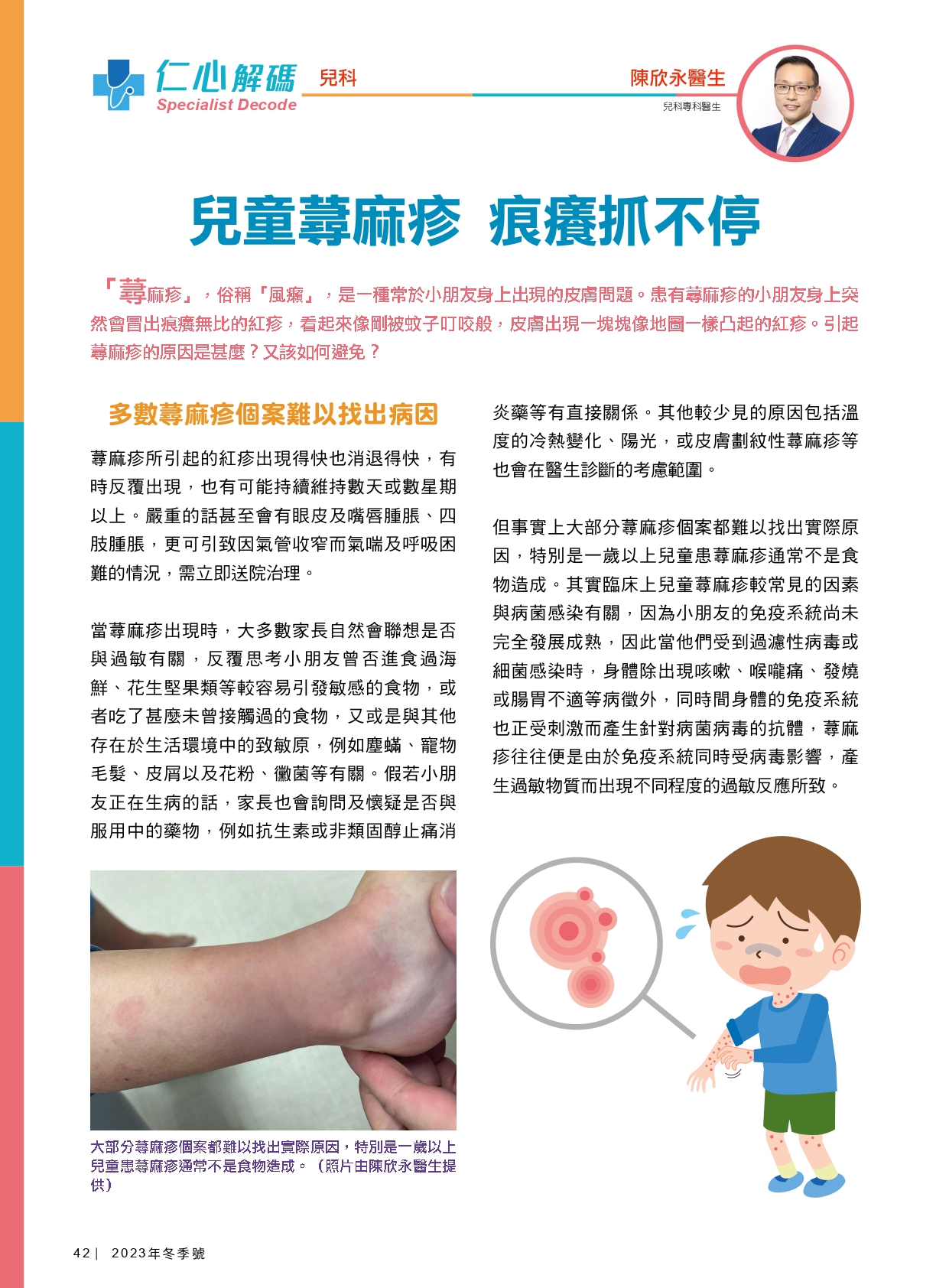

Hives, commonly known as "urticaria" or colloquially as "wind rashes", are a skin problem that frequently occurs in children. Children with hives suddenly develop intensely itchy red rashes that look like mosquito bites, with raised, map-like patches of redness on their skin. What causes hives, and how can they be avoided?
Most cases of urticaria can't have their cause identified.
Hives, which cause red rashes, appear and disappear quickly. They can recur occasionally, or may persist for several days or weeks. In severe cases, there can be swelling of the eyelids and lips, and swelling of the limbs. It can also lead to wheezing and breathing difficulties due to airway narrowing, requiring immediate hospital treatment.
When hives appear, most parents naturally wonder if they are related to allergies, and will repeatedly consider whether their child has eaten foods that are more likely to cause sensitivity, such as seafood, peanuts, or nuts, or eaten any new foods, or if they are related to other allergens in the living environment, such as dust mites, pet dander and hair, pollen, and mould. If the child is unwell, parents will also ask and suspect if there is a direct relationship with the medications they are taking, such as antibiotics or non-steroidal anti-inflammatory drugs. Other less common causes, such as changes in temperature (hot or cold), sunlight, or urticarial vasculitis, will also be considered during a doctor's diagnosis.
In reality, it's difficult to identify the exact cause of most urticaria cases, especially as urticaria in children over one year old is not usually caused by food. In clinical practice, the more common factors for childhood urticaria are related to microbial infections. This is because children's immune systems are not yet fully developed. Therefore, when they are infected with viruses or bacteria, their bodies may exhibit symptoms such as coughs, sore throats, fevers, or gastrointestinal discomfort. Simultaneously, their immune systems are being stimulated to produce antibodies against the pathogens. Urticaria often arises because the immune system is simultaneously affected by the virus, producing allergens and leading to varying degrees of allergic reactions.
Second-generation antihistamines are effectively treated.
Treatment primarily involves oral antihistamines. Antihistamines can alleviate allergic itching symptoms, and as urticaria often recurs and lasts for several days to weeks, second-generation antihistamines with longer-lasting effects and that do not cause drowsiness or fatigue are preferable. If the effect is still not satisfactory, first-generation antihistamines can be used concurrently as directed by a doctor, or short-term oral steroid medication can be taken to control the condition. Most paediatric urticaria caused by infections will gradually disappear as the immune system calms down. Parents facing their child's condition need to be patient, as the symptoms often resolve completely on their own.
Regarding lifestyle habits, apart from paying attention to and avoiding any triggers for hives, parents should also try to prevent their children from overheating. This is because overheating causes the blood vessels under the skin to dilate, which can not only lead to more rashes but also intensify the itching sensation. Therefore, during a breakout of hives, it is advisable to avoid sun exposure, sweating, and bathing or showering with water that is too hot. In addition, air conditioning should be used indoors to maintain a cooler temperature. If the condition is severe and accompanied by a significant allergic reaction, medical attention should be sought immediately. Doctors will administer adrenaline to the child for first aid purposes. If the condition persists or recurs, parents may also consider allergen testing for their child to identify potential triggers for hives.
Hives are generally classified as acute or chronic based on their duration. Acute hives last less than six weeks, and most childhood hives fall into this category. Chronic hives last more than six weeks, with symptoms that recur repeatedly. It is usually difficult to identify the cause, and it is sometimes related to mental stress.
Source: Healthpoint Chronicle – Specialist Decode (Winter 2023 Issue)