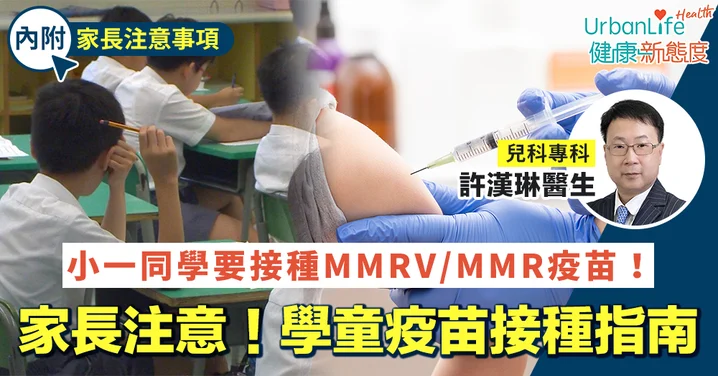
The happy summer holidays have ended, and the children are about to go back to school. The new year is the time for schoolchildren to prepare for their immunisations, especially for new Primary 1 students, who need to receive the "Measles, Mumps, Rubella and Varicella (MMRV) combined vaccine" or the "Measles, Mumps and Rubella (MMR) vaccine". What should you be aware of when getting vaccinated? This time, Paediatrician Dr Hui Hon-lam shares more information. Parents, be sure to pay attention!
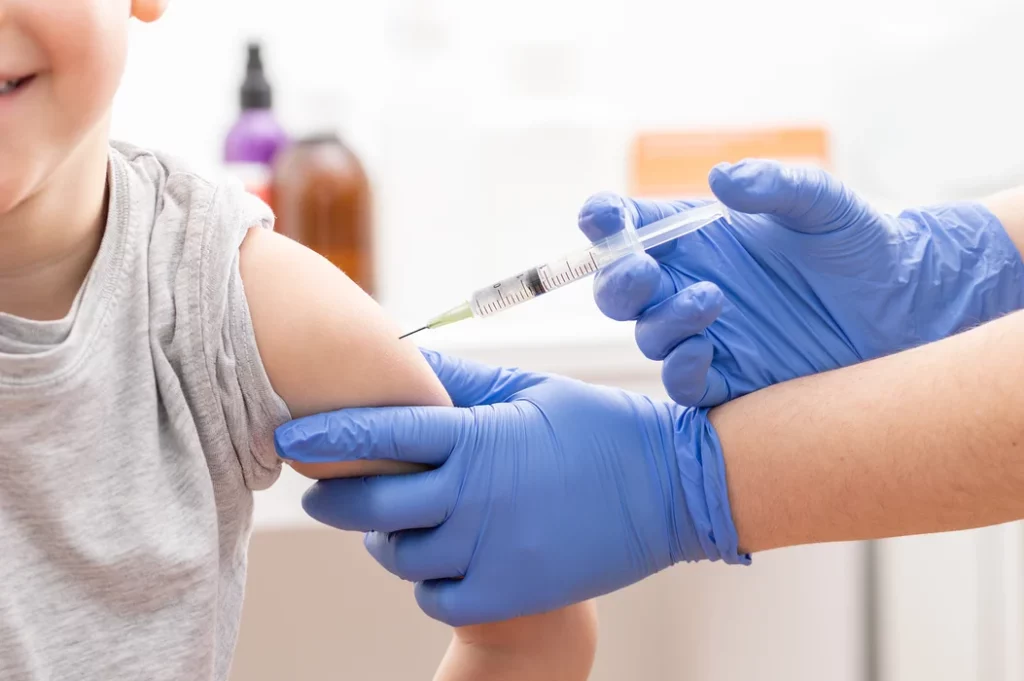
Children's vaccination guidelines | Vaccination schedule
According to information on the Department of Health website, the "Hong Kong Childhood Immunisation Programme" applies to children born on or after 1 January 2013. The Department of Health will provide them with three doses of vaccine, as detailed below:
The maternal and child health centre administers the first MMR combined vaccine and chickenpox vaccine to children who are one year old.
2. The Department of Health sent staff to schools to vaccinate children with the MMRV combined vaccine and also to provide catch-up vaccinations for children who had not yet completed their immunisation schedule.
As for children born before 1 January 2013, the Department of Health will administer two doses of the MMR combined vaccine. Primary school students entering their first year will need to receive the following vaccinations (administered by the School Immunisation Team):
• Measles, Mumps, Rubella and Varicella mixed vaccine (second dose)
• Diphtheria, Tetanus, Acellular Pertussis and Inactivated Poliovirus Vaccine (Booster)
Guide to Schoolchild Vaccinations | Schoolchildren Who Should Not Be Vaccinated
Leukaemia, lymphoma or other malignancies
• Open untreated tuberculosis
• Receiving immunosuppressive treatment, such as steroids, radiotherapy, or chemotherapy
• Immunodeficiency states, such as AIDS, hypogammaglobulinemia
• Severe allergy to neomycin, gelatin, sorbitol, or vaccine ingredients
• Serious allergic reaction to MMR, chickenpox or any components of these vaccines
• Received immunoglobulin or blood transfusion within the past year
• Received live vaccines within the last four weeks, such as BCG, oral polio vaccine, or nasal spray flu vaccine
Children with a history of brain damage, epilepsy, or a family history of epilepsy should consult a doctor before vaccination.
Children's Vaccination Guide | Vaccinations and Illnesses
Children with mild colds or coughs can be vaccinated, but children with a fever should wait until they have recovered.
Children who have already had chickenpox do not need to be vaccinated against chickenpox.
Guide to Childhood Vaccinations | Types of Vaccines
MMR 2 and Priorix are two MMR vaccines available on the market. Although produced by different companies, they have identical ingredients and are interchangeable. Both contain live attenuated viruses.
Schoolchild Vaccination Guide | Post-Vaccination Precautions
The following medications should be avoided after vaccination:
Aspirin
Steroid
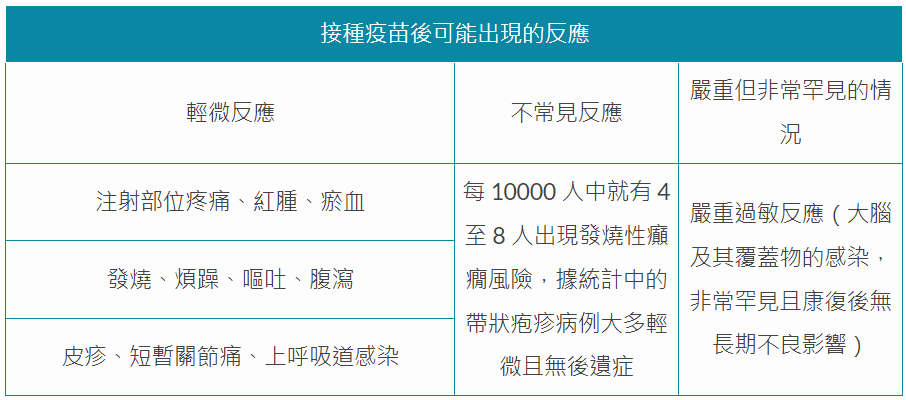
Child Vaccination Guide | Managing Vaccine Reactions
Seek medical attention immediately if the following reactions occur:
• Severe or persistent fever
• Severe rash
Severe allergic reaction
Feverish epilepsy, swollen parotid glands or lymph nodes
Joint pain
• Symptoms of meningitis, such as severe headache, stiff neck, sensitivity to light, and altered consciousness
For fever, you can take fever-reducing medication such as Panadol (paracetamol) or Nurofen (ibuprofen). If necessary, please contact a doctor or emergency room promptly.
Source: UrbanLife Health, A New Attitude to Health (4 September 2024): https://bit.ly/3MCLnR3
Read more:
【shemom】06-09-2024 Measles Combination Vaccine | MMR and MMRV Vaccine Analysis: Precautions for Primary School Students Receiving Vaccinations
【MamiDaily Parenting】09-09-2024 Which new Primary 1 students need the measles vaccine? This year's situation is special, pay attention to the birth dates of schoolchildren.