
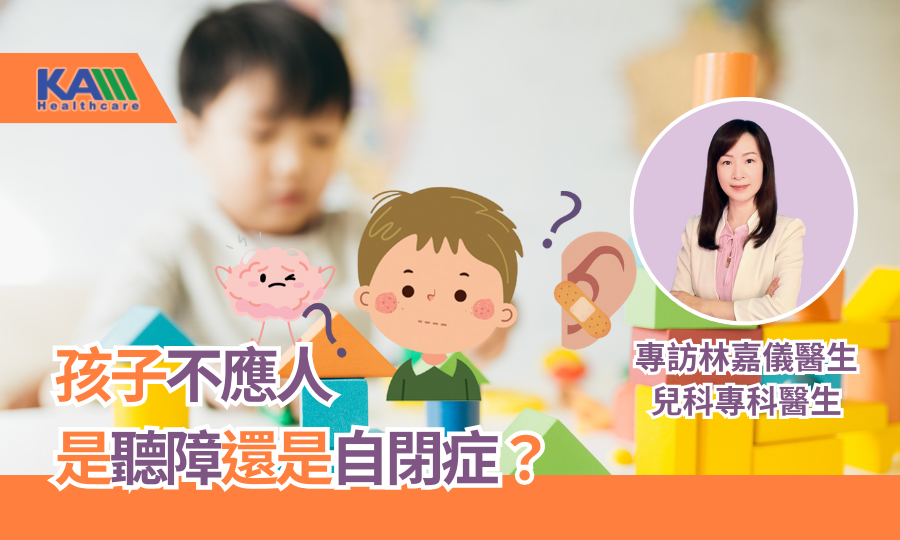
Autism spectrum disorder is a developmental disability that affects how a person behaves, interacts with others, communicates, and learns.
Autism is a congenital developmental disorder, and its causes are still inconclusive. It may be due to congenital brain structure problems or gene mutations, but external factors (such as viral infections or drug effects) may also have an influence.
In 2013, the American Psychiatric Association published the "Diagnostic and Statistical Manual of Mental Disorders" (Fifth Edition) (DSM-V), providing updated diagnostic criteria for conditions such as autism, Asperger's syndrome, and high-functioning autism, classifying them under "Autism Spectrum Disorder" (ASD).
Autism Spectrum Disorder (ASD) is characterised by a range of features that can vary significantly from person to person. These typically include: * **Difficulties with social communication and interaction:** This can manifest as challenges in understanding social cues, engaging in reciprocal conversation, making and maintaining friendships, and expressing oneself socially. Some individuals may find it difficult to non-verbal communication like eye contact, facial expressions, and body language. * **Restricted, repetitive patterns of behaviour, interests, or activities:** This can involve repetitive movements (like hand-flapping or rocking), a need for sameness and routine, highly focused and intense interests in specific topics, and sensory sensitivities (being over or under-responsive to sights, sounds, smells, tastes, or textures). The impact of ASD can be far-reaching, affecting various aspects of an individual's life: * **Social life:** Challenges with social interaction can lead to difficulties forming relationships, feeling isolated, and experiencing social anxiety. * **Education:** Depending on the individual's strengths and challenges, they may require specific educational support, such as tailored teaching methods, access to special educational needs resources, or a more structured learning environment. * **Employment:** Some individuals may face barriers to employment due to difficulties with social communication in the workplace, sensory overload, or challenges with unpredictable tasks. Others may thrive in environments that match their specific interests and strengths. * **Daily living:** Routine and predictability can be very important for individuals with ASD. Changes to routine, sensory sensitivities, or communication difficulties can make everyday tasks, such as shopping or travelling, more challenging. * **Emotional well-being:** The challenges associated with ASD can sometimes lead to anxiety, depression, or other mental health conditions. Understanding and support are crucial for promoting emotional well-being. * **Family life:** Families of individuals with ASD often need to adapt and learn new ways of communicating and supporting their loved ones. This can be rewarding but also demanding, requiring significant emotional and practical resources. It is important to remember that ASD is a spectrum, meaning that the way it presents and its impact vary greatly. With appropriate support, understanding, and accommodations, individuals with ASD can lead fulfilling and meaningful lives.
Autism Spectrum Disorder affects children's daily lives in two ways: 1. Social difficulties; 2. Behavioural problems.
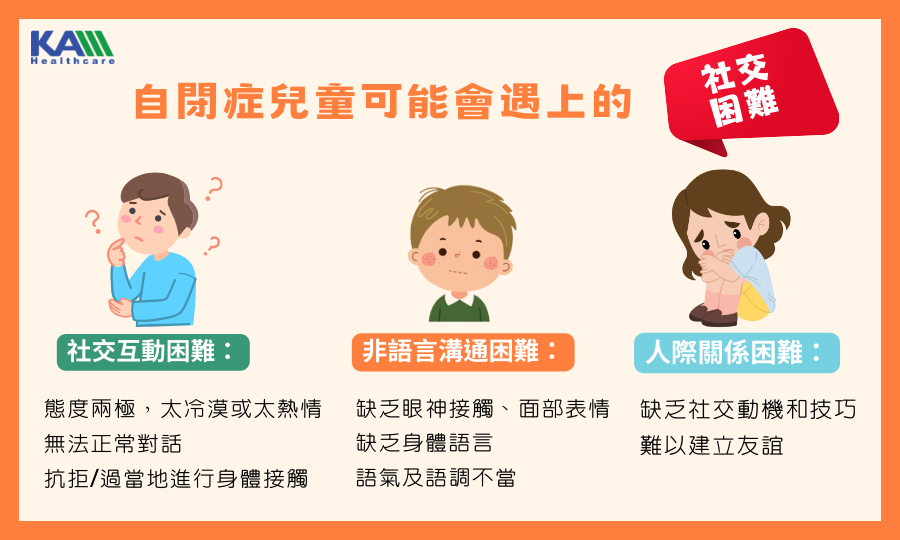
Socially
- Difficulties with social interaction: a cold and passive attitude, not good at sharing interests and feelings, unable to start or sustain conversations, and resistant to physical contact; or it could be the complete opposite, being overly enthusiastic, or inappropriately touching others.
- Difficulties with non-verbal communication: lack of eye contact, facial expression and body language. Inappropriate tone of voice and monotonous speech.
- Difficulties with interpersonal relationships: rarely notices peers, prefers to play alone, doesn't know how to adjust behaviour and responses in social settings, doesn't understand unwritten social rules; therefore finds it harder to establish friendships and integrate into groups.
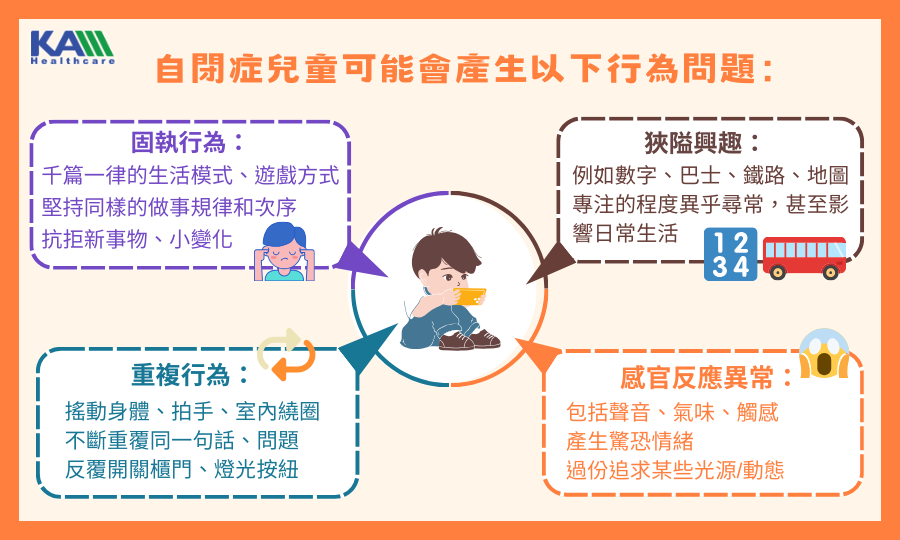
Behavioural aspects:
- Repetitive behaviours: This includes rocking the body or head, flapping hands, repeatedly opening and closing buttons or cabinet doors, and so on. Constant recitation, repeating the same question.
- Rigid behaviour: Insistence on a monotonous order and routine, such as always taking the same route to school or always placing objects in a specific location. There is strong resistance to changes in the living environment and habits.
- Narrow interests: Becoming preoccupied with specific interests, such as buses, station names, or maps, with an unusual focus on this information, to the extent that it affects daily life.
- Sensory Over- or Under-Responsivity: Extreme sensitivity to sound, light, touch, or smell, leading to stress or anxiety; conversely, a lack of normal sensitivity, with a repeated pursuit of certain stimuli.
Some children with Autism Spectrum Disorder (ASD) also have other functional impairments, such as intellectual disability, attention deficit hyperactivity disorder (ADHD), dyslexia, and hearing impairments. At the same time, children who are persistently affected by autism and unable to socialise normally may, in severe cases, develop other emotional disorders, such as anxiety disorder.
How to distinguish between hearing impairment and autism?
Hearing-impaired children and children with autism share some similar characteristics, such as not responding to speech, delayed language development, and a reluctance to speak, which can be confusing for parents and teachers. To distinguish between the two, we can focus on two aspects:
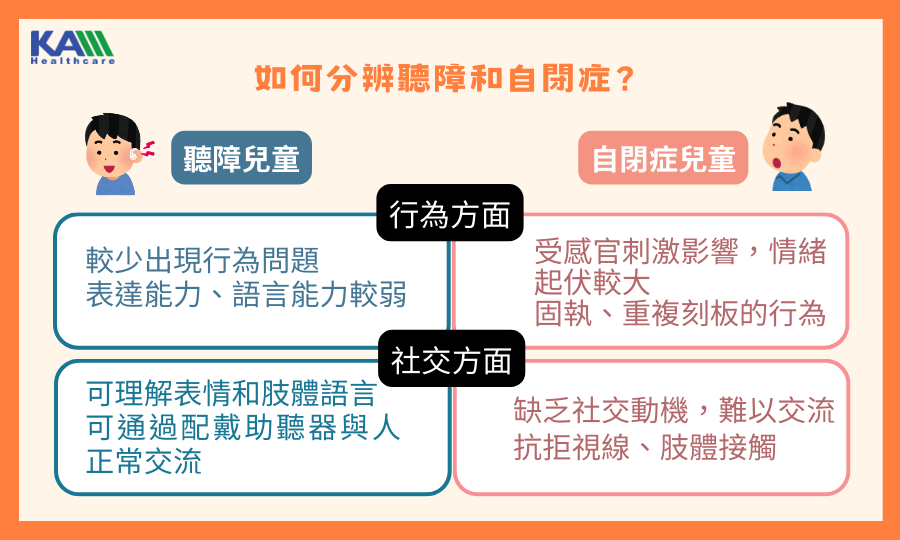
With regards to behaviour: Autistic children may exhibit limited or unique social interaction patterns due to difficulties with social interaction and narrow interests. They also tend to have more rigid behaviours, and may therefore experience more emotional fluctuations. Hearing-impaired children, due to a lack of auditory stimulation, will have weaker language comprehension and expression abilities, and may appear slow to respond. However, generally speaking, hearing-impaired children are less likely to exhibit behavioural problems compared to autistic children.
Socially: Autistic children might ignore what others say, and even if they hear it, they may not wish to respond or greet people. However, hearing-impaired children are different. Due to a lack of auditory stimulation, they have opportunities to try communicating with others in different ways, such as through body language or facial expressions. Often, a gentle tap on the shoulder or eye contact is enough for them to consciously interact with others. By wearing hearing aids and receiving adequate hearing compensation, they can regain their communication and social skills.
It is important to note that children may have both hearing problems and autism concurrently. In such cases, hearing aids will be required, and a combined approach of speech therapy and behavioural training will be necessary to address the issues. Most importantly, parents should maintain reasonable expectations and accompany their children's growth with patience.
How can I seek help for my child? What are the treatment options?
The symptoms of Autism Spectrum Disorder require appropriate training for improvement, otherwise they will continue to affect a child's development. The earlier treatment and training are provided, the better the results. Paediatricians or clinical psychologists will conduct a comprehensive assessment for the child and, based on the range and severity of autism symptoms, the child's age, cognitive abilities, and personality traits, will develop a suitable training plan to improve social difficulties and behavioural problems.
Sensory integration training, to reduce allergic reactions
There are various sensory integration therapies that can improve abnormal sensory responses in autistic individuals. For example, Therapeutic Listening can alleviate hypersensitivity to sound and improve behavioural issues. Similarly, there are corresponding training programmes for children who rock their bodies due to vestibular sensory issues, which help to enhance self-control in seeking sensory stimulation, as well as emotional regulation skills.
Interactive strategy training to improve social awareness
Children with autism generally have weaker communication skills. While children are still young, parents should seize the opportunity to train their children in interaction strategies to enhance their social motivation and skills. Parents can also use Social Stories to help their children understand human relationships and social etiquette through various social narratives. Furthermore, Theory of Mind training enables children to understand how people interact by observing and thinking, thereby learning to read people and situations, and laying a solid foundation for their future integration into society.
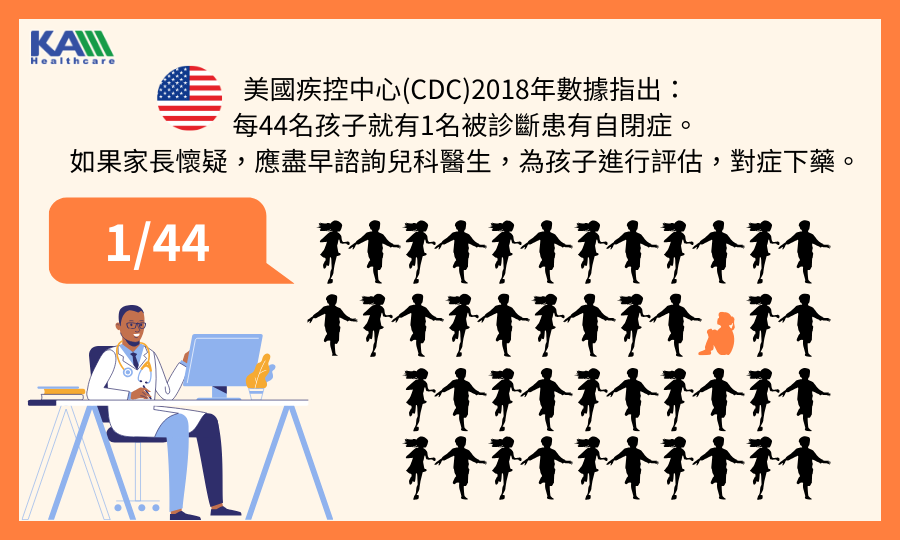
If parents suspect their child has hearing problems or autistic tendencies, they should consult a paediatrician as soon as possible for an assessment and appropriate treatment. Caution should be exercised regarding unscientific treatment methods, especially invasive ones, and professional medical advice should be sought.