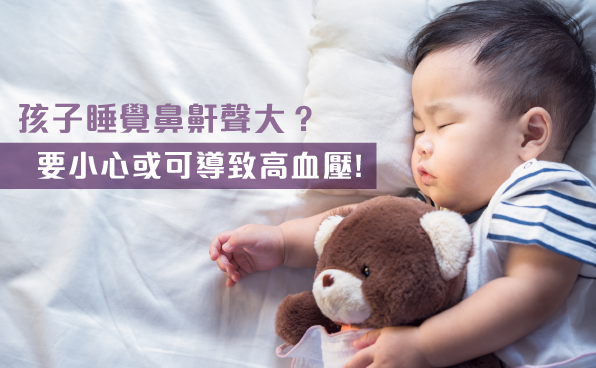
Research has found that obstructive sleep apnoea in children is an independent risk factor for hypertension in adulthood. For children with moderate to severe OSA, the risk of developing hypertension in adulthood can be as high as 2.5 times that of the general population, and in the long term, it increases their likelihood of suffering from cardiovascular and cerebrovascular diseases.
Childhood sleep apnoea can lead to high blood pressure in adulthood
Research has found that nearly 100 children with mild to severe obstructive sleep apnoea had higher blood pressure than other children of the same age, and their risk of developing high blood pressure in adulthood is 1.5 to 2.5 times higher than that of the general population.
Dr. Lau Wai Yip, an ear, nose, and throat specialist, stated that patients with sleep disorders have a higher chance of developing high blood pressure, heart disease, stroke, and even sudden death.
Symptoms of sleep apnoea in children
I snore easily when I sleep.
Sweating
Mouth breathing out of habit
Dr. Lau Wai-yip continued, "Snoring does not necessarily mean one suffers from sleep apnoea, but if it occurs very frequently or for a long duration, and is also very loud, the risk of suffering from sleep apnoea increases relatively."
Treatment
If children display the aforementioned symptoms, parents may consult a doctor about a tonsillectomy. If a child's sleep apnoea is caused by obesity, dietary and weight management should be implemented. In some cases, a continuous positive airway pressure machine may be used during sleep to improve sleep apnoea.